
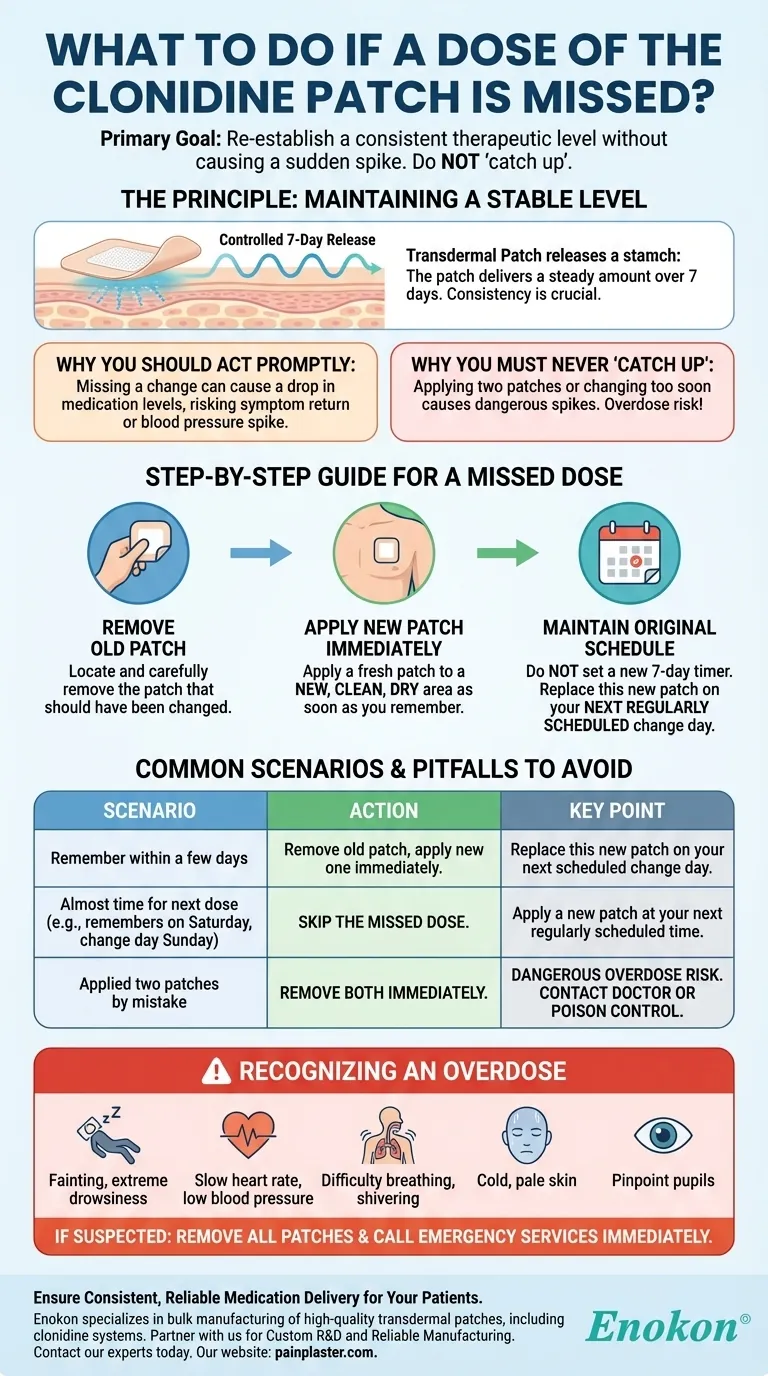
If you miss your scheduled time to change your clonidine patch, the standard procedure is to remove the old patch and apply a new one to a different area of skin as soon as you remember. You should then replace this new patch on your next regularly scheduled change day. It is critical never to apply two patches at once to make up for a missed dose.
The primary goal when managing a missed clonidine patch is to re-establish a consistent therapeutic level of the medication in your body without causing a sudden spike. The key is to resume your normal weekly schedule as quickly as possible, not to "catch up" on the missed time.
The Principle: Maintaining a Stable Medication Level
The clonidine patch is a transdermal system designed to deliver a steady, controlled amount of medication through your skin over a seven-day period. This consistency is crucial for managing your condition effectively.
Why You Should Act Promptly
Forgetting to change your patch can cause the level of clonidine in your blood to drop, potentially leading to a return of symptoms or, in some cases, a rapid increase in blood pressure. Addressing the missed dose promptly helps maintain this therapeutic stability.
Why You Must Never "Catch Up"
Applying two patches or changing them too close together can cause a sudden, dangerous spike in medication levels. This significantly increases the risk of side effects and overdose. The system is designed for a slow, seven-day release, and that principle must be respected.
Step-by-Step Guide for a Missed Dose
Follow this simple procedure if you've forgotten to change your patch on schedule.
Step 1: Remove the Old Patch
The first step is always to locate and carefully remove the patch that should have already been changed.
Step 2: Apply a New Patch Immediately
As soon as you remember, apply a fresh patch. It is important to place it on a new, clean, and dry area of skin to ensure proper adhesion and absorption and to avoid skin irritation.
Step 3: Maintain Your Original Schedule
This is a critical point. Do not set a new seven-day timer from the moment you applied the replacement patch. Instead, you should remove this new patch on your next regularly scheduled change day. This action puts you back on your consistent, easy-to-remember routine.
Common Scenarios and Pitfalls to Avoid
Your course of action may change slightly depending on how much time has passed since the missed dose.
The "Almost Time" Scenario
If you realize you missed your dose and it is already very close to your next scheduled change day (for example, you remember on a Saturday and your change day is Sunday), it is often better to skip the missed dose. Simply wait and apply the new patch at your regularly scheduled time.
The Danger of Doubling Up
Applying an extra patch is dangerous and constitutes an overdose. If you or someone else accidentally applies more than one patch, remove them all immediately.
Recognizing an Overdose
Symptoms of a clonidine overdose require urgent medical attention and can include:
- Fainting or extreme drowsiness
- Slow heart rate and low blood pressure
- Difficulty breathing or shivering
- Cold, pale skin
- Pinpoint pupils
If an overdose is suspected, remove all patches and call your local poison control center or emergency services immediately.
Making the Right Choice for Your Health
Navigating a missed medication dose can be stressful, but the rules for the clonidine patch are straightforward and designed for your safety.
- If you remember within a few days of your missed change: Remove the old patch, apply a new one, and then replace it again on your original, scheduled day.
- If it's nearly time for your next scheduled change: Skip the missed application entirely and just put on your next patch at the normal time.
- If you ever apply two patches by mistake: Remove both immediately and contact your doctor or poison control for guidance, even if you feel fine.
Ultimately, maintaining the rhythm of your weekly schedule is the most effective way to ensure your treatment is both safe and effective.
Summary Table:
| Scenario | Action | Key Point |
|---|---|---|
| Remember within a few days | Remove old patch, apply new one immediately. | Replace this new patch on your next scheduled change day. |
| Almost time for next dose | Skip the missed dose. | Apply a new patch at your next regularly scheduled time. |
| Applied two patches by mistake | Remove both patches immediately. | Contact your doctor or poison control; this is an overdose risk. |
Ensure Consistent, Reliable Medication Delivery for Your Patients
As a trusted partner for healthcare distributors and pharmaceutical brands, Enokon specializes in the bulk manufacturing of high-quality transdermal patches, including systems like clonidine. Our technical expertise ensures precise, controlled drug delivery that is critical for patient safety and treatment efficacy.
Partner with us for:
- Custom R&D: Develop tailored transdermal solutions for your specific drug formulations.
- Reliable Manufacturing: Benefit from our robust production of consistent, reliable pain plasters and medicated patches.
Let's work together to create safer and more effective treatment options. Contact our experts today to discuss your transdermal patch needs.
Visual Guide
Related Products
- Lidocaine Hydrogel Pain Relief Patch for Pain Relief
- Menthol Gel Pain Relief Patch
- Capsaicin Chili Medicated Pain Relief Patches
- Herbal Medicated Anti Diarrhea Patch for Digestive Relief
- Icy Hot Menthol Medicine Pain Relief Patch
People Also Ask
- How does the aqueous base in a lidocaine patch contribute to drug delivery? Unlocking Sustained Pain Relief Technology
- What are the advantages of topical anesthetics over invasive Lidocaine infiltration? Discover Safer, Scalable Relief
- Which pain patch is most effective for arthritis? Find the Best Relief for Your Joint Pain
- How should lidocaine patches be applied for optimal use? Maximize Pain Relief with Proper Application
- Why are lidocaine patches preferred over oral medications? Targeted Relief & Scale Your Brand with OEM R&D Solutions



















