
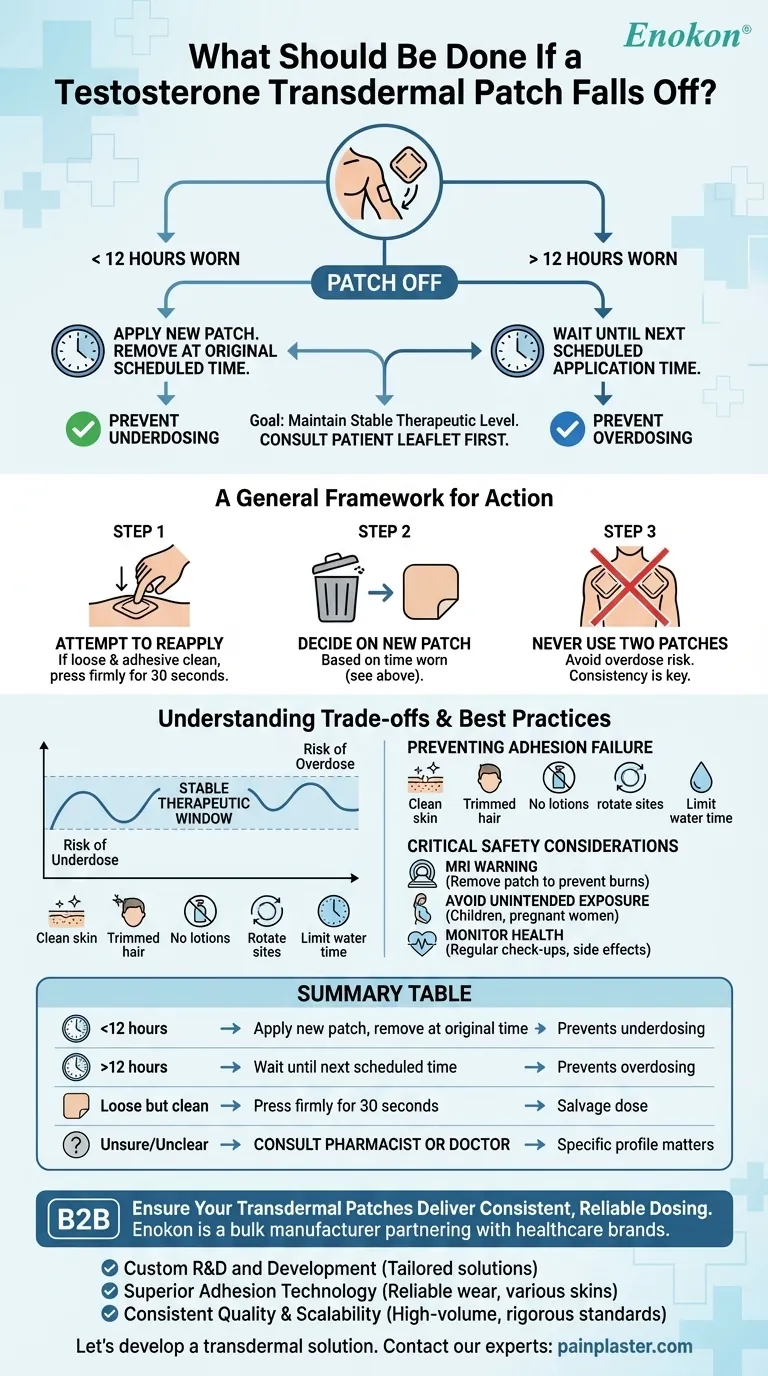
If your testosterone transdermal patch falls off, your immediate action depends on how long it was on your skin. If it was worn for fewer than 12 hours, you should typically apply a new patch and continue with your regular schedule. If it was on for more than 12 hours, it's often best to wait until your next scheduled application time.
The primary goal is to maintain a stable, therapeutic level of testosterone without risking an overdose. Because different brands have different instructions, the safest first step is always to consult the patient information leaflet that came with your specific prescription.
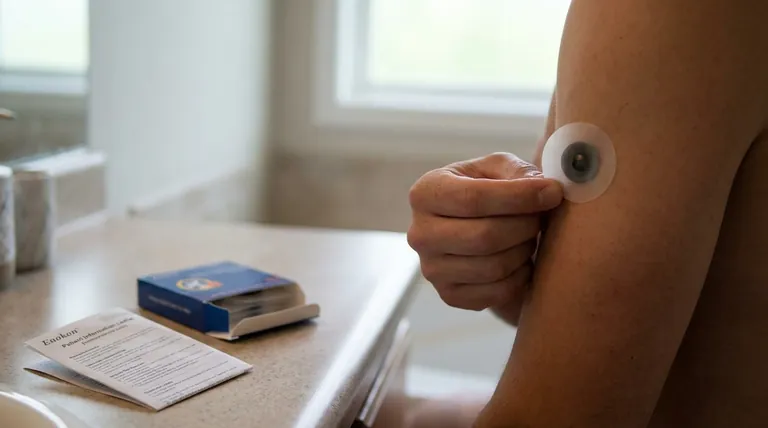
Why Patch Instructions Can Seem Contradictory
The advice you find for handling a detached patch can vary significantly. This isn't because some of it is wrong; it's because testosterone patches are not all the same. They differ in their duration, dosage, and the technology used for adhesion and drug delivery.
The Manufacturer's Guide is Your Primary Source
The instructions provided with your specific brand of patch are the most accurate guide. A patch designed for 24-hour wear will have different rules than one intended for a shorter duration. Always default to the information provided by the manufacturer or your pharmacist.
Touching the Adhesive Can Reduce Effectiveness
If you are trying to reapply a patch that has only partially lifted, be careful not to touch the adhesive side. Oils and dirt from your fingers can compromise its ability to stick to the skin and may interfere with medication absorption.
A General Framework for Action
If you cannot find your specific instructions, you can follow a logical framework designed to prioritize safety and therapeutic consistency.
Step 1: Attempt to Reapply It
If the patch has just loosened or fallen off and the adhesive side is clean, try to press it firmly back onto your skin. Hold it in place with the palm of your hand for about 30 seconds to help the adhesive bond with your skin's warmth.
Step 2: Decide Whether to Replace or Wait
If the patch will not stick, your next step depends on timing.
- If it falls off early (worn <12 hours): The patch has not delivered its full dose. In this case, dispose of the old one safely and apply a new patch. You should then remove this new patch at your original, regularly scheduled time to stay on track.
- If it falls off late (worn >12 hours): The patch has already delivered most of its medication. Applying a new one immediately could lead to an excessive dose. It is generally safer to wait until your next scheduled application time.
Step 3: Never Use Two Patches
Do not apply two patches at once or use extra patches to "make up" for a missed dose. This significantly increases the risk of side effects from an overdose. Consistency over time is more important than a single day's dose.
Understanding the Trade-offs and Best Practices
Using a transdermal patch involves balancing convenience with the need for consistent medication delivery. Understanding the potential issues can help you avoid them.
The Goal: A Stable Therapeutic Window
Your prescription is designed to keep testosterone levels within a specific range. A patch falling off creates a risk of your levels dropping too low (underdosing). Applying a new one at the wrong time can push them too high (overdosing). The guidelines are designed to keep you in that effective and safe middle ground.
Preventing Adhesion Failure
You can take several steps to ensure your patch stays in place:
- Apply the patch to a clean, dry, and cool area of skin.
- Choose a spot with minimal hair, or trim the hair (do not shave, as this can cause irritation).
- Avoid applying lotions, oils, or powders to the area.
- Rotate application sites as directed to prevent skin irritation.
- Limit prolonged time in water, such as in pools or hot tubs, which can weaken the adhesive.
Critical Safety Considerations
Beyond adhesion, remember these key safety protocols:
- Prevent Burns: Transdermal patches may contain metal components. Always remove your patch before an MRI scan to avoid serious skin burns.
- Avoid Unintended Exposure: Ensure others, especially women who are or may become pregnant and children, do not come into contact with the patch or the application site.
- Monitor Your Health: Regular check-ups are essential to monitor for potential side effects, including changes in cholesterol, an increased risk of blood clots, or impacts on prostate health.
Making the Right Choice for Your Goal
When a patch falls off, your decision should be guided by safety and consistency.
- If your primary focus is avoiding a missed dose: For a patch that has been on for only a few hours, replace it with a new one but maintain your original replacement schedule.
- If your primary focus is preventing an overdose: For a patch that has been on for most of its intended duration, waiting until the next scheduled application time is the most cautious approach.
- If your primary focus is absolute certainty: The best action is to call your pharmacist or doctor's office for guidance tailored to your specific prescription and health profile.
Ultimately, managing your therapy correctly is a key part of ensuring it is both safe and effective.
Summary Table:
| Situation | Recommended Action | Key Rationale |
|---|---|---|
| Patch falls off after <12 hours | Apply a new patch. Remove it at your original, scheduled time. | The patch has not delivered its full dose. This prevents underdosing. |
| Patch falls off after >12 hours | Wait until your next scheduled application time. | The patch has delivered most of its medication. This prevents overdosing. |
| Patch is loose but adhesive is clean | Press firmly back onto skin for 30 seconds. | Re-establishing adhesion can salvage the dose if the patch is still viable. |
| Unsure or instructions are unclear | Always consult your pharmacist or doctor first. | Your specific prescription and health profile are the most important factors. |
Ensure Your Transdermal Patches Deliver Consistent, Reliable Dosing
Dealing with patch adhesion issues can compromise patient therapy and brand trust. Enokon is a bulk manufacturer of reliable transdermal patches and pain plasters, partnering with healthcare and pharmaceutical distributors and brands.
We combine advanced manufacturing with deep technical expertise to solve complex challenges like adhesion and controlled drug release.
Partner with us to benefit from:
- Custom R&D and Development: Tailored solutions for your specific active ingredients and delivery requirements.
- Superior Adhesion Technology: Patches designed for reliable wear across various skin types and lifestyles.
- Consistent Quality & Scalability: High-volume production that meets rigorous quality standards.
Let's develop a transdermal solution that enhances patient compliance and therapy outcomes.
Contact our experts today for a consultation
Visual Guide
Related Products
- Silicone Scar Sheets Patch Transdermal Drug Patch
- Far Infrared Heat Pain Relief Patches Transdermal Patches
- Prostate Pain Kidney Health Care Patch for Men
- Menthol Gel Pain Relief Patch
- Icy Hot Menthol Medicine Pain Relief Patch
People Also Ask
- What role does a silicone-based transdermal delivery system play in Parkinson's? Enhancing Early-Stage Patient Care
- How is the long-term skin tolerance of silicone-based transdermal patches evaluated in clinical settings? R&D and Safety
- Why is a polarizing microscope used to evaluate the long-term stability of transdermal drug patches? Ensure Efficacy.
- What are common adverse effects of transdermal drug delivery? Risks & Prevention Tips
- What are the advantages of transdermal drug patches? Optimize Medication Delivery with Patches








