
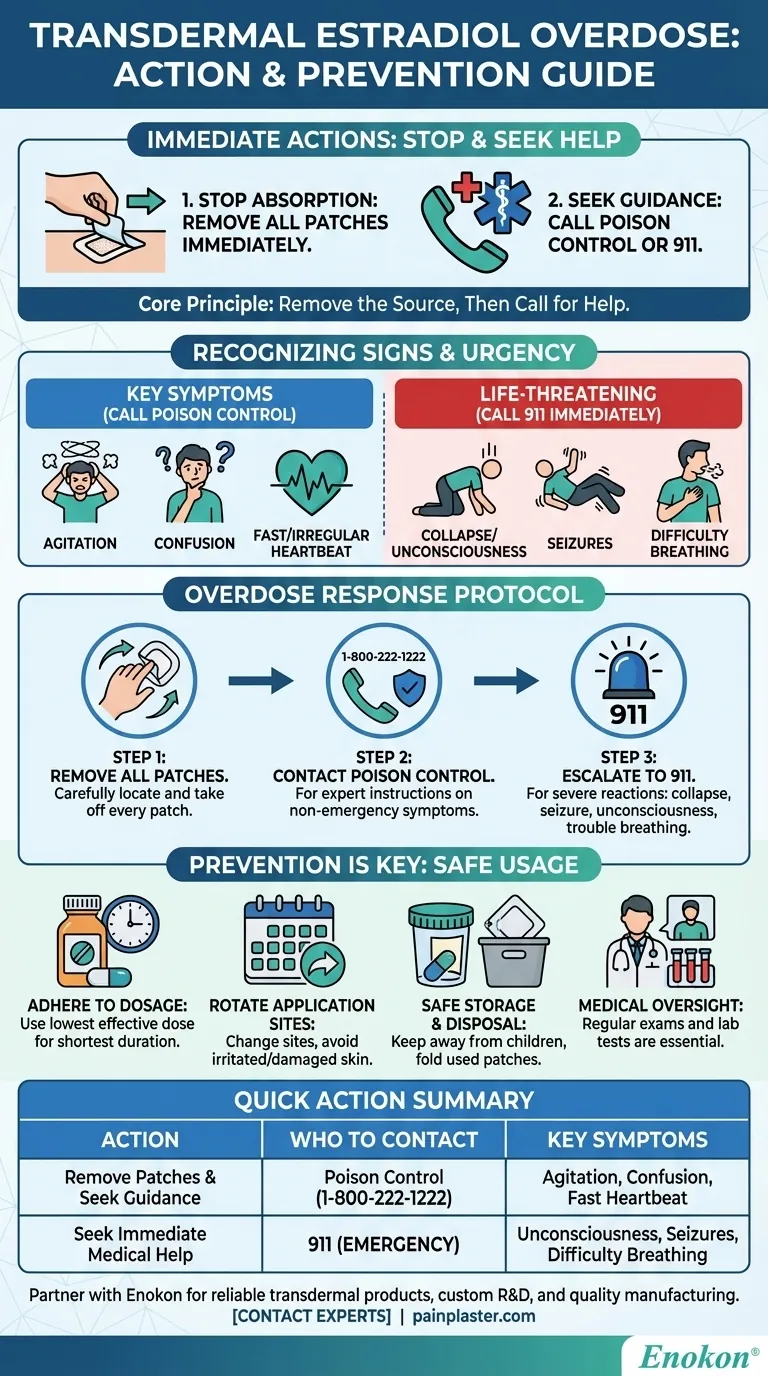
In the event of a suspected transdermal estradiol overdose, the most critical actions are to stop further absorption and seek immediate medical guidance. The first step is to remove any and all patches from the skin. Immediately afterward, you must contact a Poison Control center for expert instruction. If the individual has collapsed, is having a seizure, is struggling to breathe, or cannot be awakened, call 911 for emergency medical services without delay.
The core principle for managing a transdermal estradiol overdose is immediate removal of the source (the patch), followed by a prompt call to the appropriate medical authority—Poison Control for guidance or 911 for life-threatening emergencies.
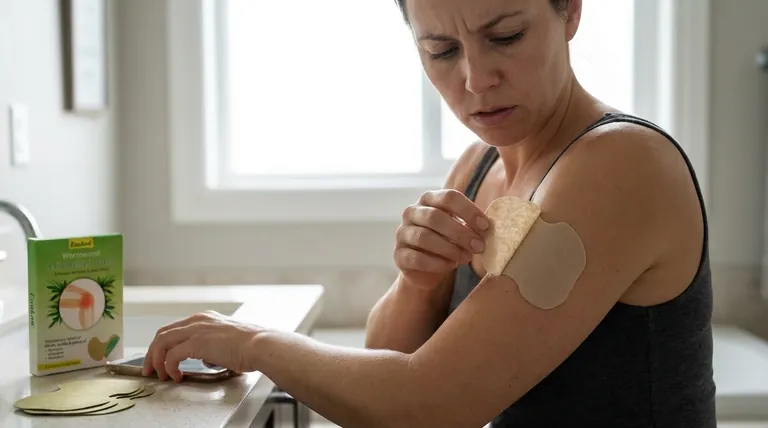
Recognizing the Signs of Overexposure
Understanding the symptoms associated with an overdose is crucial for a timely and appropriate response. While symptoms can vary, certain indicators signal that medical attention is necessary.
Key Symptoms to Watch For
The body may react to an excess of estrogen with noticeable neurological and cardiovascular symptoms.
Be alert for signs such as agitation, confusion, or a fast or irregular heartbeat. These symptoms indicate a potentially serious systemic reaction.
Differentiating the Level of Urgency
Knowing who to call is just as important as knowing when to call.
For general concerns or mild symptoms after excessive patch use, Poison Control is the correct resource. For severe, life-threatening symptoms like unconsciousness, seizures, or difficulty breathing, calling 911 is the non-negotiable first step.
The Protocol for Overdose Response
A clear, step-by-step approach ensures that you can act confidently and effectively in a stressful situation. Follow this sequence precisely.
Step 1: Remove All Patches
The immediate priority is to stop the body from absorbing any more of the medication. Carefully locate and remove every patch from the skin.
Step 2: Contact Poison Control
Once the source is removed, contact the Poison Control helpline at 1-800-222-1222.
Their experts are equipped to provide specific instructions based on the amount of medication used and the symptoms being experienced.
Step 3: When to Escalate to 911
Emergency services are required for severe, life-threatening reactions.
If the person collapses, has a seizure, is unconscious, or is unable to breathe normally, bypass Poison Control and call 911 immediately.
Understanding the Context: Prevention Is Key
The most effective way to handle an overdose is to prevent it from ever occurring. Safe usage of transdermal estradiol requires strict adherence to medical advice and an understanding of key precautions.
Adhering to Prescribed Dosage
An overdose most often occurs from using too many patches at once. Always use the lowest effective dose for the shortest possible duration as determined by your doctor.
Proper Application and Site Rotation
To ensure consistent absorption and prevent skin irritation, it is critical to rotate application sites with each new patch.
Never apply patches to the breasts or to skin that is irritated, oily, or damaged. Also, be aware that using sunscreen over the patch area may affect absorption.
Safe Storage and Disposal
Keep new and used patches well out of the reach of children. A used patch still contains enough active medication to be harmful.
Follow specific instructions for proper disposal, which often involves folding the sticky sides together before discarding.
The Importance of Medical Oversight
Transdermal estradiol is a potent medication that requires ongoing professional monitoring.
Regular medical appointments, including physical and pelvic exams and relevant lab tests, are essential. This allows your doctor to check your body's response and ensure the treatment remains both safe and effective.
Making the Right Choice for Your Safety
Your approach to using transdermal estradiol should be guided by your specific situation and a commitment to safety.
- If you suspect an overdose has just occurred: Immediately remove all patches and call Poison Control at 1-800-222-1222, or call 911 for any life-threatening symptoms.
- If you are concerned about long-term safety: Schedule regular checkups with your healthcare provider to monitor your body's response and confirm you are on the lowest effective dose.
- If you want to prevent future issues: Strictly follow your doctor's instructions for application, site rotation, and the safe storage and disposal of your patches.
Proactive communication with your healthcare provider is the cornerstone of using transdermal estradiol safely and effectively.
Summary Table:
| Action | Who to Contact | Key Symptoms |
|---|---|---|
| Remove all patches | Poison Control (1-800-222-1222) | Agitation, confusion, fast/irregular heartbeat |
| Seek immediate medical guidance | 911 for emergencies | Unconsciousness, seizures, difficulty breathing |
Ensure the safety and reliability of your transdermal products with Enokon. As a bulk manufacturer of reliable transdermal patches and pain plasters for healthcare and pharmaceutical distributors and brands, we provide the technical expertise for custom R&D and development. Benefit from our commitment to quality and safety—contact our experts today to discuss your manufacturing needs.
Visual Guide
Related Products
- Far Infrared Heat Pain Relief Patches Transdermal Patches
- Silicone Scar Sheets Patch Transdermal Drug Patch
- Menthol Gel Pain Relief Patch
- Icy Hot Menthol Medicine Pain Relief Patch
- Mugwort Wormwood Pain Relief Patch for Neck Pain
People Also Ask
- Why is the selection of matrix materials critical when developing customized transdermal patches? Optimize Efficacy
- What are the physical impacts of external heat exposure on the performance and safety of transdermal patches? - Guide
- What role does a skin tolerance scoring system play in the safety evaluation of transdermal patches? Key Safety Metrics
- What are the clinical advantages of local transdermal delivery systems? Unlock Safer, More Effective Pain Relief Solutions
- How does high-purity far-infrared ceramic powder contribute to the efficacy of far-infrared physical therapy patches?



















