
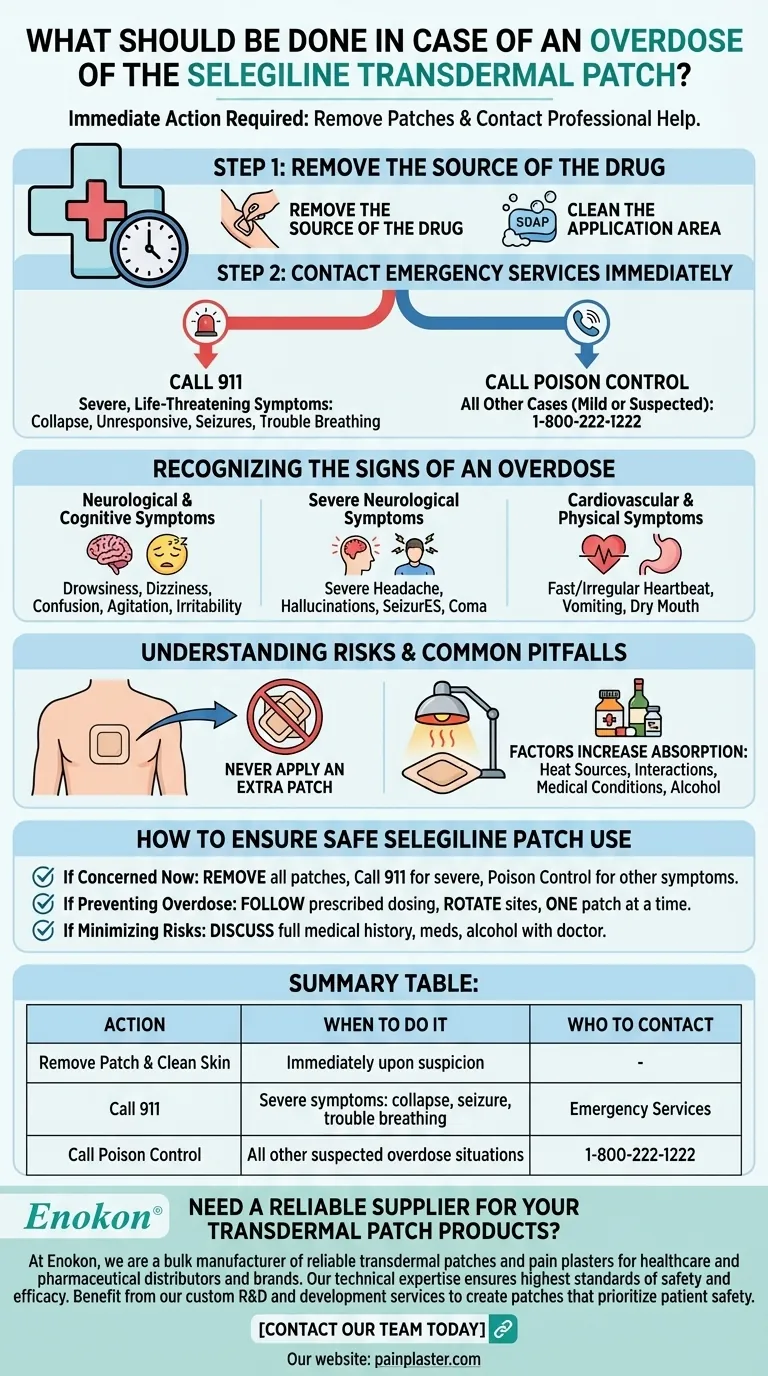
In the event of a suspected selegiline transdermal patch overdose, your first and most critical action is to seek immediate medical help. Remove any patches from the skin at once and contact a poison control center or emergency services. The specific symptoms exhibited by the individual will determine whether you should call 911 or the poison control hotline.
A selegiline overdose is a medical emergency that requires an immediate two-step response: remove any patches from the skin and contact professional help. Call 911 for severe symptoms like collapse or seizures, or call Poison Control for guidance in all other situations.

Immediate Steps to Take During an Overdose
Time is critical in a potential overdose situation. Follow these steps methodically to ensure the person's safety while waiting for professional medical assistance.
Step 1: Remove the Source of the Drug
The first thing you must do is stop any further absorption of the medication into the body.
Carefully remove all selegiline patches from the person's skin.
After removal, gently clean the application area with soap and warm water to wash away any residual medication.
Step 2: Contact Emergency Services Immediately
Once the patches are removed, you must contact professionals. The severity of the symptoms dictates who to call first.
Call 911 for Severe, Life-Threatening Symptoms
If the individual has collapsed, is unresponsive, or cannot be awakened, call 911 immediately.
Other critical signs that require emergency services include having a seizure or experiencing trouble breathing.
Call Poison Control for All Other Cases
For any other suspected overdose situation, even if symptoms seem mild, call the national poison control helpline at 1-800-222-1222.
These experts can provide immediate, specific instructions for your situation while you await further medical care.
Recognizing the Signs of an Overdose
Symptoms can range from moderate to severe. Being able to identify them can help you communicate effectively with emergency responders.
Neurological and Cognitive Symptoms
An overdose often impacts the central nervous system first.
Look for signs like drowsiness, dizziness, confusion, agitation, and irritability.
Severe Neurological Symptoms
More dangerous signs indicate a significant medical event is occurring.
These include severe headache, hallucinations, seizures, and in extreme cases, coma.
Cardiovascular and Physical Symptoms
The body will also show physical signs of distress.
Be aware of a fast or irregular heartbeat, vomiting, and dry mouth.
Understanding the Risks and Common Pitfalls
Selegiline is a potent medication, and understanding why an overdose is dangerous is key to preventing one. Misuse, even if accidental, can lead to serious complications.
The Danger of Applying Extra Patches
Never apply an extra patch to make up for a missed dose.
This action directly introduces too much medication into your system and is a common cause of accidental overdose. If you miss a dose, simply apply a new patch and resume your normal 24-hour schedule.
Factors That Increase Absorption and Risk
External heat sources, such as heating pads or excessive sun exposure, on the patch area can increase the rate at which the drug is absorbed, elevating overdose risk.
Interactions with other medications, pre-existing medical conditions like heart disease, and alcohol consumption can also complicate treatment and increase risk. It is vital to discuss your full medical history with your doctor.
How to Ensure Safe Selegiline Patch Use
Proactive knowledge is the most effective tool for safety. Use this guide to inform your actions.
- If you are concerned about a potential overdose right now: Remove all patches from the skin and immediately call 911 for severe symptoms (collapse, seizure, trouble breathing) or Poison Control (1-800-222-1222) for all other guidance.
- If your primary focus is preventing an overdose: Always follow the prescribed dosing schedule, rotate application sites as directed, and never apply more than one patch at a time.
- If you want to minimize underlying risk factors: Have a transparent conversation with your doctor about all other medications you take, any medical conditions you have, and your alcohol consumption.
Following the correct medical protocol is the key to using this medication safely and effectively.
Summary Table:
| Action | When to Do It | Who to Contact |
|---|---|---|
| Remove Patch & Clean Skin | Immediately upon suspicion of overdose. | - |
| Call 911 | For severe symptoms: collapse, seizure, trouble breathing. | Emergency Services |
| Call Poison Control | For all other suspected overdose situations, even mild symptoms. | 1-800-222-1222 |
Need a reliable supplier for your transdermal patch products?
At Enokon, we are a bulk manufacturer of reliable transdermal patches and pain plasters for healthcare and pharmaceutical distributors and brands. Our technical expertise ensures every product is developed with the highest standards of safety and efficacy in mind.
Benefit from our custom R&D and development services to create patches that prioritize patient safety.
Contact our team today to discuss your manufacturing needs and how we can support your brand with quality transdermal solutions.
Visual Guide
Related Products
- Silicone Scar Sheets Patch Transdermal Drug Patch
- Far Infrared Heat Pain Relief Patches Transdermal Patches
- Menthol Gel Pain Relief Patch
- Icy Hot Menthol Medicine Pain Relief Patch
- Mugwort Wormwood Pain Relief Patch for Neck Pain
People Also Ask
- What role does a silicone-based transdermal delivery system play in Parkinson's? Enhancing Early-Stage Patient Care
- How is the long-term skin tolerance of silicone-based transdermal patches evaluated in clinical settings? R&D and Safety
- Why is a polarizing microscope used to evaluate the long-term stability of transdermal drug patches? Ensure Efficacy.
- What are common adverse effects of transdermal drug delivery? Risks & Prevention Tips
- What are the advantages of transdermal drug patches? Optimize Medication Delivery with Patches











