
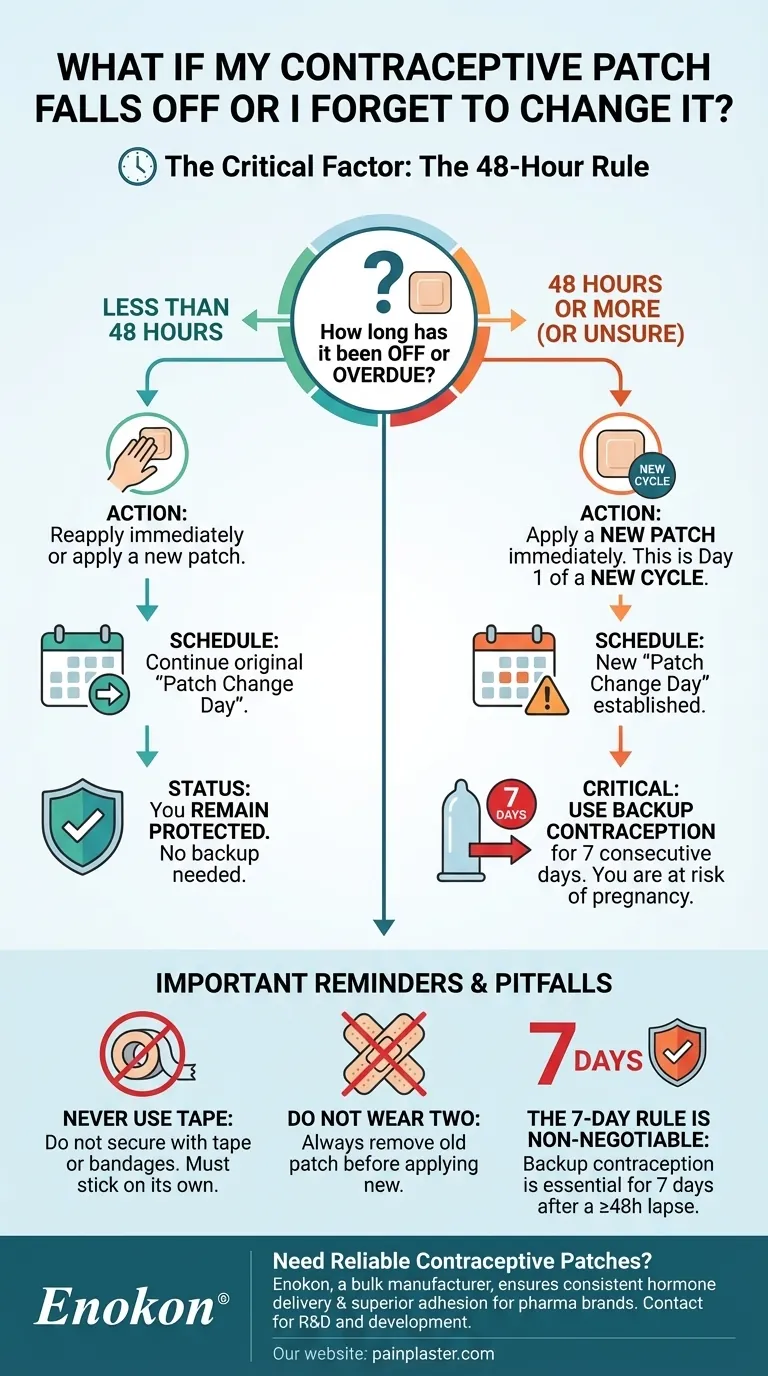
If your contraceptive patch falls off or you forget to change it, your immediate action depends on how long it has been detached or overdue. If the lapse is less than 48 hours, you can typically replace the patch and remain protected. If it has been 48 hours or more, you must apply a new patch and use a backup method of contraception for the next seven days to ensure you are protected against pregnancy.
The critical factor is time. A lapse of less than 48 hours is generally manageable without compromising effectiveness, but exceeding that window requires immediate action and seven days of backup contraception to re-establish protection.

The Core Principle: Maintaining Hormonal Stability
The contraceptive patch works by consistently releasing hormones into your bloodstream. This steady stream prevents ovulation and thickens cervical mucus, effectively preventing pregnancy.
Why Time is the Critical Factor
When the patch falls off or a change is delayed, this hormonal level can drop. A brief interruption of less than 48 hours is usually not enough to allow your body to begin the process of ovulation.
However, once you pass the 48-hour mark, the risk that your natural hormonal cycle could restart increases significantly. This is why a more cautious approach, including backup contraception, is required.
Protocol 1: The Patch Has Fallen Off or Become Loose
If you notice your patch is detached, assess the situation immediately. The adhesive is crucial, and its integrity determines the next step.
If It's Been OFF for LESS Than 48 Hours
First, try to reapply the patch if it is still sticky. Press down firmly for 10-15 seconds. If it does not stick securely, or if it has folded onto itself, discard it and apply a new patch immediately.
You do not need to use backup contraception. Continue to follow your original schedule and change your patch on your normal "patch change day."
If It's Been OFF for MORE Than 48 Hours (or you are unsure)
You are at risk of pregnancy. Apply a new patch as soon as you realize the issue.
This day now becomes Day 1 of a new cycle. You will have a new "patch change day" based on the day you applied this new patch.
Crucially, you must use a backup, non-hormonal form of contraception (like condoms) for the next seven consecutive days to ensure you are fully protected.
Protocol 2: You Forgot to Change Your Patch
Forgetting to change your patch follows the same 48-hour rule. The key is to act as soon as you remember.
If You Are LESS Than 48 Hours Late
Simply remove the old patch and apply a new one as soon as you remember.
Your protection is not compromised. Continue with your original schedule, and your "patch change day" remains the same. No backup contraception is needed.
If You Are MORE Than 48 Hours Late
You may not be protected against pregnancy. Apply a new patch immediately. This marks the beginning of a new 4-week patch cycle, and this day is your new "patch change day."
You must use a backup method of birth control, such as condoms, for the first seven days after applying the new patch.
Common Pitfalls and Critical Reminders
Navigating this can be stressful, but avoiding these common mistakes will ensure you remain protected.
Never Use Tape or Bandages
Do not attempt to secure a non-sticky patch with medical tape, bandages, or any other adhesive. This can interfere with hormone delivery and render the patch ineffective. If it won't stick on its own, it must be replaced.
Do Not Wear Two Patches
If you apply a new patch, always remove the old one first. Wearing two patches at once delivers an incorrect dose of hormones and increases the risk of side effects.
The 7-Day Backup Rule is Non-Negotiable
If you have a lapse of 48 hours or more, the seven-day backup contraception rule is essential. It takes this long for the patch's hormones to consistently suppress ovulation and restore your full contraceptive protection.
Consider Emergency Contraception
If you had unprotected sex during the time your patch was off or overdue for more than 48 hours, contact your healthcare provider to discuss if emergency contraception is necessary.
Making the Right Choice for Your Situation
Your response should always be guided by the 48-hour window.
- If your patch has been off or late for less than two days: Replace the patch immediately and stick to your original change schedule. You are still protected.
- If your patch has been off or late for more than two days: Apply a new patch immediately, which starts a new cycle, and use backup contraception for seven full days.
- If you had unprotected sex after the 48-hour window: Contact your doctor or pharmacist to discuss if you need emergency contraception.
When in doubt, always apply a new patch, use backup contraception for seven days, and consult the patient information leaflet for your specific brand or speak with a healthcare provider.
Summary Table:
| Situation | Action | Backup Contraception Needed? |
|---|---|---|
| Patch off/Late < 48 hours | Apply new patch immediately. Keep original change day. | No |
| Patch off/Late ≥ 48 hours | Apply new patch immediately. This starts a new cycle. | Yes, for 7 days |
Need reliable, adhesive-strong contraceptive patches for your patients? As Enokon, a bulk manufacturer of reliable transdermal patches for healthcare and pharma brands, we ensure consistent hormone delivery and superior adhesion. Benefit from our technical expertise for custom R&D and development to create patches that minimize user error and maximize protection. Contact our experts today to discuss your manufacturing needs.
Visual Guide
Related Products
- Heating Pain Relief Patches for Menstrual Cramps
- Prostate Pain Kidney Health Care Patch for Men
- Silicone Scar Sheets Patch Transdermal Drug Patch
- Lidocaine Hydrogel Pain Relief Patch for Pain Relief
- Menthol Gel Pain Relief Patch
People Also Ask
- What are the benefits of Period Pain Heat Patches? Drug-Free, On-the-Go Relief
- What are the key benefits of heating patches for elderly individuals? Relieve Pain & Improve Mobility
- What are the key differences between conventional heat patches and deep heat devices? Choosing the Right Pain Relief Solution
- What are the different types of heat patches? Find the Right Pain Relief for Your Needs
- What percentage of people with back pain use heat patches for relief? Discover the Popular Choice for Pain Management












