
If you've missed a dose of your oxybutynin patch, the immediate action is straightforward: apply a new patch as soon as you remember. It is critical to first remove the old patch if it is still on your skin. Never apply two patches at the same time to make up for the missed dose, as this can lead to an overdose.
The primary goal is to re-establish your regular medication schedule as safely as possible. This means applying the patch when you remember, unless doing so would place it too close to your next scheduled dose, in which case it is safer to skip the missed dose entirely.
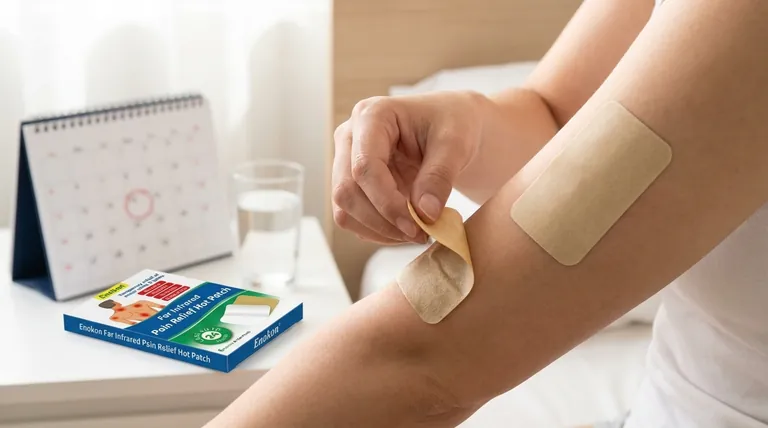
The Core Principle: Resuming Your Schedule Safely
When you forget to change your patch, the objective is to get the medication level in your system back to a stable, therapeutic state without causing a spike from too much medicine at once.
Action 1: Apply the Missed Patch Immediately
As soon as you realize you've forgotten, apply a new patch. This helps minimize the time your body is without the intended dose of medication, which can prevent the return of symptoms.
Action 2: Remove the Old Patch First
This is a non-negotiable step. The most significant risk comes from wearing more than one patch at a time. Always ensure the previous patch is removed before applying a new one.
Action 3: Maintain Your Original Schedule
Applying a patch late does not reset your entire schedule. If you normally change your patch on Mondays and Thursdays, and you forget Monday's patch until Tuesday, you should still change that patch again on your regularly scheduled Thursday.
The Critical Exception: When to Skip the Dose
The "apply as soon as you remember" rule has one major exception that prevents you from getting too much medication.
What "Almost Time" Means
If you remember your missed dose when it is nearly time for your next scheduled dose anyway, you should skip the one you missed. For example, if you change your patch every four days and you remember three days late, it's better to wait until the next day and apply the next patch on schedule.
Why You Should Skip the Dose
Applying a patch very close to the next scheduled one can create an overlap, delivering a higher-than-intended dose. Skipping the missed dose is the safer option to avoid potential side effects.
How to Proceed
Simply wait for your next scheduled application time. Apply the new patch as you normally would and continue with your regular routine from that point forward. Do not apply an extra patch to compensate.
Common Scenarios and Pitfalls
Understanding the "why" behind these rules helps you handle related situations correctly and avoid common mistakes.
The Risk of Doubling Doses
Applying two patches at once can significantly increase the amount of oxybutynin absorbed into your bloodstream. This can intensify side effects like dry mouth, dizziness, drowsiness, blurred vision, and constipation.
What if a Patch Falls Off?
If your patch falls off before its scheduled removal time, simply apply a new one to a different area of skin. However, you should still remove this new patch on your original schedule day to keep your routine consistent.
The Consequence of a Missed Dose
Forgetting a dose may lead to a temporary return of the symptoms the medication is meant to treat, such as urinary urgency or frequency. This is why it is important to get back on your schedule as soon as it is safe to do so.
Making the Right Choice for Your Situation
Follow these simple rules to manage a missed dose based on when you remember.
- If you remembered within a day or so of the missed dose: Apply a new patch immediately after removing the old one, and stick to your original replacement schedule.
- If it is almost time for your next scheduled patch: Do not apply a late patch. Skip the missed dose and simply apply your next patch at the correct time.
- If your patch accidentally falls off: Apply a new patch right away, but make sure to remove it and apply the next one on your originally scheduled day.
Following this protocol ensures you can safely and effectively manage your treatment without unnecessary disruption.
Summary Table:
| Scenario | Action to Take | Key Rule |
|---|---|---|
| Remember within a day or so | Apply a new patch immediately. Remove the old one first. | Maintain your original schedule. |
| Almost time for next dose | Skip the missed dose. Wait for your next scheduled application. | Avoid applying two patches close together. |
| Patch falls off early | Apply a new patch to a different skin area. | Remove this new patch on your original schedule day. |
Ensure consistent, reliable delivery of your transdermal medications.
As a trusted bulk manufacturer of transdermal patches, Enokon understands that consistent, high-quality product performance is critical for patient safety and treatment efficacy. Our technical expertise in custom R&D and development ensures your patches deliver the intended dose reliably.
If you are a healthcare or pharma distributor or brand looking for a reliable manufacturing partner for transdermal patches or pain plasters, contact our experts today to discuss your project requirements and benefit from our proven solutions.
Visual Guide

Related Products
- Menthol Gel Pain Relief Patch
- Lidocaine Hydrogel Pain Relief Patch for Pain Relief
- Icy Hot Menthol Medicine Pain Relief Patch
- Herbal Medicated Anti Diarrhea Patch for Digestive Relief
- Asthma Cough and Pain Relief Patch for Adults and Kids
People Also Ask
- How do pain relief patches compare to other pain relief methods? Discover Targeted, Long-Lasting Relief
- How effective are pain relief patches for muscle pain? Target Localized Pain with Transdermal Delivery
- Who should consult a healthcare professional before using pain relief patches? Ensure Your Safety with Medical Advice
- What are some common applications of pain relief patches? Effective Relief for Muscle & Joint Pain
- What are pain relief patches and how do they work? Discover Non-Invasive Pain Management



















