
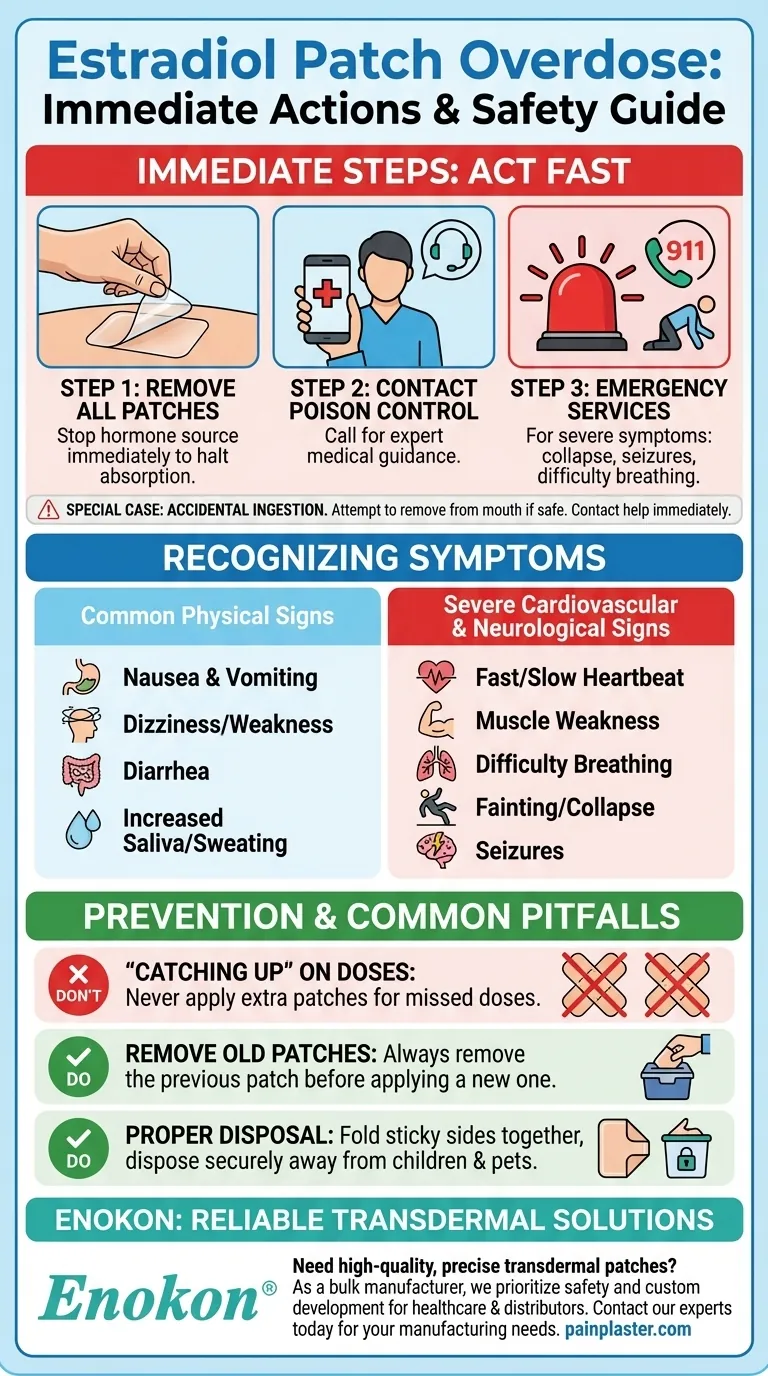
In case of a suspected estradiol patch overdose, your immediate action is to remove all patches from the skin and contact a poison control center right away. For severe symptoms like collapse, seizures, or difficulty breathing, call emergency services immediately.
The primary risk of an estradiol patch overdose stems from the continuous absorption of the hormone through the skin. Your first priority is to stop this absorption by removing the patch, and your second is to contact medical professionals to assess the situation and manage any symptoms.

Immediate Steps in a Suspected Overdose
A swift, methodical response is critical. Do not wait for symptoms to worsen before acting. Follow these steps precisely.
Step 1: Remove All Patches
The first and most important action is to stop the source of the hormone. Carefully peel off any and all estradiol patches currently on the skin. This immediately halts any further absorption of the drug into the bloodstream.
Step 2: Contact a Poison Control Center
Once the patches are removed, call your local poison control center. They are medical experts trained to handle overdose situations and will provide specific instructions based on the details you provide.
Step 3: Call Emergency Services for Severe Symptoms
If the person has collapsed, is having a seizure, has trouble breathing, or cannot be awakened, call 911 or your local emergency number immediately. These are signs of a serious medical emergency requiring urgent intervention.
A Special Case: Accidental Ingestion
If a patch was chewed or swallowed, attempt to remove it from the mouth if it is safe to do so. Whether you can remove it or not, contact poison control or emergency services immediately, as absorption through mucous membranes can be rapid.
Recognizing the Symptoms of Overdose
An overdose occurs when the level of estrogen in your body becomes too high, leading to a range of potential symptoms. Being able to recognize them is key to a fast response.
Common Physical Symptoms
Early or milder signs of an overdose can often mimic feelings of sickness. These may include:
- Nausea and vomiting
- Dizziness or weakness
- Diarrhea
- Increased saliva or sweating
Serious Cardiovascular and Neurological Signs
More severe symptoms indicate a more significant overdose that requires immediate emergency medical attention. These signs include:
- A very fast or slow heartbeat
- Muscle weakness
- Difficulty breathing
- Fainting or collapse
- Seizures
Common Pitfalls to Avoid
Accidental overdose is often preventable. Understanding the common mistakes can help ensure safe and effective use of estradiol patches.
The Risk of "Catching Up" on Doses
Never apply extra patches to make up for a missed dose. This is a primary cause of accidental overdose. If you forget to apply a patch on schedule, simply apply one as soon as you remember and then return to your original, regular schedule.
Forgetting to Remove Old Patches
It is crucial to remove the old patch before applying a new one. Leaving a previous patch on while applying a new one effectively doubles the dose and can easily lead to overdose symptoms over time.
Improper Disposal and Accidental Exposure
Used patches still contain a significant amount of the hormone. Fold the used patch in half with the sticky sides together and dispose of it where children or pets cannot access it. Accidental exposure to others is a serious risk.
Making the Right Choice for Your Safety
Your protocol for using, storing, and responding to issues with estradiol patches should prioritize safety above all else.
- If you suspect any level of overdose: Immediately remove all patches and call your local poison control center for guidance.
- If you have missed a dose: Apply a single patch as soon as you remember and then continue with your normal application schedule, never doubling up.
- To prevent future issues: Create a consistent routine that includes checking for and removing the old patch before applying the new one in a different location.
Proactive management and immediate action are the keys to using estradiol patches safely and effectively.
Summary Table:
| Action | Key Step | Why It's Important |
|---|---|---|
| Step 1 | Remove all patches from the skin. | Stops further absorption of the hormone into the bloodstream. |
| Step 2 | Contact a poison control center. | Get expert medical advice specific to the situation. |
| Step 3 | Call emergency services for severe symptoms (e.g., collapse, seizure). | Ensures immediate, life-saving medical intervention. |
Need a reliable, high-quality supply of transdermal patches? As Enokon, a bulk manufacturer of reliable transdermal patches and pain plasters for healthcare and pharmaceutical distributors and brands, we prioritize safety and precision in every product. Benefit from our technical expertise for custom R&D and development to ensure your therapies are delivered effectively and securely. Contact our experts today to discuss your manufacturing needs.
Visual Guide
Related Products
- Menthol Gel Pain Relief Patch
- Icy Hot Menthol Medicine Pain Relief Patch
- Mugwort Wormwood Pain Relief Patch for Neck Pain
- Herbal Medicated Anti Diarrhea Patch for Digestive Relief
- Lidocaine Hydrogel Pain Relief Patch for Pain Relief
People Also Ask
- How do pain relief patches compare to other pain relief methods? Discover Targeted, Long-Lasting Relief
- How effective are pain relief patches for muscle pain? Target Localized Pain with Transdermal Delivery
- Who should consult a healthcare professional before using pain relief patches? Ensure Your Safety with Medical Advice
- What are some common applications of pain relief patches? Effective Relief for Muscle & Joint Pain
- What are pain relief patches and how do they work? Discover Non-Invasive Pain Management



















