
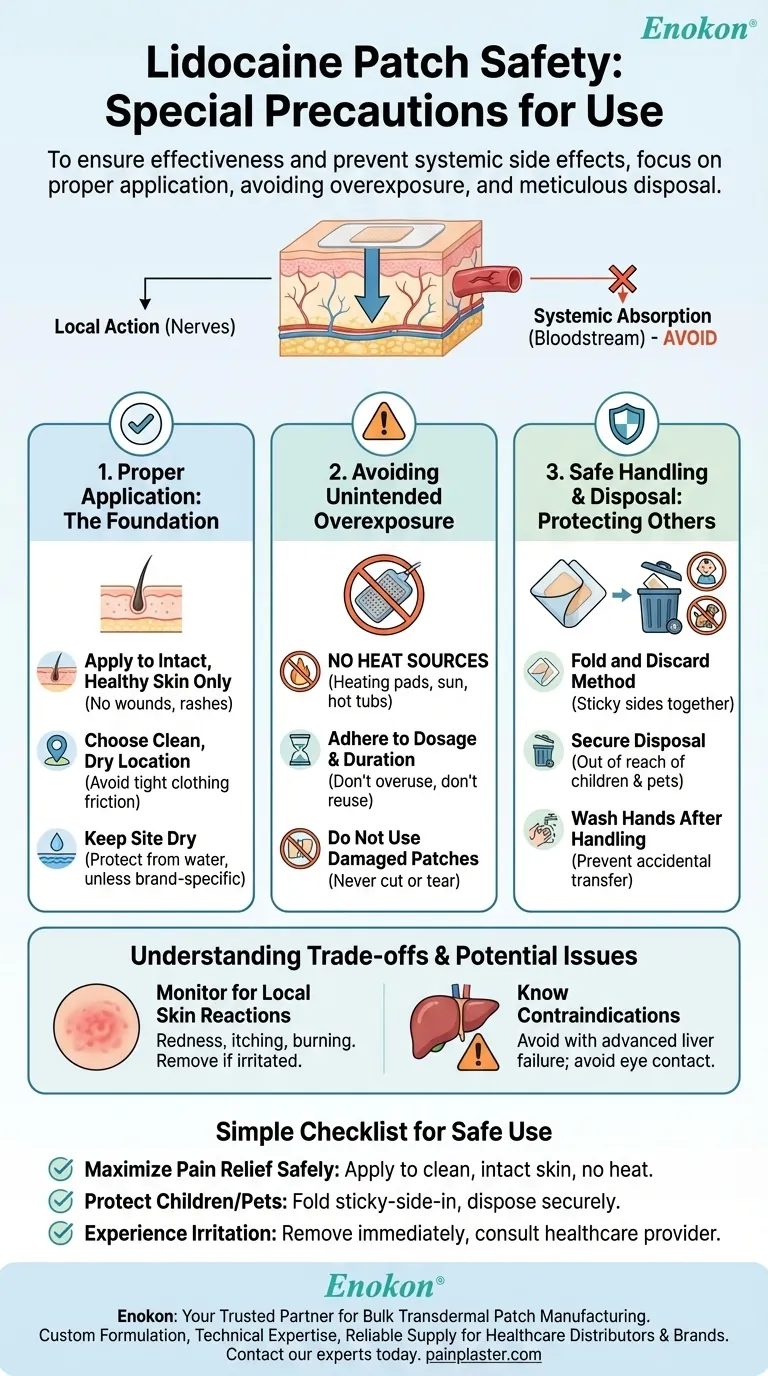
To use a lidocaine patch safely and effectively, you must focus on three critical areas: proper application to intact skin, avoiding factors that increase absorption like heat, and meticulous disposal to prevent accidental exposure. These precautions are designed to keep the medication localized to the treatment area and prevent it from entering your bloodstream in high concentrations, which could cause systemic side effects.
The core principle of lidocaine patch safety is ensuring the medication acts locally on your skin's nerves, not systemically throughout your body. Every precaution, from application to disposal, is designed to control the rate of absorption and prevent accidental contact by others.
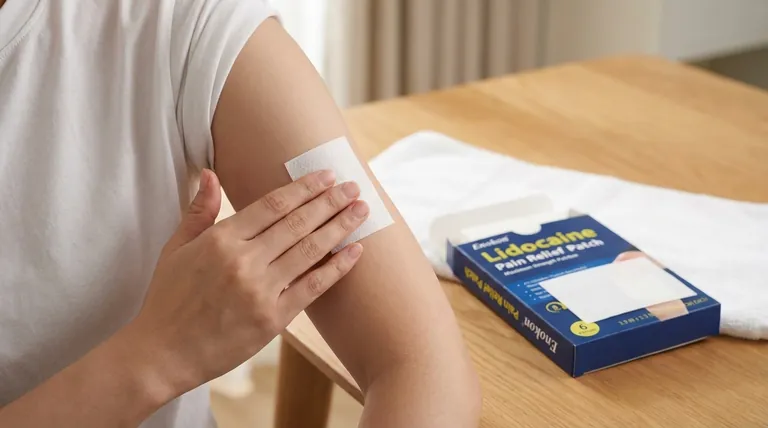
Proper Application: The Foundation of Safety
Correct application is the first and most important step in using a lidocaine patch safely. The goal is to create a stable, controlled environment for the medication to be delivered as intended.
Apply Only to Intact, Healthy Skin
A lidocaine patch must only be applied to skin that is completely intact and healthy. Do not apply it over open wounds, burns, rashes, irritated skin, or any area with a break in the skin's surface.
A compromised skin barrier can cause the lidocaine to be absorbed much more rapidly and unpredictably into your bloodstream, increasing the risk of adverse effects.
Choose the Right Location
Apply the patch to a clean, dry area of skin. Avoid locations where it might be rubbed excessively by tight clothing, as this friction can irritate the skin or dislodge the patch.
Keep the Application Site Dry
Most lidocaine patches should be kept dry and protected from water. Submerging them in water can interfere with adhesion and drug delivery.
Note that some specific brands, like Ztlido, are designed to tolerate limited exposure to water, but this is the exception, not the rule.
Avoiding Unintended Overexposure
Once the patch is applied, the next priority is to prevent anything that might accelerate the absorption of the medication beyond the intended therapeutic dose.
Do Not Apply Heat
This is a critical safety rule. Never apply a heat source over a lidocaine patch. This includes heating pads, electric blankets, hot tubs, or even prolonged, direct sunlight.
Heat increases blood flow to the skin, which dramatically speeds up the absorption of lidocaine into your system. This can lead to toxic levels of the drug in your body.
Adhere to Dosage and Duration
Use only the number of patches prescribed by your healthcare provider for the specified amount of time. Do not use more patches than directed, and do not wear a patch for longer than recommended. You should also never reuse an old patch.
Do Not Use Damaged Patches
Never cut or use a patch that has been damaged or torn. A compromised patch can alter the rate at which the medication is released, leading to inconsistent or unsafe dosing.
Safe Handling and Disposal: Protecting Others
A used lidocaine patch still contains a significant amount of active medication, posing a serious risk to children and pets if ingested or handled improperly.
The Critical Importance of Disposal
Accidental exposure is one of the biggest risks associated with topical patches. Children and pets can be attracted to used patches in the trash, and ingestion can be extremely dangerous or even fatal.
The "Fold and Discard" Method
Immediately after removing a patch, fold it in half so the sticky, medicated sides press together. This seals the remaining medication inside.
Place the folded patch back in its original pouch if possible, and then dispose of it in a trash can that is securely out of the reach of any children or pets.
Wash Your Hands After Handling
Always wash your hands thoroughly with soap and water after applying, removing, or otherwise handling a lidocaine patch. This prevents you from accidentally transferring the medication to your eyes, mouth, or other sensitive areas.
Understanding the Trade-offs and Potential Issues
While generally safe when used correctly, it's important to be aware of potential side effects and situations where the patch may not be appropriate.
Monitor for Local Skin Reactions
The most common side effects are mild and occur at the application site. These can include redness, itching, a rash, or a burning sensation. If you experience irritation, remove the patch and do not reapply one to that area until the irritation has fully resolved.
Know the Contraindications
Lidocaine is metabolized by the liver. Patients with advanced liver failure should not use the patch, as their body cannot clear the drug effectively, leading to a risk of toxic accumulation.
Avoid Contact with Eyes
Be extremely careful to avoid getting any of the medication from the patch into your eyes. If accidental contact occurs, rinse the eye immediately with plenty of water.
A Simple Checklist for Safe Lidocaine Patch Use
Follow these guidelines to ensure you are using your lidocaine patch both safely and for maximum benefit.
- If your primary focus is maximizing pain relief safely: Always apply the patch to clean, dry, and unbroken skin, and never use an external heat source over it.
- If you live with children or pets: Your top priority is secure storage and meticulous disposal—always fold used patches sticky-side-in before discarding them in a secure trash can.
- If you experience any skin irritation: Remove the patch immediately, clean the area, and consult your healthcare provider before reapplying a new one.
Following these direct precautions ensures you receive the intended local pain relief without unintended risks.
Summary Table:
| Precaution Category | Key Action | Why It's Important |
|---|---|---|
| Application | Apply only to intact, clean, dry skin. | Prevents rapid, uncontrolled absorption into the bloodstream. |
| During Use | Avoid heat sources (heating pads, sun). | Heat increases absorption, raising risk of systemic side effects. |
| Disposal | Fold patch sticky-side in; discard securely. | Protects children/pets from accidental ingestion of residual drug. |
Need a reliable, high-quality lidocaine patch?
As Enokon, a leading bulk manufacturer of transdermal patches, we specialize in producing safe and effective pain relief solutions. Our technical expertise ensures precise drug delivery and adherence to the highest safety standards.
We are the ideal partner for:
- Healthcare & Pharma Distributors seeking a trusted, large-volume supplier.
- Brands looking for custom R&D and development of private-label transdermal products.
Partner with us to benefit from:
- Custom Formulation: Tailor patches to specific release profiles and patient needs.
- Technical Expertise: Leverage our deep knowledge of transdermal technology for optimal product performance and safety.
- Reliable, Bulk Supply: Ensure consistent quality and availability for your market.
Contact our experts today to discuss your lidocaine patch or other transdermal product requirements.
Visual Guide
Related Products
- Lidocaine Hydrogel Pain Relief Patch for Pain Relief
- Capsaicin Chili Medicated Pain Relief Patches
- Menthol Gel Pain Relief Patch
- Icy Hot Menthol Medicine Pain Relief Patch
- Herbal Medicated Anti Diarrhea Patch for Digestive Relief
People Also Ask
- How does the aqueous base in a lidocaine patch contribute to drug delivery? Unlocking Sustained Pain Relief Technology
- What are the advantages of topical anesthetics over invasive Lidocaine infiltration? Discover Safer, Scalable Relief
- Which pain patch is most effective for arthritis? Find the Best Relief for Your Joint Pain
- Will a GP routinely continue prescribing lidocaine patches after the initial period? Understanding Short-Term Pain Relief
- Why are lidocaine patches preferred over oral medications? Targeted Relief & Scale Your Brand with OEM R&D Solutions



















