
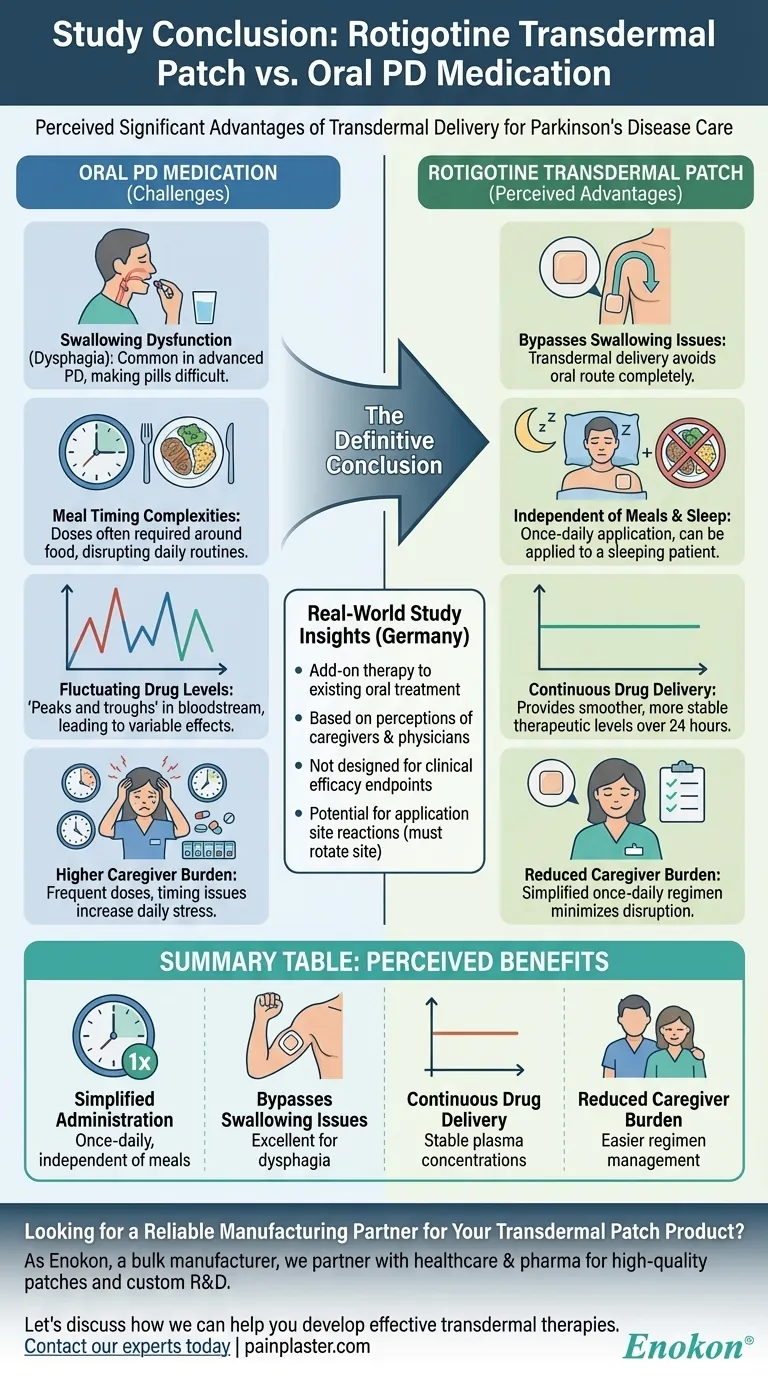
Based on the study, the definitive conclusion was that caregivers, nurses, and physicians perceived significant advantages with the rotigotine transdermal patch compared to oral Parkinson's Disease (PD) medication. These perceived benefits were noted not only in the context of medical treatment but also in practical, everyday caregiving situations.
The core insight is that the patch's advantage lies in its delivery system. The continuous, once-daily transdermal application simplifies care, bypasses common issues like swallowing difficulties, and provides a smoother dosing profile, which is perceived as a major benefit by both clinical staff and caregivers.
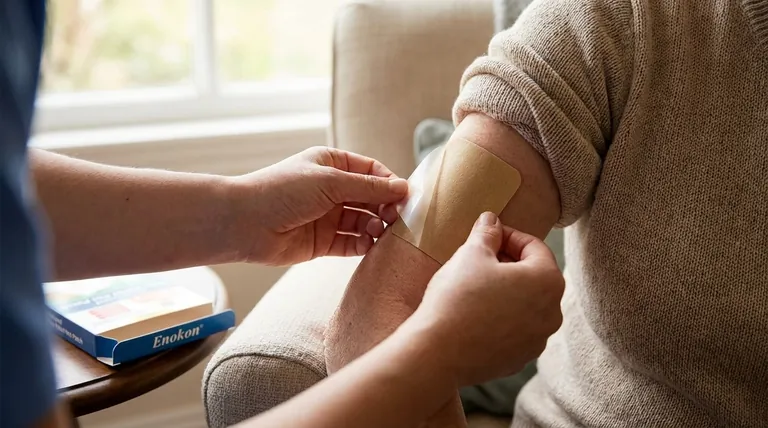
The Basis of the Study: Real-World Perceptions
Study Design and Context
The findings come from a cross-sectional, non-interventional study conducted in Germany. This design was chosen to capture "real-world" data from routine clinical practice, rather than a controlled experimental setting.
Patients included in the study had PD, a documented need for care, and had been using the rotigotine patch as an add-on to their oral PD treatment for at least one month.
How Perceptions Were Measured
Caregivers, nurses, and physicians completed questionnaires to assess their experiences. They rated various aspects of the transdermal patch on a 5-point scale, comparing it directly to the oral medications the patient was also taking. The scale ranged from -2 (major disadvantage) to +2 (major advantage).
Key Advantages Identified by Caregivers and Physicians
Bypassing Administration Challenges
A primary advantage noted was the patch's ability to circumvent issues common with oral medications. This is especially relevant for patients experiencing swallowing dysfunction (dysphagia), a frequent symptom in advanced PD.
The patch also offers application independently from meals, removing the complexity of timing doses around food, which is often required for oral PD drugs.
Simplifying the Caregiving Regimen
The convenience of a once-daily application was a significant perceived benefit. This reduces the daily burden on both the patient and the caregiver.
Furthermore, the ability to apply the patch to a sleeping patient was seen as a major practical advantage, minimizing disruption and ensuring treatment adherence without waking the individual.
The Power of Continuous Drug Delivery
Transdermal patches are designed to provide a smoother, more consistent delivery of medication over a 24-hour period. This contrasts with oral medications, which can create fluctuating "peaks and troughs" of the drug in the bloodstream.
This continuous delivery can lead to more stable therapeutic effects. While using a different drug (rivastigmine) as an example, studies have shown that a transdermal patch can provide comparable drug exposure in the brain over 24 hours to the maximum recommended oral dose, but in a more consistent manner.
Understanding the Clinical Context and Trade-offs
The Role as an Add-On Therapy
It is critical to note that this study evaluated the rotigotine patch as an add-on therapy. It was used in conjunction with existing oral treatments, not as a standalone replacement. The positive perceptions are based on this combined-therapy context.
A Study of Perception, Not Efficacy
The study's objective was to measure the perceptions of caregivers and physicians regarding advantages and disadvantages. It was not designed to measure hard clinical endpoints, such as changes in motor scores or other direct measures of drug efficacy.
Inherent Limitations of Transdermal Systems
While not specified as a disadvantage in this study's conclusion, all transdermal patches carry the potential for application site reactions, such as skin redness or irritation. This is a common trade-off that must be managed by rotating the application site.
How to Apply These Findings to Your Goal
For clinicians and caregivers, this study highlights specific scenarios where a transdermal patch may offer practical value.
- If your primary focus is reducing caregiver burden: The patch's simple, once-daily application that is independent of meals and can be done while the patient sleeps offers a clear operational advantage.
- If your primary focus is managing a patient with swallowing difficulties: The transdermal route is an excellent alternative that completely bypasses the challenges and risks associated with oral administration in patients with dysphagia.
- If your primary focus is mitigating motor fluctuations: The continuous drug delivery from a patch may help provide more stable plasma concentrations, which is a key strategy for managing "off" periods.
Ultimately, understanding these perceived benefits allows for a more tailored and patient-centric approach to managing complex Parkinson's Disease therapy.
Summary Table:
| Perceived Advantage | Description |
|---|---|
| Simplified Administration | Once-daily patch application, independent of meals. Can be applied to a sleeping patient. |
| Bypasses Swallowing Issues | Transdermal delivery avoids challenges of dysphagia, common in advanced PD. |
| Continuous Drug Delivery | Provides smoother, more stable medication levels over 24 hours compared to oral drugs. |
| Reduced Caregiver Burden | Easier regimen management was a significant benefit noted by caregivers and nurses. |
Looking for a reliable manufacturing partner for your transdermal patch product?
As Enokon, a bulk manufacturer of reliable transdermal patches and pain plasters, we partner with healthcare and pharma distributors and brands. Our technical expertise ensures high-quality production and supports custom R&D for innovative solutions like the one highlighted in this study.
Let's discuss how we can help you develop and manufacture effective transdermal therapies. Contact our experts today to explore the possibilities.
Visual Guide
Related Products
- Far Infrared Heat Pain Relief Patches Transdermal Patches
- Silicone Scar Sheets Patch Transdermal Drug Patch
- Icy Hot Menthol Medicine Pain Relief Patch
- Menthol Gel Pain Relief Patch
- Mugwort Wormwood Pain Relief Patch for Neck Pain
People Also Ask
- Why is the selection of matrix materials critical when developing customized transdermal patches? Optimize Efficacy
- What role does a skin tolerance scoring system play in the safety evaluation of transdermal patches? Key Safety Metrics
- What are the physical impacts of external heat exposure on the performance and safety of transdermal patches? - Guide
- What are the clinical advantages of local transdermal delivery systems? Unlock Safer, More Effective Pain Relief Solutions
- How does high-purity far-infrared ceramic powder contribute to the efficacy of far-infrared physical therapy patches?








