
Deciding when to stop using nonprescription capsaicin patches is a critical component of using them safely. You should discontinue use and consult a doctor if you experience severe burning, if your pain gets worse, if it improves but then returns, or if the pain lasts for more than seven days. These signals indicate the patch is either ineffective for your condition or causing an adverse reaction.
The core principle is that over-the-counter capsaicin patches are intended for temporary relief of minor pain. Any response that deviates from modest, steady improvement within one week—such as worsening pain or severe irritation—is a clear sign to stop use and seek a professional medical evaluation.
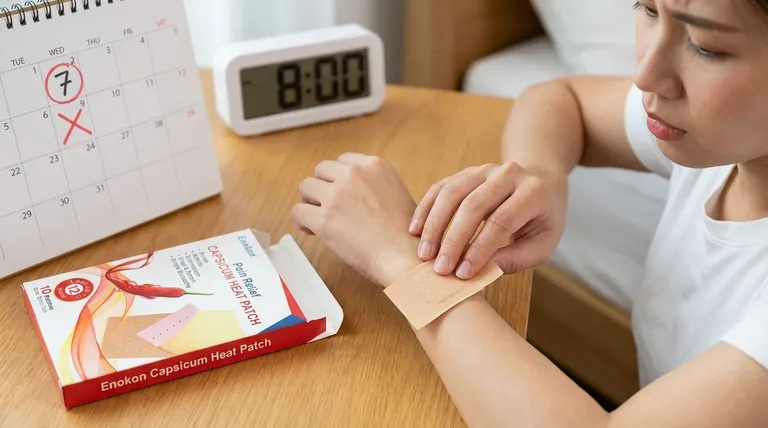
Understanding the Role of OTC Capsaicin
The Intended Purpose
Nonprescription capsaicin patches are designed to provide localized, temporary relief from minor aches and pains.
They are most commonly used for discomfort in muscles and joints stemming from conditions like arthritis, backaches, muscle strains, bruises, cramps, and sprains.
What to Expect During Use
When applied, capsaicin typically creates a warming or mild burning sensation. This is a normal part of how the active ingredient works.
However, it is crucial to distinguish this expected warmth from a severe or painful reaction.
Critical Signals to Discontinue Use
Pay close attention to your body’s response. The following are clear indicators that you should remove the patch and contact your doctor.
Severe Burning Occurs
While mild warmth is normal, a burning sensation that feels severe, painful, or intolerable is not. This is a sign of excessive skin irritation or an adverse reaction.
Your Pain Worsens
The purpose of the patch is to alleviate pain. If the pain in the treated area intensifies after application, the product is not working as intended and may be aggravating the condition.
Pain Improves, Then Worsens
A pattern where your pain gets better for a short time but then returns, often worse than before, suggests the patch may be masking a more significant underlying issue that requires diagnosis.
Pain Persists for More Than 7 Days
Over-the-counter capsaicin patches are for short-term use only. If your pain has not resolved after a full week of use, it is time to seek a medical diagnosis to identify the root cause.
Best Practices for Safe Application
Proper use is essential for both effectiveness and safety. Always follow the specific directions on the product packaging.
Prepare the Skin Correctly
Apply the patch only to a clean, dry, and hairless area of skin.
Crucially, do not apply capsaicin patches to skin that is broken, damaged, cut, infected, or covered with a rash.
Adhere to Time and Frequency Limits
The standard guidance for nonprescription 0.025% patches is to apply one up to three or four times daily.
Never leave a single patch on for more than eight hours per application. Do not wrap or apply a tight bandage over the patch, as this can increase irritation.
Practice Post-Application Hygiene
Immediately after applying or removing a patch, wash your hands thoroughly with soap and water. Avoid touching your eyes, mouth, or other sensitive areas until your hands are clean.
Understanding the Limitations
Symptom Relief, Not a Cure
It is important to remember that these patches manage the symptom of pain; they do not cure the underlying condition causing it.
The Risk of Skin Irritation
The primary risk associated with capsaicin is skin irritation. Following application guidelines, especially avoiding broken skin and adhering to time limits, is the best way to minimize this risk.
The 7-Day Safety Boundary
The one-week usage limit is a critical safety guideline. Continued pain signifies that the problem is beyond the scope of self-treatment and requires a professional evaluation.
Making the Right Choice for Your Pain
Use these guidelines to determine your next steps.
- If your primary focus is treating new, minor pain: Use the patch exactly as directed for up to 7 days while monitoring the area for negative reactions.
- If your primary focus is addressing pain that isn't improving: Discontinue use after one week and schedule an appointment with your healthcare provider.
- If your primary focus is responding to a bad reaction: Remove the patch immediately if you experience severe burning or worsening pain, wash the skin, and call your doctor.
Listening to your body's signals is the most reliable way to use capsaicin patches safely and determine when it's time to seek professional medical advice.
Summary Table:
| Signal to Stop | Action to Take |
|---|---|
| Severe, painful burning | Remove patch immediately and consult a doctor. |
| Pain worsens after application | Discontinue use; the patch may be ineffective. |
| Pain improves but then returns | Stop use; may indicate an underlying issue. |
| No relief after 7 days of use | Seek medical diagnosis for persistent pain. |
Need a reliable, high-quality capsaicin patch?
As Enokon, a bulk manufacturer of reliable transdermal patches and pain plasters, we provide healthcare and pharma distributors and brands with consistent, effective products. Benefit from our technical expertise for custom R&D and development to create the perfect pain relief solution for your market.
Contact our experts today to discuss your needs.
Visual Guide

Related Products
- Capsaicin Chili Medicated Pain Relief Patches
- Heat Relief Capsicum Patch for Lower Back Pain Relief
- Menthol Gel Pain Relief Patch
- Icy Hot Menthol Medicine Pain Relief Patch
- Lidocaine Hydrogel Pain Relief Patch for Pain Relief
People Also Ask
- What conditions should be reported to a care team before using capsaicin patches? Ensure Safe Pain Relief
- What conditions can capsaicin creams and patches help relieve? Find Targeted Pain Relief for Nerves & Joints
- What are the uses of nonprescription capsaicin patches? Natural Pain Relief for Muscles & Joints
- What should be avoided while using capsaicin patches? Essential Safety Tips for Effective Pain Relief
- How are capsaicin patches administered? A Guide to Clinical vs. At-Home Use



















