
In short, you should contact a doctor immediately for any signs of a severe allergic reaction or overdose, such as dizziness, irregular heartbeat, or difficulty breathing. You should also consult your doctor before use if you are pregnant, breastfeeding, or have liver conditions, and during use if your symptoms worsen or do not improve.
While lidocaine patches are applied to the skin for local pain, the medication can be absorbed into your bloodstream. Therefore, communication with your doctor before and during use is essential to prevent systemic side effects and ensure safe, effective treatment.

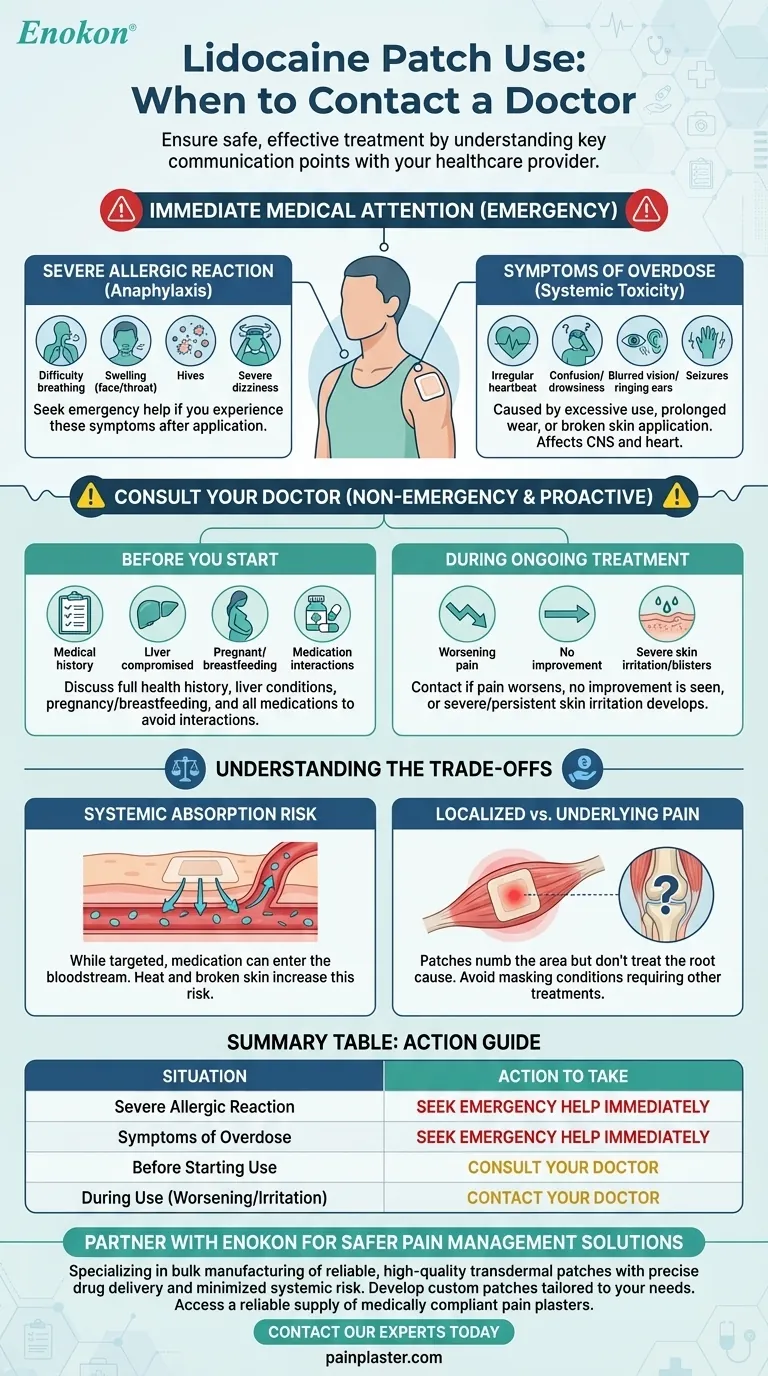
When to Seek Immediate Medical Attention
Certain situations are medical emergencies and require immediate intervention. Do not wait to see if symptoms improve.
Signs of a Severe Allergic Reaction
Although rare, a serious allergic reaction (anaphylaxis) is possible.
Seek emergency help if you experience hives, severe dizziness, swelling of the face, lips, tongue, or throat, or have difficulty breathing after applying a patch.
Symptoms of Overdose (Systemic Toxicity)
Using too many patches, wearing them for too long, or applying them to broken skin can cause a dangerous amount of lidocaine to enter your bloodstream.
Symptoms of an overdose affect the central nervous system and heart. These include drowsiness, confusion, blurred vision, ringing in the ears, a slow or irregular heartbeat, or seizures.
When to Consult Your Doctor (Non-Emergency)
Proactive and ongoing communication with your healthcare provider is key to using lidocaine patches safely.
Before You Start Using the Patch
Your doctor needs a complete picture of your health to determine if this treatment is right for you.
Always discuss your full medical history, including any liver conditions, as a compromised liver may struggle to process the medication, increasing your risk of side effects.
Be sure to review all other medications you are taking, both prescription and over-the-counter, to avoid potential interactions.
You must inform your doctor if you are pregnant, planning to become pregnant, or breastfeeding, as the effects of lidocaine in these situations are not well-established.
During Ongoing Treatment
Contact your doctor if the pain in the application area worsens or if you see no improvement after starting treatment.
You should also consult your provider if you develop severe or persistent skin irritation, redness, or blisters at the patch site.
Understanding the Trade-offs
The primary benefit of a lidocaine patch is targeted pain relief with a lower risk of systemic side effects compared to oral medications. However, this risk is not zero.
The Risk of Systemic Absorption
The core trade-off is convenience versus the potential for the drug to enter your bloodstream. Factors like applying heat over the patch or using it on damaged skin significantly increase absorption and the risk of toxicity.
Localized vs. Underlying Pain
Lidocaine patches numb the area they cover but do not treat the underlying cause of the pain. Relying on them without a proper diagnosis can mask a condition that requires different medical treatment.
Making the Right Choice for Your Health
Your approach to using lidocaine patches should be guided by your health profile and a clear dialogue with your provider.
- If you are considering starting lidocaine patches: Your first step is a thorough discussion with your doctor about your complete health history and all current medications.
- If you are currently using lidocaine patches: Be vigilant for any severe reactions, and immediately report any worsening pain or persistent skin irritation to your provider.
- If you fall into a high-risk category (e.g., you have liver disease or are pregnant): Do not use lidocaine patches without explicit approval and guidance from your healthcare professional.
Ultimately, treating your lidocaine patch as the potent medication it is ensures you manage pain safely and effectively.
Summary Table:
| Situation | Action to Take |
|---|---|
| Severe Allergic Reaction (e.g., difficulty breathing, swelling) | Seek Emergency Help Immediately |
| Symptoms of Overdose (e.g., dizziness, irregular heartbeat, seizures) | Seek Emergency Help Immediately |
| Before Starting Use (e.g., liver condition, pregnancy, other medications) | Consult Your Doctor |
| During Use (e.g., worsening pain, no improvement, severe skin irritation) | Contact Your Doctor |
Ensure the Safety and Efficacy of Your Pain Management Solutions
As a trusted partner for healthcare and pharmaceutical brands, Enokon specializes in the bulk manufacturing of reliable, high-quality transdermal patches, including lidocaine-based formulations. Our technical expertise ensures precise drug delivery and minimized systemic risk.
Partner with us to:
- Develop custom patches tailored to your specific therapeutic needs and safety profiles.
- Leverage our advanced R&D for formulations that prioritize patient safety.
- Access a reliable supply of medically compliant pain plasters for your distributors or brand.
Let's collaborate to create safer pain relief options for patients. Contact our experts today to discuss your custom transdermal patch development needs.
Visual Guide
Related Products
- Lidocaine Hydrogel Pain Relief Patch for Pain Relief
- Capsaicin Chili Medicated Pain Relief Patches
- Menthol Gel Pain Relief Patch
- Icy Hot Menthol Medicine Pain Relief Patch
- Herbal Medicated Anti Diarrhea Patch for Digestive Relief
People Also Ask
- How does the aqueous base in a lidocaine patch contribute to drug delivery? Unlocking Sustained Pain Relief Technology
- What are the advantages of topical anesthetics over invasive Lidocaine infiltration? Discover Safer, Scalable Relief
- Which pain patch is most effective for arthritis? Find the Best Relief for Your Joint Pain
- Will a GP routinely continue prescribing lidocaine patches after the initial period? Understanding Short-Term Pain Relief
- How should lidocaine patches be applied for optimal use? Maximize Pain Relief with Proper Application



















