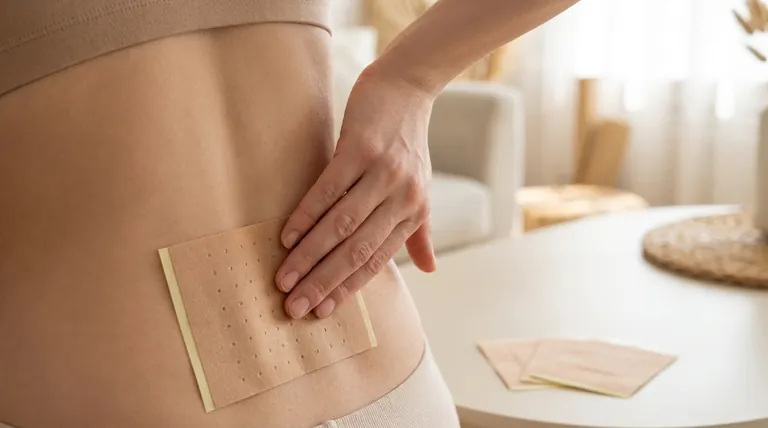
In short, the Signal Relief patch can be placed anywhere on your body experiencing discomfort. While it can be applied directly over the pain, its effectiveness is maximized by finding the precise location that best interrupts the body's pain signals. This often requires a brief process of exploration.
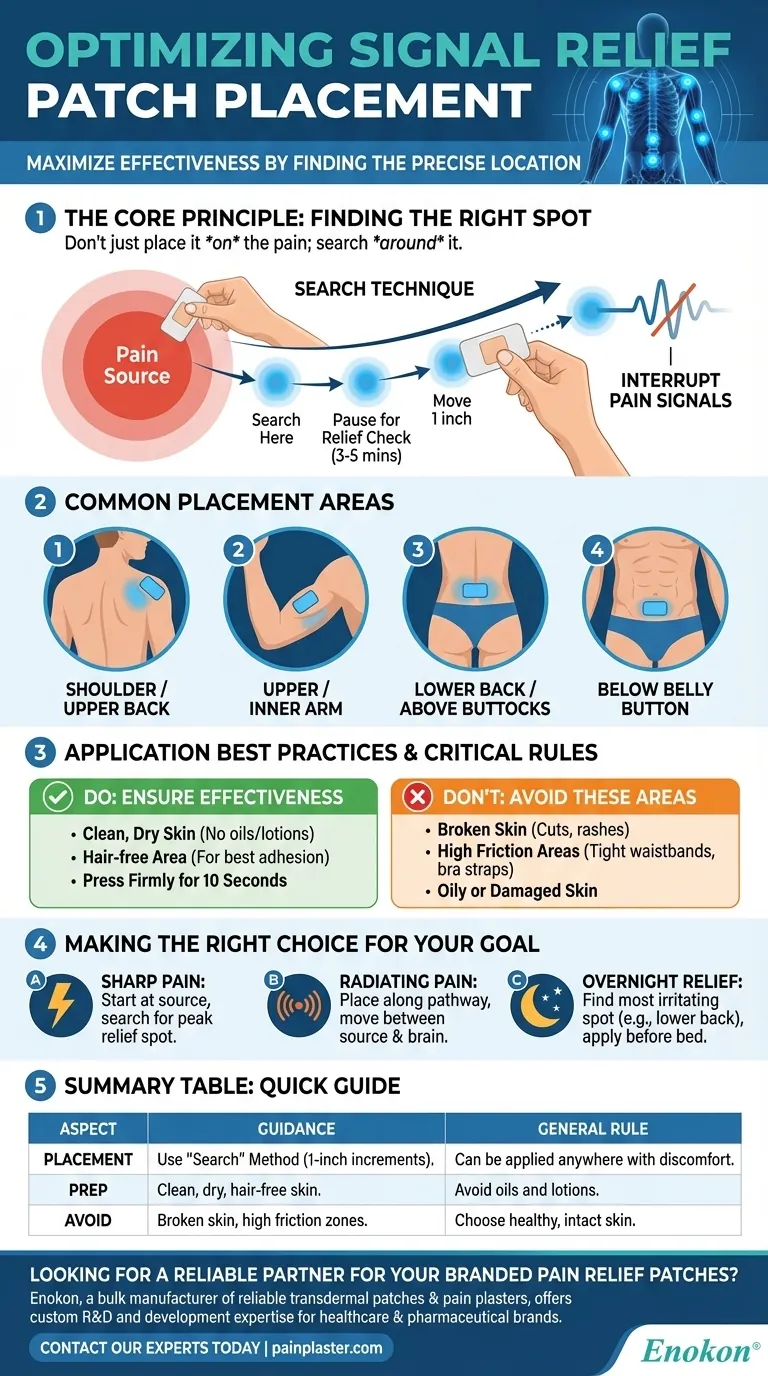
The key to using the Signal Relief patch is not just placing it on the pain, but systematically searching the area around the pain to find the specific spot that provides the most significant and immediate relief.
The Core Principle: Finding the Right Spot
True relief comes from correctly positioning the patch to interact with your body's natural electrical signals. This is less about general placement and more about precise targeting.
Start Directly at the Source
Your initial placement should always be directly on or next to the area of most intense discomfort. This serves as your starting point for exploration.
Use the "Search" Technique
Hold the patch on the primary point of discomfort for 3-5 minutes. If relief isn't satisfactory, begin moving it in small, one-inch increments away from that point, following the line of tension or discomfort.
Pause for at least one minute in each new spot to gauge the level of relief. This methodical process allows you to zero in on the exact location where the patch is most effective.
Common Placement Areas
While the patch can be used anywhere, common and effective locations include the:
- Shoulder or upper back near the shoulder blade
- Upper or inner arm
- Lower back or just above the buttocks
- Below the belly button
Application Best Practices
Proper preparation and application ensure the patch adheres correctly and functions optimally.
Prepare the Skin
The patch must be applied to clean, dry skin. Any oils, lotions, or moisture can interfere with the adhesive and the patch's effectiveness.
Ensure Good Adhesion
For best results, apply the patch to a relatively hair-free area. After peeling off the backing, press the patch firmly in place for about 10 seconds to ensure it is secure.
Critical Placement Rules to Avoid
Knowing where not to place the patch is as important as knowing where to place it. Misapplication can lead to irritation or cause the patch to fall off.
Never Apply to Broken Skin
Do not place the patch on any area with cuts, scrapes, rashes, sunburns, or infections. The skin must be completely intact.
Avoid Areas of High Friction
Placing the patch where clothing will constantly rub against it, such as under a tight waistband or bra strap, can cause it to peel off prematurely.
Avoid Damaged or Oily Skin
The patch will not adhere well to skin that is overly oily, scarred, or otherwise damaged. Choose a nearby location with healthy, intact skin for best results.
Making the Right Choice for Your Goal
Your strategy for placement may change slightly depending on the nature of your discomfort.
- If your primary focus is a specific, sharp pain: Start directly on the point of maximum intensity and use the search technique to pinpoint the optimal location for immediate relief.
- If your primary focus is broader, radiating pain: Place the patch along the pathway of the discomfort, moving it between the source of the pain and your brain until you find the spot that best quiets the signal.
- If your primary focus is overnight relief: Find the most consistently irritating area, such as the lower back, and apply the patch there before bed to allow it to work for an extended period.
Ultimately, finding the perfect placement is a simple process of discovery that puts you in control of your own relief.
Summary Table:
| Aspect | Guidance |
|---|---|
| General Rule | Can be applied anywhere on the body experiencing discomfort. |
| Key Technique | Use the "Search" method: move the patch in 1-inch increments from the pain source to find the most effective spot. |
| Common Areas | Shoulder, upper/lower back, arm, below belly button. |
| Skin Prep | Must be clean, dry, and hair-free for optimal adhesion. |
| Areas to Avoid | Broken skin, areas of high friction (e.g., under tight straps), oily or damaged skin. |
Looking for a reliable partner for your own branded pain relief patches?
As Enokon, a bulk manufacturer of reliable transdermal patches and pain plasters, we provide healthcare and pharmaceutical distributors and brands with the technical expertise for custom R&D and development. Benefit from our experience to create a high-quality product that meets your specific market needs.
Contact our experts today to discuss your project and discover how we can help you bring effective pain management solutions to market.
Visual Guide
Related Products
- Far Infrared Pain Patch Relief Pain Reliever for Back
- Far Infrared Deep Heat Relief Patches Medicated Pain Relief Patches
- Far Infrared Knee Pain Patch Heat Patches for Pain Relief
- Far Infrared Heat Pain Relief Patches Transdermal Patches
- Icy Hot Menthol Medicine Pain Relief Patch
People Also Ask
- How does high-purity far-infrared ceramic powder contribute to the efficacy of far-infrared physical therapy patches?
- Why Control Pseudo-diffusion in Pain Relief Patch Manufacturing? Enhance Efficacy & Performance
- What are pain relief patches and how are they used? A Guide to Safe, Targeted Relief
- When should you consider using pain relief products like creams and patches? Optimize Comfort & Safety
- What are pain relief patches? Discover Targeted, Drug-Free Pain Management Solutions