
The proper storage of capsaicin patches depends entirely on whether you are using a high-concentration prescription product or a lower-concentration over-the-counter (OTC) version. High-potency prescription patches are administered exclusively in a clinical setting and are never stored at home. Commercially available OTC patches, however, require specific at-home storage to ensure safety and effectiveness.
The central rule is one of potency and safety: high-concentration prescription patches are handled only by medical professionals, while lower-concentration OTC patches must be stored securely at home, away from children and pets, to prevent accidental exposure.
The Critical Distinction: Prescription vs. OTC
Understanding the type of patch you are dealing with is the first and most important step. The storage and handling protocols are completely different and are based on the concentration of capsaicin and the potential for adverse effects.
High-Concentration Prescription Patches
These are medical treatments, not consumer products. They contain a very high dose of capsaicin and are used to treat conditions like nerve pain from postherpetic neuralgia or diabetic neuropathy.
Because of their potency, these patches are administered only by a healthcare professional in a hospital or clinic. Your condition and blood pressure will be monitored during the procedure. You will not be given these patches to take home, so at-home storage is not a concern.
Lower-Concentration OTC Patches
These are the patches you can buy at a pharmacy for temporary relief of minor aches and pains from muscles and joints. You are responsible for their storage and use.
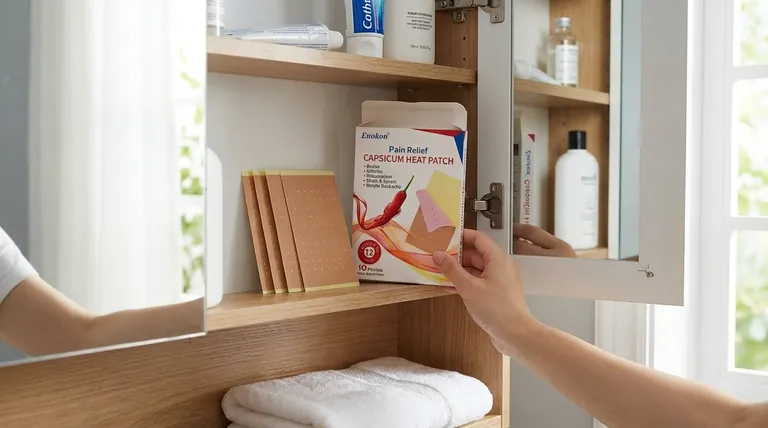
For these products, you must store the patches in their original container with the packaging tightly closed. They should be kept at room temperature and, most importantly, out of reach of children and pets to prevent accidental ingestion or contact.
Safe Handling and Application Protocols
Proper handling is just as critical as proper storage. The active ingredient, capsaicin, can cause a significant burning sensation on any skin it touches, especially sensitive areas.
Before You Apply
Always apply an OTC patch to a clean, dry, and hairless area of skin. Never apply a patch to skin that is broken, cut, infected, irritated, or covered in a rash.
During Application
After applying the patch, immediately wash your hands thoroughly with soap and water. This removes any residue from your fingers and prevents you from accidentally touching your eyes, nose, or mouth, which can be extremely painful. Do not wrap or bandage over the patch.
After Removal
When you remove a used patch, fold it in half with the sticky sides together. This contains the remaining capsaicin and makes it safer to handle.
Common Pitfalls and Precautions
Using capsaicin patches requires an awareness of potential side effects and interactions. Overlooking these precautions can lead to discomfort or injury.
Managing Skin Sensitivity
The treated area will likely feel red and hot; this is an expected effect of the capsaicin. For several days after treatment, the skin will be more sensitive to heat.
Avoid hot showers or baths, direct sun exposure, heating pads, saunas, and vigorous exercise, as these activities can reactivate the burning sensation.
Avoiding Accidental Exposure
The primary risk is accidental exposure to yourself or others. Never touch your face after handling a patch until your hands have been washed. Be mindful of children or pets who might come into contact with the application site or a discarded patch.
Disposal is a Safety Issue
Never dispose of a capsaicin patch by flushing it down the toilet. The active ingredient can contaminate waterways. Used patches should be disposed of carefully in the trash or, ideally, through a medicine take-back program.
Making the Right Choice for Your Goal
Your approach to capsaicin patches must be dictated by the type of product and the pain you are treating.
- If you are receiving a high-concentration prescription patch: Your role is to be an informed patient. Understand that this is a supervised medical procedure, and follow all post-treatment instructions from your doctor, especially regarding heat sensitivity.
- If you are using an over-the-counter patch for minor pain: Your primary responsibility is safe storage and meticulous handling. Secure storage away from children is non-negotiable to prevent serious accidents.
Ultimately, whether administered by a doctor or applied by you, treating capsaicin with respect is key to using it safely and effectively.
Summary Table:
| Patch Type | Storage Location | Key Precautions |
|---|---|---|
| Prescription (High-Concentration) | Administered in clinic only; no home storage. | Handled exclusively by healthcare professionals. |
| OTC (Lower-Concentration) | At home, in original container, at room temperature. | Keep out of reach of children and pets. |
Ensure the safety and efficacy of your transdermal pain relief products. Partner with Enokon, a bulk manufacturer of reliable transdermal patches and pain plasters for healthcare and pharmaceutical distributors and brands. Benefit from our technical expertise for custom R&D and development to create products with clear, safe handling and storage guidelines. Contact our experts today to discuss your manufacturing needs.
Visual Guide

Related Products
- Capsaicin Chili Medicated Pain Relief Patches
- Heat Relief Capsicum Patch for Lower Back Pain Relief
- Menthol Gel Pain Relief Patch
- Mugwort Wormwood Pain Relief Patch for Neck Pain
- Icy Hot Menthol Medicine Pain Relief Patch
People Also Ask
- What conditions should be reported to a care team before using capsaicin patches? Ensure Safe Pain Relief
- What conditions can capsaicin creams and patches help relieve? Find Targeted Pain Relief for Nerves & Joints
- What are the uses of nonprescription capsaicin patches? Natural Pain Relief for Muscles & Joints
- What should be avoided while using capsaicin patches? Essential Safety Tips for Effective Pain Relief
- What less common side effects may occur with the capsaicin patch? Recognizing Systemic & Rare Reactions



















