Pain relief patches are considered discreet primarily due to their advanced physical design. Their construction is ultra-thin, flexible, and stretchable, which allows them to conform to the body's natural contours so seamlessly they become barely noticeable under clothing.
The discretion of a pain relief patch is a function of its material engineering. By combining an ultra-thin profile with high flexibility, the patch acts like a second skin, moving with your body to remain virtually undetectable during daily activities.

The Core Principles of Discreet Design
To understand why these patches are so effective at staying hidden, we need to look at the specific characteristics engineered into their structure. This isn't just about being small; it's about a combination of factors working together.
Ultra-Thin Profile
The patch is built from several distinct layers—an adhesive, a drug reservoir, a release membrane, and a protective backing. Each of these layers is engineered to be exceptionally thin, resulting in a final product that doesn't create a noticeable bulge under fabric.
This low profile is the first line of defense against detection.
Flexibility and Stretchability
A patch must move with you to remain discreet. Its materials are designed to be highly flexible and stretchable, allowing it to bend, twist, and stretch along with your skin.
This is especially critical over joints like the knee or elbow. A rigid patch would buckle or peel at the edges when you move, immediately giving away its presence.
Seamless Adhesion
The adhesive layer is designed to provide firm, even contact across the entire surface of the patch. This ensures it lies perfectly flat against the skin, without gaps or bubbles.
By conforming seamlessly to the unique contours of your body, the patch avoids casting shadows or creating lines that would be visible through clothing.
Functional Discretion
Discretion also comes from a clean application. The patch adheres directly to the skin without requiring any messy or painful rubbing.
Once applied, the protective backing layer prevents the active ingredients from making contact with your clothes or hands, ensuring a contained and unobtrusive experience.
Understanding the Practical Limitations
While modern patches are highly discreet, no solution is perfect. Understanding the potential trade-offs ensures you have realistic expectations for their use.
Fabric and Fit
The type of clothing you wear matters. While a patch may be invisible under most fabrics, it could show a faint outline under extremely thin or tight-fitting materials like silk blouses or compression athletic wear.
Adhesion Variables
The patch's ability to remain perfectly flat can be affected by skin type, sweat, or oils. In some cases, an edge may begin to lift slightly after prolonged wear or intense activity, reducing its discretion.
Color and Branding
Not all patches are designed with visual discretion as the top priority. Some are clear or flesh-toned to blend in, while others may have visible branding or bright colors, making them more obvious if uncovered.
Making the Right Choice for Your Goal
To ensure you get the level of discretion you need, consider what aspect is most important for your situation.
- If your primary focus is invisibility: Seek out patches specifically marketed as "ultra-thin" and choose a product that is clear or matches your skin tone.
- If your primary focus is use during activity: Prioritize patches praised for "high stretchability" and "strong adhesion," as these are less likely to peel or buckle when you move.
- If your primary focus is a no-mess experience: Confirm the patch has a secure backing layer designed to prevent any residue from transferring to clothing.
Ultimately, the goal of a modern pain patch is to integrate into your life, providing targeted relief without drawing unwanted attention.
Summary Table:
| Key Feature | Contribution to Discretion |
|---|---|
| Ultra-Thin Profile | Eliminates noticeable bulges under clothing. |
| Flexibility & Stretchability | Moves with your body, preventing buckling or peeling. |
| Seamless Adhesion | Lies flat against skin contours, avoiding visible lines. |
| Clean Application | No-mess, contained design prevents residue on clothes. |
Need a truly discreet pain relief solution for your brand?
At Enokon, we are a bulk manufacturer of reliable transdermal patches and pain plasters. We specialize in creating custom solutions for healthcare and pharmaceutical distributors and brands. Our technical expertise in material engineering ensures your patches are not only effective but also exceptionally discreet, with ultra-thin profiles and superior adhesion.
Let us help you develop a product that integrates seamlessly into your customers' lives. Contact our R&D experts today to discuss your custom patch requirements.
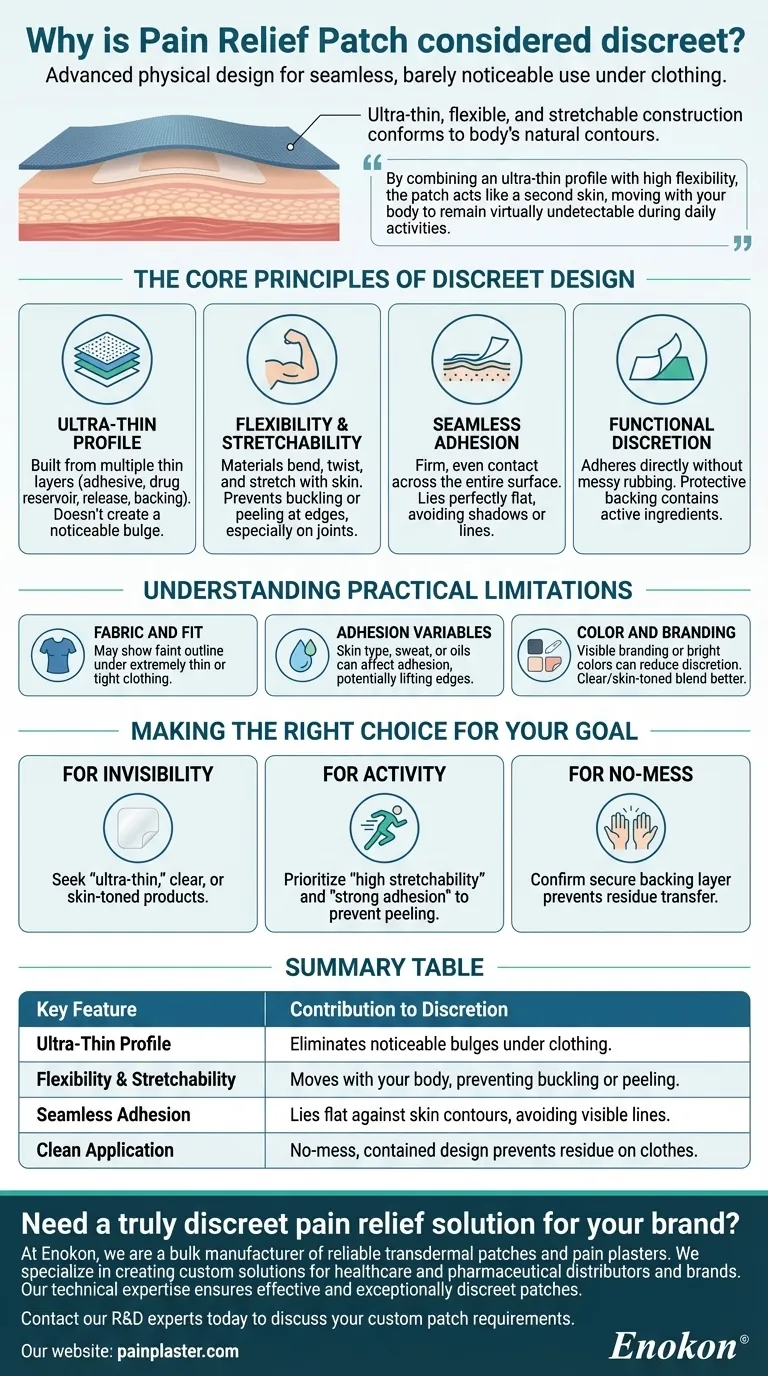
Visual Guide
Related Products
- Mugwort Wormwood Pain Relief Patch for Neck Pain
- Menthol Gel Pain Relief Patch
- Lidocaine Hydrogel Pain Relief Patch for Pain Relief
- Icy Hot Menthol Medicine Pain Relief Patch
- Far Infrared Pain Patch Relief Pain Reliever for Back
People Also Ask
- What are pain relief patches and how are they used? A Guide to Safe, Targeted Relief
- What is the purpose of pain relief patches? Get Targeted Relief with Fewer Side Effects
- What type of pain are pain relief patches best suited for? Find Targeted Relief for Your Aches
- What safety considerations should be kept in mind when using pain relief patches? Ensure Safe & Effective Pain Management
- What are pain relief patches? Discover Targeted, Drug-Free Pain Management Solutions