
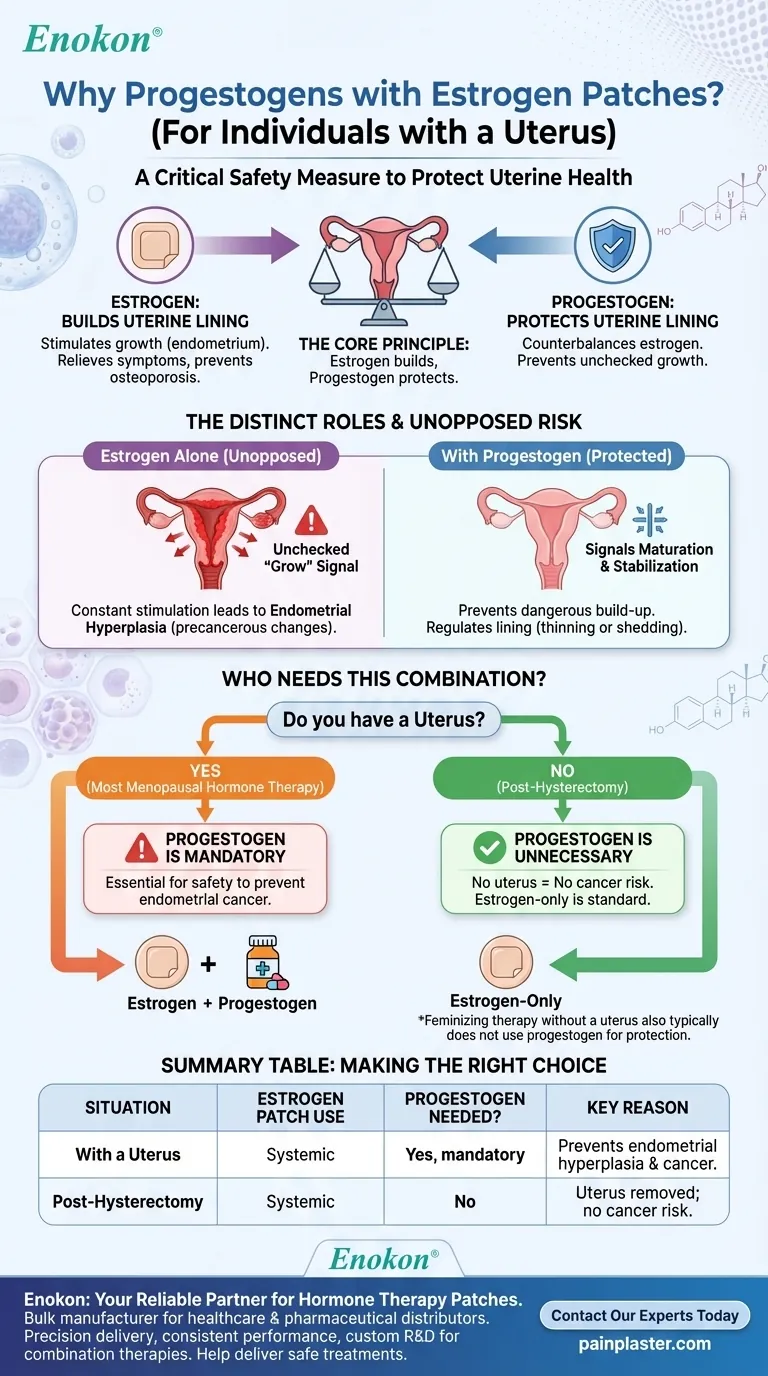
For individuals with a uterus, progestogens are used alongside estrogen patches as a critical safety measure. Estrogen alone stimulates the growth of the uterine lining (the endometrium), and without a counterbalancing hormone, this unchecked growth can lead to precancerous changes and a significantly increased risk of endometrial cancer.
The core principle is straightforward: estrogen builds the uterine lining, and progestogen protects it. For anyone using systemic estrogen therapy who has not had a hysterectomy, this combination is the standard of care to ensure safety.

The Distinct Roles of Estrogen and Progestogen
To understand why these hormones are used together, it's essential to recognize their separate and complementary functions within hormone therapy.
What Estrogen Therapy Achieves
Estrogen is the primary hormone for treating symptoms associated with low estrogen levels.
It is highly effective for relieving menopausal symptoms like hot flashes and vaginal dryness, preventing osteoporosis, and is a foundational component of feminizing hormone therapy for transgender women.
Estrogen's Unopposed Effect on the Uterus
By itself, estrogen sends a constant "grow" signal to the endometrium.
Month after month, this can cause the lining to become abnormally thick, a condition known as endometrial hyperplasia. This is a well-established precursor to endometrial cancer.
The Protective Mechanism of Progestogen
The addition of a progestogen is not for symptom management; its primary purpose is to counteract estrogen's effect on the uterus.
Halting Endometrial Growth
Progestogen signals the uterine lining to mature and stabilize, effectively opposing estrogen's continuous growth signal.
This prevents the lining from becoming excessively thick and developing the abnormal cells associated with hyperplasia.
Regulating the Uterine Lining
Depending on the regimen, progestogen causes the uterine lining to either thin out over time (with continuous use) or to shed completely (with cyclical use), mimicking a menstrual period.
Both methods effectively prevent the dangerous build-up of endometrial tissue, dramatically reducing the risk of cancer.
Who Needs This Combination?
The decision to add a progestogen is based on one simple, critical factor: the presence or absence of a uterus.
The Rule for Those With a Uterus
If you are using systemic estrogen (patches, pills, gels) and have a uterus, a progestogen is considered mandatory for your safety.
This applies to most cases of menopausal hormone therapy for women who have not had a hysterectomy.
The Exception: Post-Hysterectomy
If you have had a hysterectomy, your uterus and its endometrial lining have been removed.
Therefore, there is no risk of endometrial cancer, and taking a progestogen is unnecessary. Estrogen-only therapy is the standard and preferred treatment in this case.
Making the Right Choice for Your Goal
Understanding this distinction is key to a safe and effective hormone therapy plan developed with your healthcare provider.
- If your primary focus is menopausal symptom relief and you have a uterus: Combining a progestogen with your estrogen patch is the essential safety standard to protect your uterine health.
- If your primary focus is menopausal symptom relief and you have had a hysterectomy: Estrogen-only therapy is the appropriate choice, as a progestogen offers no benefit and is not needed for protection.
- If your primary focus is feminizing hormone therapy: Since a uterus is not present, progestogens are not used for endometrial protection, though they may be considered for other potential, less-established effects.
Knowing why each hormone is prescribed empowers you to ensure your treatment aligns perfectly with your body's specific needs.
Summary Table:
| Situation | Estrogen Patch Use | Progestogen Needed? | Key Reason |
|---|---|---|---|
| With a Uterus | Systemic (patch, pill, gel) | Yes, mandatory | Prevents endometrial hyperplasia & cancer by countering estrogen's growth effect on the uterine lining. |
| Post-Hysterectomy | Systemic (patch, pill, gel) | No | The uterus and endometrial lining have been removed, eliminating the cancer risk. |
Need a reliable partner for your hormone therapy patches?
As Enokon, a bulk manufacturer of reliable transdermal patches for healthcare and pharmaceutical distributors, we understand the critical need for precise and consistent hormone delivery. Our technical expertise ensures the quality and performance of your products, and we offer custom R&D services to develop patches tailored to your specific formulations, including combination therapies.
Let us help you deliver safe and effective treatments to your patients. Contact our experts today to discuss your transdermal patch needs.
Visual Guide
Related Products
- Heating Pain Relief Patches for Menstrual Cramps
- Menthol Gel Pain Relief Patch
- Icy Hot Menthol Medicine Pain Relief Patch
- Lidocaine Hydrogel Pain Relief Patch for Pain Relief
- Prostate Pain Kidney Health Care Patch for Men
People Also Ask
- What are the benefits of Period Pain Heat Patches? Drug-Free, On-the-Go Relief
- What are the key benefits of heating patches for elderly individuals? Relieve Pain & Improve Mobility
- What are the different types of heat patches? Find the Right Pain Relief for Your Needs
- What are the key differences between conventional heat patches and deep heat devices? Choosing the Right Pain Relief Solution
- What percentage of people with back pain use heat patches for relief? Discover the Popular Choice for Pain Management












