
The Elegant Compromise of Transdermal Delivery
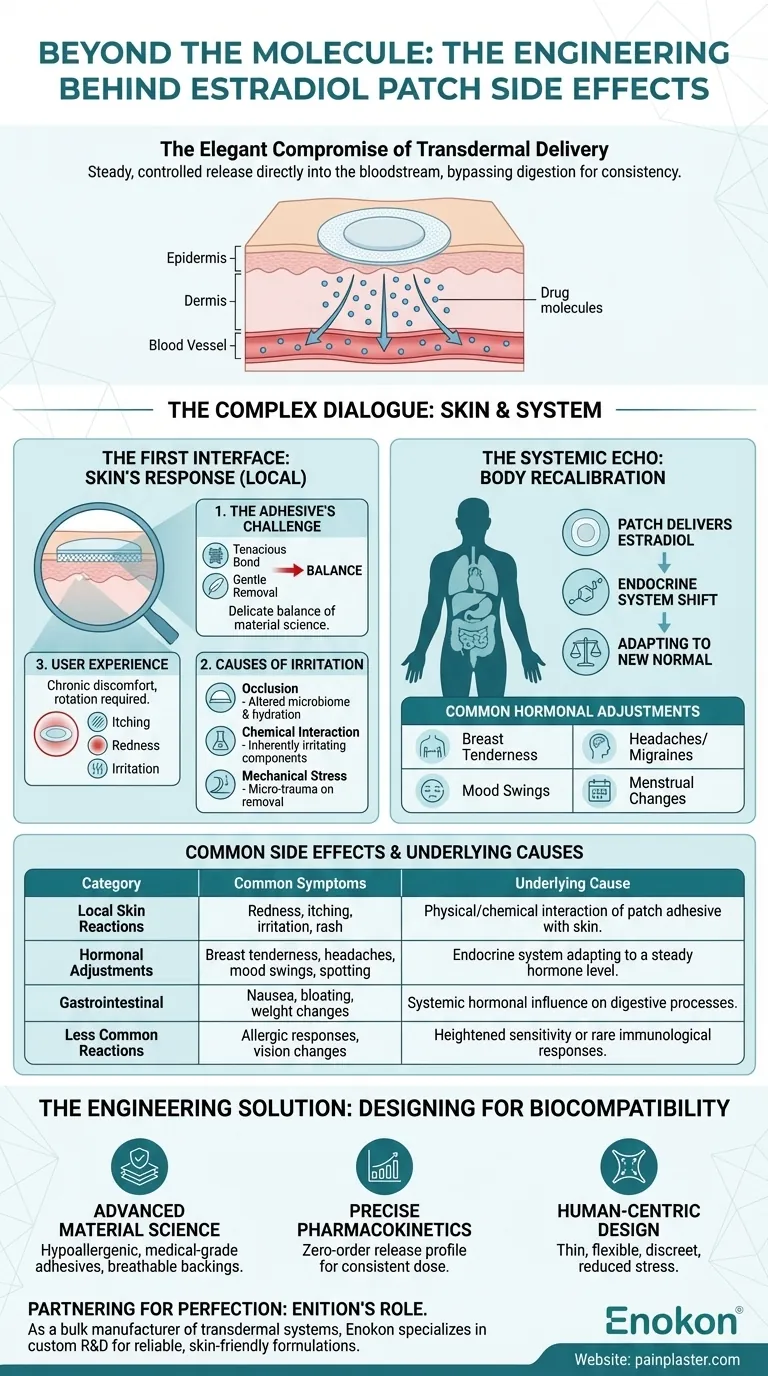
A transdermal patch is a marvel of biomedical engineering. It promises a steady, controlled release of a therapeutic agent directly into the bloodstream, bypassing the harsh environment of the digestive system. For hormone replacement therapy, like the estradiol patch, this means consistency and predictability.
But this elegance rests on a complex, silent dialogue between the patch, the drug, and the unique biology of the user's skin. Side effects aren't just a list of symptoms; they are the tangible results of this intricate conversation. Understanding them is not just about managing medicine, but about appreciating the engineering challenge at the skin's surface.
The First Interface: The Skin's Response
The most common feedback from this dialogue is a local skin reaction. Itching, redness, or irritation at the application site are not failures of the drug, but rather a direct consequence of the physical interface.
The Adhesive's Double-Edged Sword
An adhesive on a transdermal patch has a paradoxical job. It must be tenacious enough to adhere for several days through showers, movement, and friction. Yet, it must be gentle enough to avoid provoking an immune response or damaging the skin's outer layer upon removal.
This is a delicate balance of material science.
- Occlusion: The patch creates a covered, moist environment, which can alter the skin's natural microbiome and hydration.
- Chemical Interaction: The adhesive's own chemical components can be inherently irritating to sensitive individuals.
- Mechanical Stress: The simple act of peeling off a strong adhesive causes micro-trauma to the skin.
From a user's perspective, this isn't a minor inconvenience. It's a source of chronic discomfort and a constant reminder of their therapy, forcing them to meticulously rotate sites and monitor for worsening reactions.
The Systemic Echo: When the Body Recalibrates
Once estradiol crosses the skin barrier, a second conversation begins—this time with the entire endocrine system. The body, accustomed to its own fluctuating hormonal rhythms, is now introduced to a steady, external supply.
This shift from a dynamic to a more static hormonal state can cause a cascade of adjustments that we perceive as side effects.
A New Hormonal Baseline
The body’s initial response is often one of recalibration. The introduction of a consistent level of estradiol can lead to effects that mirror natural hormonal shifts, but without the familiar cyclical context.
This explains common systemic effects like:
- Breast tenderness
- Headaches or migraines
- Mood swings
- Unpredictable changes in menstrual patterns
These aren't necessarily adverse reactions so much as the body's process of adapting to a new normal. The table below outlines these common adjustments.
| Category | Common Symptoms | Underlying Cause |
|---|---|---|
| Local Skin Reactions | Redness, itching, irritation, rash | Physical/chemical interaction of the patch adhesive with skin. |
| Hormonal Adjustments | Breast tenderness, headaches, mood swings, spotting | The body's endocrine system adapting to a new, steady hormone level. |
| Gastrointestinal | Nausea, bloating, weight changes | Systemic hormonal influence on digestive processes. |
| Less Common Reactions | Allergic responses (blistering, severe swelling), vision changes | Heightened sensitivity or rare immunological responses. |
The Engineering Solution: Designing for Biocompatibility
If the problem lies in the delivery system, so does the solution. Minimizing side effects is fundamentally an engineering challenge—one that goes far beyond simply choosing the active pharmaceutical ingredient. It requires a holistic approach to the patch's design.
The Triad of an Ideal Patch
A superior transdermal patch is built on three pillars of expertise:
- Advanced Material Science: Utilizing hypoallergenic, medical-grade adhesives and breathable backing materials that reduce occlusion and allow the skin to function more naturally.
- Precise Pharmacokinetics: Engineering the drug matrix for a truly zero-order release profile. This ensures a consistent, predictable dose from the first hour to the last, preventing initial spikes that can overwhelm the body's systems.
- Human-Centric Design: Creating a patch that is thin, flexible, and discreet. A patch that moves with the body feels less like a medical device and more like a second skin, reducing mechanical stress and improving user adherence.
From Concept to Skin: The Manufacturing Partner's Role
For pharmaceutical distributors and healthcare brands, the quality of their product is defined by the user's experience. Achieving this level of engineering sophistication requires a manufacturing partner with deep technical expertise.
As a bulk manufacturer of transdermal systems, Enokon specializes in solving these exact challenges. Our focus on custom R&D allows us to develop reliable, skin-friendly formulations tailored to specific patient populations and therapeutic goals. We partner with brands to engineer patches that don't just deliver a drug, but do so with maximum efficacy and minimal disruption to the user's life.
The future of transdermal therapy lies in perfecting these details. For brands and distributors committed to offering a superior therapeutic experience, the journey begins with the right engineering and manufacturing partner. Contact Our Experts
Visual Guide
Related Products
- Menthol Gel Pain Relief Patch
- Icy Hot Menthol Medicine Pain Relief Patch
- Mugwort Wormwood Pain Relief Patch for Neck Pain
- Herbal Medicated Anti Diarrhea Patch for Digestive Relief
- Lidocaine Hydrogel Pain Relief Patch for Pain Relief
Related Articles
- Beyond Efficacy: The Psychology of Adherence in Topical Pain Relief
- The 60-Minute Architecture: Engineering Predictability in Topical Pain Relief
- More Than a Feeling: The Precise Engineering of Cold vs. Hot Pain Relief
- Beyond the Molecule: The Behavioral Science of the Simple Pain Patch
- The Human Interface of Pain Relief: Why Delivery Systems Define Success



















