
The Illusion of Simplicity
A transdermal patch feels like a marvel of modern convenience. For localized pain, you apply a small, adhesive square and, for the next 12 hours, the problem is managed. It’s a classic “set it and forget it” solution.
This perceived simplicity is a powerful psychological comfort. But it masks a sophisticated interaction between a precisely engineered device and the complex, dynamic system that is the human body. The question that often comes up—"Do I need to change my diet while using a lidocaine patch?"—is the entry point to a much deeper conversation about how these systems work together.
The short answer is typically no. But the full answer reveals why an effective therapeutic product is about much more than just its active ingredient.
The Patch is a System, Not Just a Product
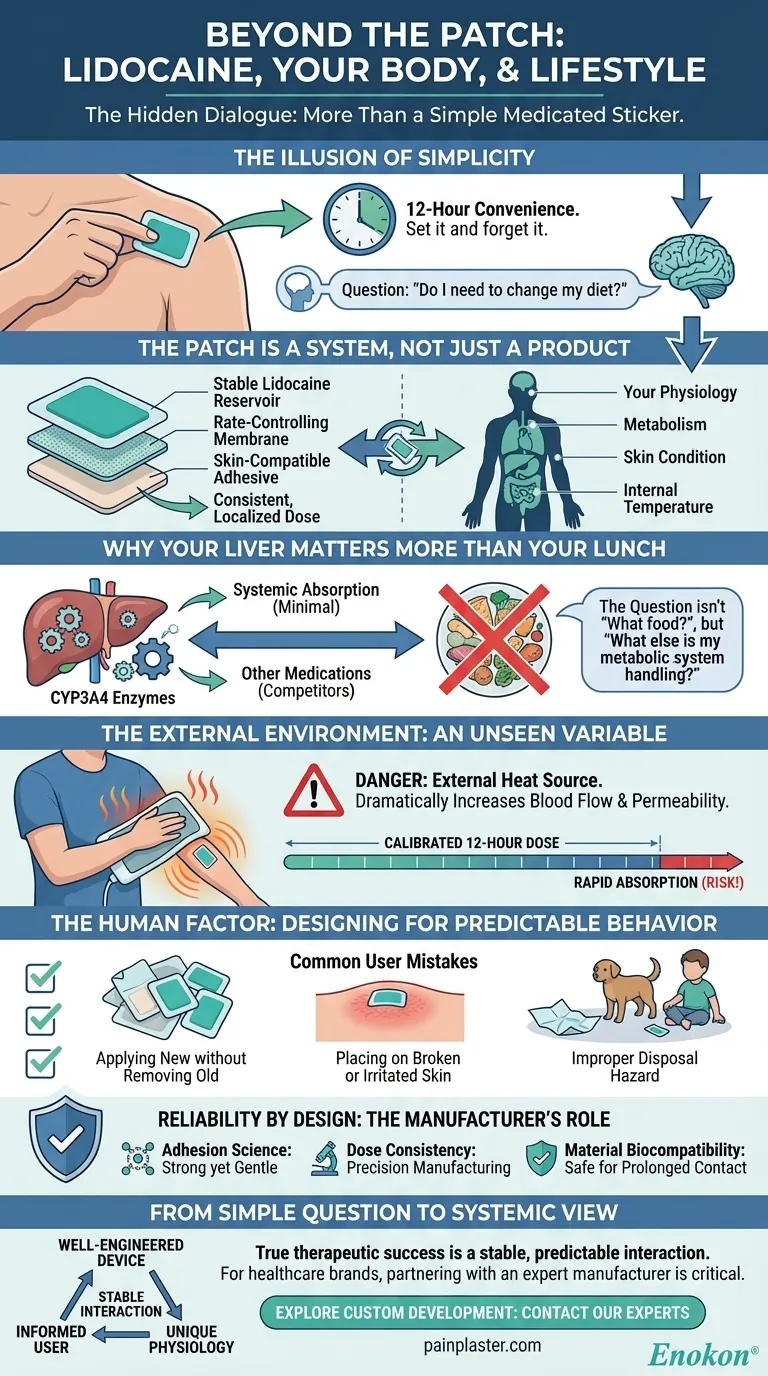
Think of a transdermal patch not as a medicated sticker, but as one half of an integrated system. The patch itself is an elegant piece of engineering: a stable reservoir of lidocaine, a rate-controlling membrane, and a skin-compatible adhesive, all designed to deliver a consistent, localized dose over a set period.
The other half of the system is you. Your physiology—your metabolism, your skin's condition, your internal temperature—dictates how the medication is absorbed and processed. The manufacturer designs the patch for a predictable environment, but every patient's body introduces a unique set of variables.
Why Your Liver Matters More Than Your Lunch
For most patients using a standard 5% lidocaine patch, systemic absorption is minimal. The drug works locally, and what little enters the bloodstream is well below a level that would cause concern. This is why your diet is rarely a factor.
The critical variable isn't what you eat, but how your body processes compounds. Lidocaine is metabolized primarily by enzymes in the liver (like CYP3A4). If a patient has impaired liver function or is taking other medications that compete for these same enzymes (like certain antiarrhythmics or antifungals), the equation changes. The body's ability to clear the small amount of systemically absorbed lidocaine is reduced, and that's when risks can emerge.
The question isn't "What food interacts with the patch?" but rather, "What else is my metabolic system being asked to handle?"
The External Environment: An Unseen Variable
Our instincts for managing pain are primal. When something hurts, we often apply heat—a heating pad, a hot shower, a long bath. It’s a sensible, deeply ingrained behavior.
With a transdermal patch, however, that instinct can override the product's design. The patch is engineered to release its medication at a controlled rate based on normal body temperature. Applying an external heat source dramatically increases blood flow to the skin and enhances its permeability.
Suddenly, the carefully calibrated 12-hour dose can be absorbed much more rapidly. The engineered system is being pushed beyond its design parameters, not by a drug interaction, but by a simple environmental change. This is a classic example of how user behavior and environment can become the most critical safety factors.
The Human Factor: Designing for Predictable Behavior
In any engineered system, the most unpredictable element is the human user. The greatest risks associated with transdermal patches often stem from simple, understandable mistakes:
- Applying a new patch without removing the old one.
- Placing a patch on broken or irritated skin, accelerating absorption.
- Forgetting to fold and safely discard a used patch, making it a hazard for children or pets.
The challenge for a manufacturer isn’t just to produce a patch that contains the right amount of medication. The real engineering goal is to create a product that is difficult to misuse—one that accounts for human psychology.
This is where the quality of the product becomes paramount. A patch that adheres reliably for the full 12 hours without causing skin irritation reduces the temptation for a user to tamper with it. A product with clear, simple instructions minimizes cognitive load for a patient already managing the stress of chronic pain.
Reliability by Design: The Manufacturer's Role
For healthcare distributors and pharmaceutical brands, partnering with a manufacturer that understands this systemic view is critical. The integrity of the final product depends on expertise that goes far beyond basic formulation. Key considerations include:
- Adhesion Science: The adhesive must be strong enough to last through a daily routine but gentle enough to prevent skin damage upon removal.
- Dose Consistency: The rate-controlling membrane must be manufactured with extreme precision to ensure every patch delivers a predictable and reliable dose.
- Material Biocompatibility: All materials must be inert and safe for prolonged skin contact, minimizing the risk of allergic reactions or sensitivity.
This commitment to quality isn't just about meeting regulatory standards; it's about creating a product that seamlessly and safely integrates into a person's life.
From a Simple Question to a Systemic View
So we return to our initial question: "What can I eat?" We see now that this query opens the door to a more holistic understanding of treatment. True therapeutic success isn’t found in a single product, but in the stable, predictable interaction between a well-engineered device, an informed user, and their unique physiology.
For healthcare brands aiming to deliver not just a product but a reliable therapeutic system, partnering with an expert manufacturer is the critical first step. To explore custom development and ensure the highest standards of quality, Contact Our Experts.
Visual Guide
Related Products
- Lidocaine Hydrogel Pain Relief Patch for Pain Relief
- Herbal Medicated Anti Diarrhea Patch for Digestive Relief
- Menthol Gel Pain Relief Patch
- Icy Hot Menthol Medicine Pain Relief Patch
- Asthma Cough and Pain Relief Patch for Adults and Kids
Related Articles
- Beyond the Adhesive: The Precarious Balance of Transdermal Drug Delivery
- The Unseen Dangers of Numbness: Navigating the Physics and Psychology of Lidocaine Patches
- The Efficacy Paradox: Why Lower-Dose Lidocaine Patches Are Redefining Pain Management
- Beyond Efficacy: The Psychology of Adherence in Topical Pain Relief
- The Elegant Thermodynamics of Relief: How Hydrogel Patches Master Fever and Pain



















