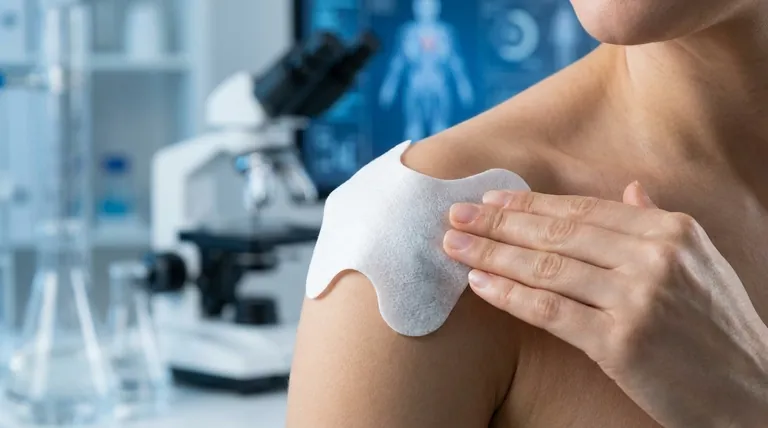
The Ritual and the Risk
Consider the common ritual of pain relief: a sprained ankle, a flare-up of arthritis, a headache. The response is almost automatic—reach for a pill.
For decades, we have unconsciously accepted a trade-off. In exchange for relief, we tolerate the risk of gastric acidity, nausea, or even more severe gastrointestinal complications. This bargain is so ingrained in our medical culture that we often view these side effects not as a design flaw, but as an unavoidable cost of treatment.
But what if this compromise isn't necessary? What if the problem isn't the drug itself, but the crude method we use to deliver it?
The System, Not Just the Molecule
Oral non-steroidal anti-inflammatory drugs (NSAIDs) like diclofenac work well, but their delivery is a brute-force approach. To get a therapeutic dose to a specific joint or muscle, the entire body must be flooded with the medication via the digestive system.
This method is inherently inefficient and prone to collateral damage. The drug directly irritates the sensitive lining of the stomach and intestines. Plasma concentrations spike and fall, creating a physiological rollercoaster that can trigger systemic side effects. The focus has always been on the molecule, but the real revolution is in the method.
A More Elegant Design: The Transdermal Approach
A transdermal patch represents a fundamental shift in design philosophy. Instead of a flood, it offers a controlled, targeted release. It’s the difference between using a fire hose to water a single flower and installing a precision drip irrigation system.
This elegance is rooted in two simple yet powerful principles.
Bypassing the Gatekeeper
The most significant advantage is bypassing the gastrointestinal tract entirely. By delivering diclofenac directly through the skin to the tissue beneath, the patch eliminates the primary cause of oral NSAID-induced side effects: direct mucosal irritation. The first-pass metabolism in the liver is also avoided, making the delivery more efficient.
Steady State, Not a Spike
Unlike the peak-and-trough cycle of a pill taken every few hours, a transdermal patch provides a slow, consistent release of medication. This maintains a steady therapeutic level in the local tissue, minimizing the jarring systemic fluctuations that can lead to adverse reactions. The body is not shocked; it's gently supplied.
The Evidence: Safety without Sacrificing Efficacy
This isn't just theory. Clinical evidence confirms the superiority of this delivery system's design. In a comparative study, the differences were stark:
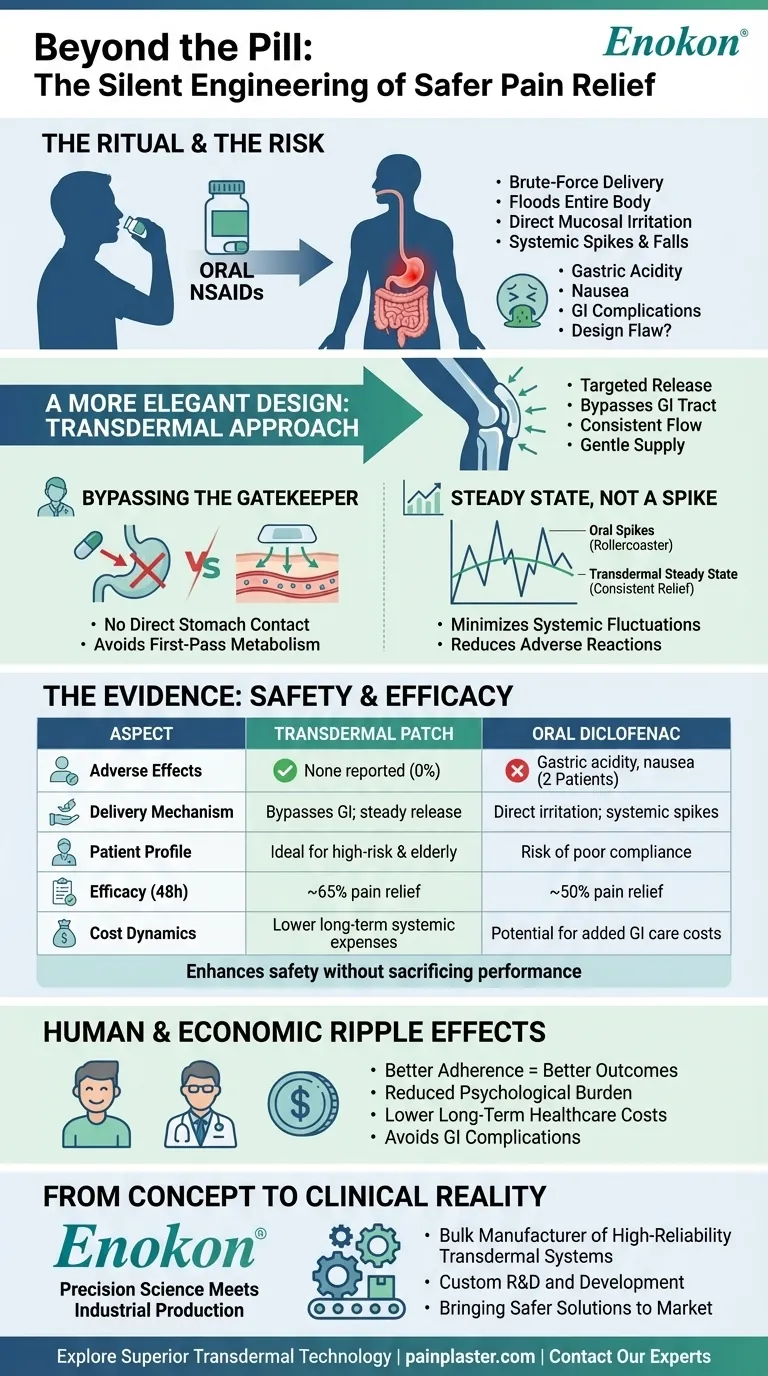
- Oral Diclofenac Group: Two patients reported gastric acidity and nausea—the exact side effects we've been conditioned to expect.
- Transdermal Patch Group: Zero patients reported any local or systemic adverse effects. None.
Crucially, this enhanced safety profile did not come at the cost of performance. Both methods provided significant pain relief, with the patch demonstrating marginally faster results (65% vs. 50% relief in the first 48 hours).
The data speaks for itself.
| Aspect | Transdermal Patch | Oral Diclofenac |
|---|---|---|
| Adverse Effects | None reported | Gastric acidity, nausea |
| Delivery Mechanism | Bypasses GI tract; steady drug release | Direct mucosal irritation; systemic spikes |
| Patient Profile | Ideal for high-risk GI patients and the elderly | Risk of poor compliance due to side effects |
| Efficacy (48h) | ~65% pain relief | ~50% pain relief |
| Cost Dynamics | Higher unit cost, lower long-term systemic expenses | Lower unit cost, potential for added GI care costs |
The Human and Economic Ripple Effects
The implications of this shift are profound. For patients with a history of ulcers or sensitivity to oral NSAIDs, transdermal patches aren't just a preference; they're a necessity.
Furthermore, a treatment that doesn't make a patient feel sick is a treatment a patient will actually follow. Better adherence leads directly to better outcomes. The psychological burden of "braving" the side effects is lifted, replaced by simple, comfortable relief.
From a healthcare provider's perspective, the "cheaper" pill can become expensive fast. The costs associated with managing GI complications—from prescribing additional anti-ulcer medications to potential hospitalizations—can easily outweigh the initial savings.
From Concept to Clinical Reality
The engineering elegance of a transdermal patch requires an equal level of manufacturing and R&D excellence to become a reliable, scalable medical solution. The polymer matrix, the penetration enhancers, and the adhesive must all work in perfect harmony.
This is where precise science meets industrial production. As a bulk manufacturer of high-reliability transdermal systems, Enokon provides the technical expertise that allows healthcare distributors and pharmaceutical brands to bring these safer solutions to market. We specialize in custom R&D and development, ensuring that the final product delivers on the promise of effective pain relief without the old compromises.
The future of pain management isn't just about discovering new molecules; it's about perfecting the way we deliver the ones we already have. To explore how superior transdermal technology can elevate your product offerings and improve patient outcomes, Contact Our Experts.
Visual Guide
Related Products
- Far Infrared Heat Pain Relief Patches Transdermal Patches
- Silicone Scar Sheets Patch Transdermal Drug Patch
- Icy Hot Menthol Medicine Pain Relief Patch
- Menthol Gel Pain Relief Patch
- Mugwort Wormwood Pain Relief Patch for Neck Pain
Related Articles
- Engineering Certainty: The Invisible Architecture of a Gold-Standard Clinical Trial
- The Silent Workhorse: How Transdermal Patches Rewrote the Rules of Pain Management
- Beyond Efficacy: The Psychology of Adherence in Topical Pain Relief
- Beyond the Molecule: The Behavioral Science of the Simple Pain Patch
- The Human Interface of Pain Relief: Why Delivery Systems Define Success



















