The Allure of a Simple Solution
There is a powerful psychology behind the transdermal patch. Unlike a pill swallowed or a needle injected, a patch feels like a direct, contained solution. You place it precisely where it hurts. The relief feels localized, the intervention minimal.
This perception of simplicity is its greatest strength, but it can also mask a complex biological and engineering reality. The patch isn't just a sticker with medicine; it's a sophisticated drug delivery system designed to negotiate with our body's most formidable barrier: the skin. When that negotiation breaks down, side effects emerge.
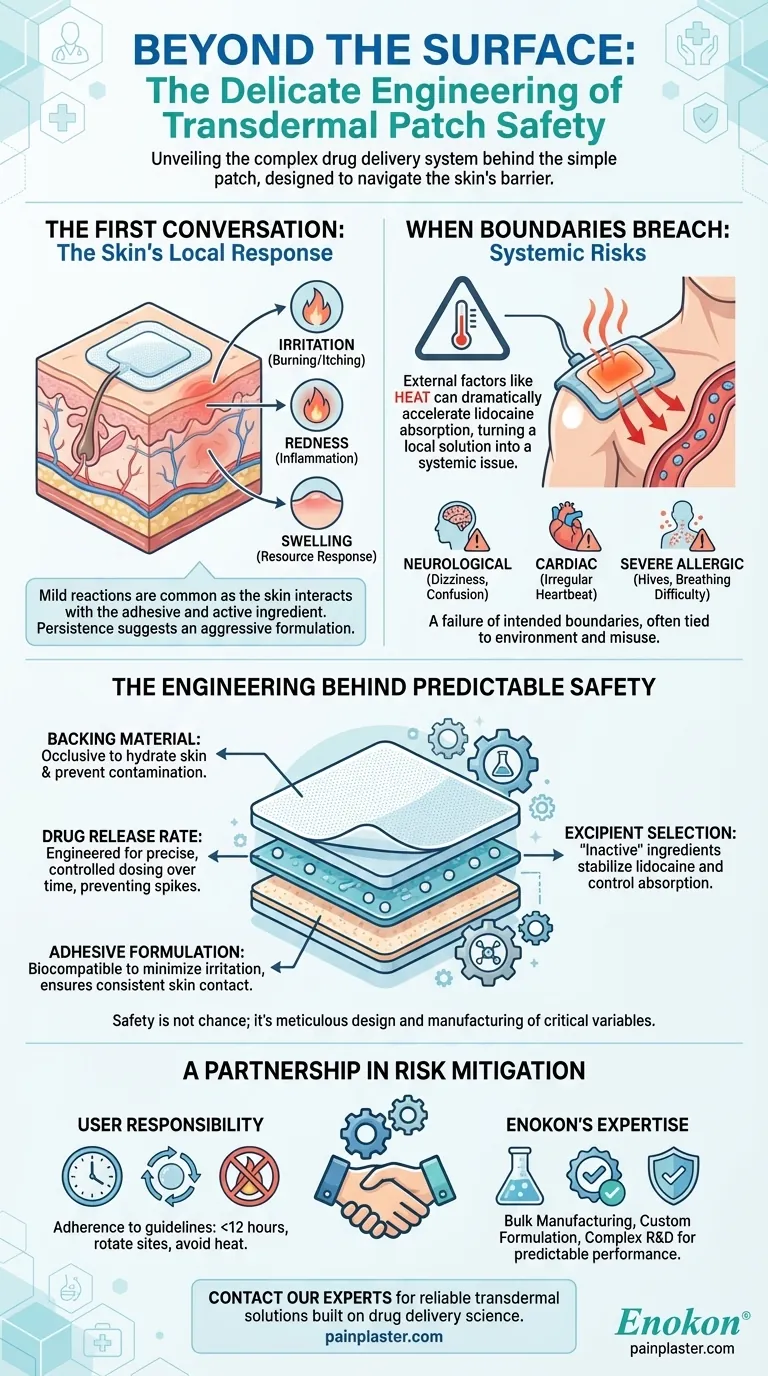
The First Conversation: The Skin's Response
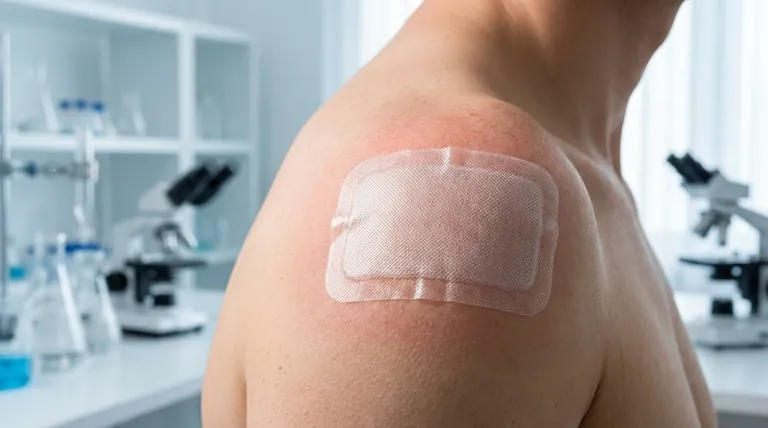
Most side effects from a lidocaine patch are localized. They happen right where the patch is applied.
Think of this as the body's initial reaction to a foreign object that is actively trying to deliver a substance through its defenses. The result is often mild and manageable:
- Irritation: A burning or itching sensation.
- Redness or Discoloration: A sign of localized inflammation.
- Swelling: The body sending resources to the area.
These reactions are typically the cost of doing business—the skin signaling that it's interacting with the patch's adhesive and active ingredient. But when they persist or worsen, it’s a sign that the balance is off. The patch's formulation may be too aggressive for that individual's skin.
When the Boundary Is Breached: Systemic Risks
The real engineering challenge is ensuring the active ingredient, lidocaine, stays local. The goal is to numb the nerves in a specific area, not to enter the bloodstream in significant amounts.
Imagine a construction worker using a lidocaine patch for chronic shoulder pain. Seeking extra relief after a long day, they apply a heating pad over the patch. Heat accelerates molecular activity, dramatically increasing the rate at which lidocaine is absorbed through the skin and into the bloodstream.
Suddenly, a local solution becomes a systemic problem. This can lead to serious, though rare, side effects:
- Neurological Symptoms: Dizziness, confusion, or blurred vision.
- Cardiac Effects: An irregular or rapid heartbeat.
- Severe Allergic Reactions: Hives, swelling, or difficulty breathing.
This isn't just user error; it's a failure of the system's intended boundaries. It reveals how profoundly the patch's performance is tied to its environment and use.
The Engineering Behind Predictable Safety
Preventing these outcomes isn't a matter of chance; it's a matter of meticulous design and manufacturing. The safety of a transdermal patch is determined by a few critical engineering variables long before it reaches the user.
| Critical Design Factor | Role in Safety & Efficacy |
|---|---|
| Adhesive Formulation | Must be biocompatible to minimize skin irritation, yet strong enough to ensure consistent skin contact and drug delivery. |
| Drug Release Rate | The core of the system. Engineered to release a precise, controlled dose over a set period, preventing sudden spikes. |
| Excipient Selection | "Inactive" ingredients that stabilize the lidocaine, control its absorption profile, and ensure its consistency. |
| Backing Material | Must be occlusive enough to hydrate the skin for absorption but prevent contamination or excessive drug release. |
A failure in any one of these components can turn a reliable therapeutic tool into an unpredictable variable. This is why the expertise behind the patch is as important as the active ingredient within it.
A Partnership in Risk Mitigation
Ultimately, safety is a shared responsibility. The user must adhere to the guidelines—no more than 12 hours on, rotating sites, avoiding heat.
But the foundational responsibility lies with the manufacturer. For healthcare distributors and brands, partnering with a manufacturer isn't just about sourcing a product. It's about sourcing reliability. It’s about trusting that the complex R&D has been done to ensure every single patch performs predictably.
At Enokon, we specialize in the bulk manufacturing of transdermal systems where this reliability is engineered from the ground up. Our expertise in custom formulation means we help our partners develop patches that deliver consistent, safe, and effective pain relief. We manage the complexity so the user experience can remain simple and safe.
If you're looking to provide reliable transdermal solutions that are built on a deep understanding of drug delivery science, we can help you navigate the technical challenges. Contact Our Experts
Visual Guide
Related Products
- Lidocaine Hydrogel Pain Relief Patch for Pain Relief
- Far Infrared Heat Pain Relief Patches Transdermal Patches
- Silicone Scar Sheets Patch Transdermal Drug Patch
- Icy Hot Menthol Medicine Pain Relief Patch
- Menthol Gel Pain Relief Patch
Related Articles
- Beyond the Adhesive: The Precarious Balance of Transdermal Drug Delivery
- The Unseen Dangers of Numbness: Navigating the Physics and Psychology of Lidocaine Patches
- The Efficacy Paradox: Why Lower-Dose Lidocaine Patches Are Redefining Pain Management
- Beyond the Patch: The Hidden Dialogue Between Lidocaine, Your Body, and Your Lifestyle
- Beyond Efficacy: The Psychology of Adherence in Topical Pain Relief










