The Psychology of a Localized Problem
Pain is a deeply personal, yet universal experience. Consider the dull, persistent ache in your lower back after a long flight, or the sharp throb in a shoulder muscle from hours hunched over a keyboard.
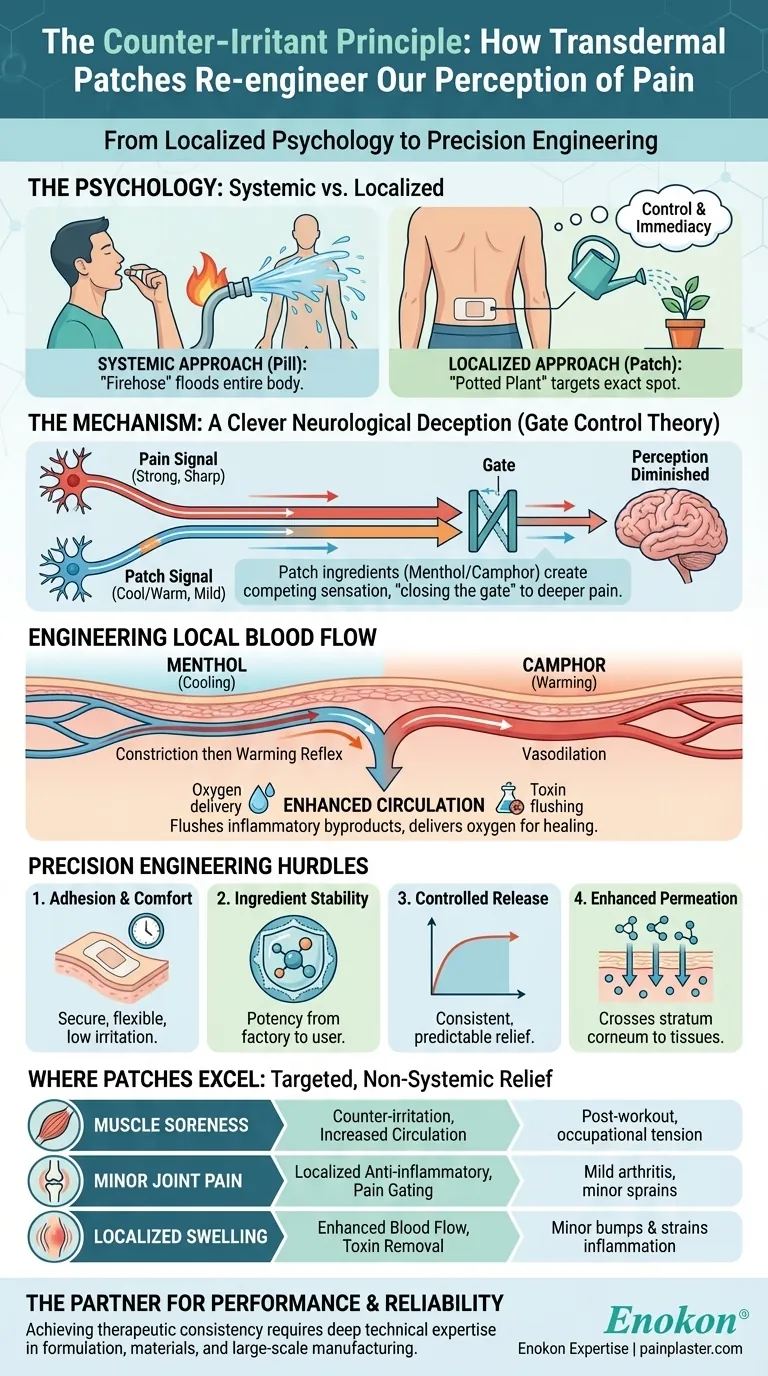
Our first instinct is often systemic. We swallow a pill, which floods our entire body with an active ingredient to hunt down a single, localized source of discomfort. It's an effective, but blunt, instrument—like using a firehose to water a single potted plant.
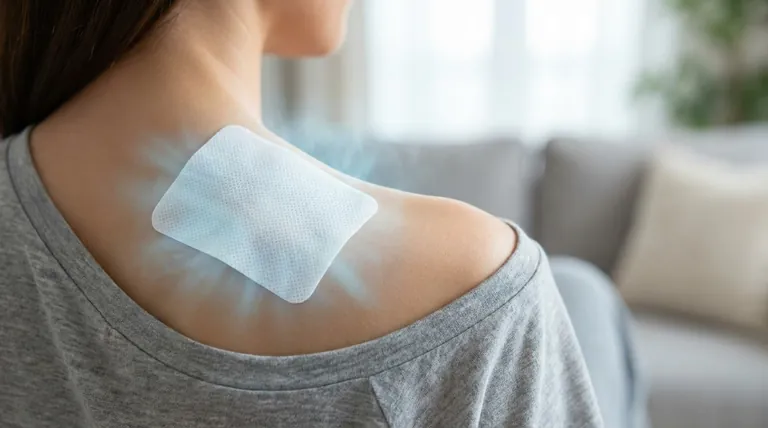
There is a powerful psychological appeal to a more direct approach. The ability to place a remedy exactly where it hurts provides a sense of control and immediacy. This is the simple genius of the transdermal pain patch.
The Mechanism: A Clever Neurological Deception
At first glance, a pain plaster seems simple. But beneath the adhesive is a sophisticated delivery system built on a principle known as "counter-irritation."
It’s less about "numbing" the pain and more about cleverly distracting the nervous system.
The Gate Control Theory of Pain
Imagine your nerve pathways are like a gate that can only allow a limited number of signals to pass through to the brain at one time. A strong, sharp pain signal—like a muscle strain—opens the gate wide.
A modern pain patch introduces a new, competing sensation. Ingredients like menthol and camphor create a persistent cooling or warming feeling. This mild, non-painful signal floods the nerve endings, effectively "closing the gate" to the deeper, more unpleasant pain signal. Your brain pays more attention to the new sensation, and the perception of the original pain diminishes.
Engineering Local Blood Flow
The active ingredients in these plasters do more than just trick the brain; they trigger a physical response.
- Menthol creates a cooling sensation, causing blood vessels near the skin's surface to constrict. The body's natural response is to compensate by increasing blood flow to warm the area back up.
- Camphor and other herbal extracts often act as vasodilators, gently warming the area and directly widening blood vessels.
Both pathways lead to the same outcome: enhanced local circulation. This helps flush out inflammatory byproducts and delivers oxygen-rich blood to the tissue, accelerating the body's natural healing process.
From Ancient Remedy to Precision Engineering
The concept of applying herbal poultices to the skin is thousands of years old. But transforming a traditional remedy into a reliable, mass-produced medical product is a significant engineering challenge.
The difference between an ineffective patch and a high-performance one lies in the sophistication of its transdermal delivery system.
The Technical Hurdles of Delivery
Delivering active ingredients through the skin's tough outer layer (the stratum corneum) requires precision. Success depends on solving several variables at once:
- Adhesion & Comfort: The patch must stick securely for hours through movement and sweat, yet peel off without causing significant skin irritation.
- Ingredient Stability: The active compounds must remain potent and stable within the adhesive matrix from the factory to the end-user.
- Controlled Release: The patch must be engineered to release its ingredients at a steady, consistent rate for predictable, long-lasting relief.
- Enhanced Permeation: The formulation must help the active molecules penetrate the skin barrier to reach the underlying tissues where they are needed most.
Where Transdermal Patches Excel
Because of their targeted, non-systemic nature, pain plasters are an exceptionally effective solution for a specific class of ailments. They offer relief without the potential side effects of oral medications.
| Condition | Primary Mechanism of Action | Ideal Use Case |
|---|---|---|
| Muscle Soreness | Counter-irritation, Increased Circulation | Post-workout recovery, occupational muscle tension |
| Minor Joint Pain | Localized Anti-inflammatory Delivery, Pain Gating | Mild arthritis flare-ups, minor sprains |
| Localized Swelling | Enhanced Blood Flow, Toxin Removal | Reducing inflammation from minor bumps and strains |
The Partner for Performance and Reliability
Achieving this level of therapeutic performance consistently across millions of units requires deep technical expertise in formulation chemistry, material science, and manufacturing processes. It’s one thing to understand the science; it’s another to execute it at scale with unwavering quality.
This is where a specialized manufacturing partner becomes essential. For healthcare distributors and brands looking to deliver reliable, effective pain relief solutions grounded in sound science, our expertise in custom R&D and large-scale manufacturing at Enokon can make all the difference. Contact Our Experts
Visual Guide
Related Products
- Far Infrared Heat Pain Relief Patches Transdermal Patches
- Silicone Scar Sheets Patch Transdermal Drug Patch
- Icy Hot Menthol Medicine Pain Relief Patch
- Mugwort Wormwood Pain Relief Patch for Neck Pain
- Menthol Gel Pain Relief Patch
Related Articles
- Engineering Certainty: The Invisible Architecture of a Gold-Standard Clinical Trial
- The Silent Workhorse: How Transdermal Patches Rewrote the Rules of Pain Management
- Beyond the Pill: The Silent Engineering of Safer Pain Relief
- Beyond Efficacy: The Psychology of Adherence in Topical Pain Relief
- Beyond the Molecule: The Behavioral Science of the Simple Pain Patch



















