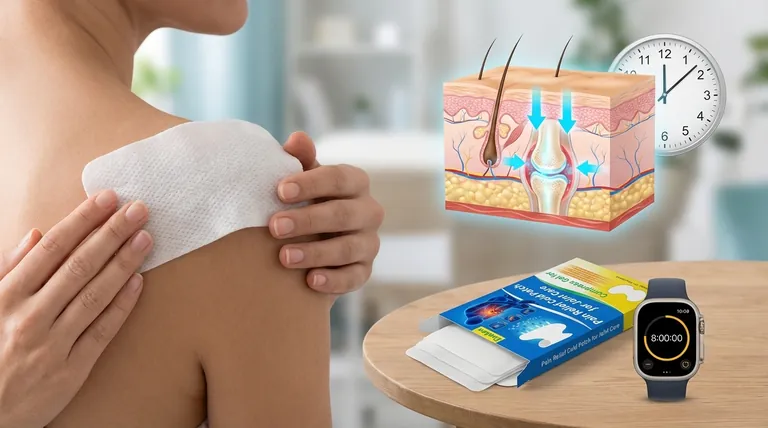
The Psychology of "More is Better"
There's a simple instruction on the box: "Wear for no more than 8 hours."
Our intuition often tells us otherwise. If a pain plaster provides relief, leaving it on longer should surely provide more relief. This cognitive bias—the assumption that more of a good thing is always better—is a powerful one.
But a transdermal patch is not a simple bandage. It's a sophisticated drug delivery system, and its instructions are not suggestions. They are the operating manual for a complex biological and chemical interaction. Ignoring them is like redlining an engine, hoping to get a little more speed before it fails.
More Than a Sticker: The Plaster as a Precision Delivery System
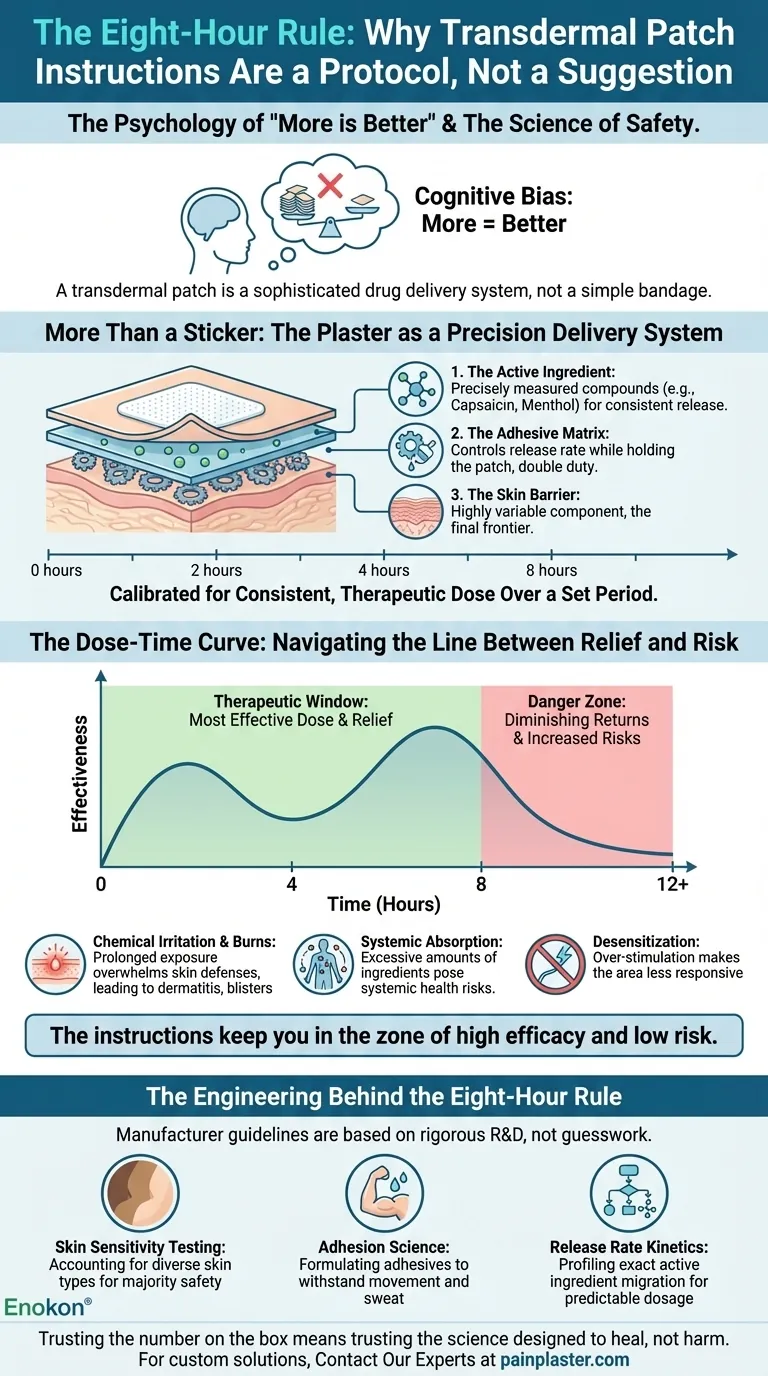
Think of a pain plaster as a time-release capsule for the skin. It’s engineered with three critical components working in harmony:
- The Active Ingredient: Compounds like capsaicin or menthol, precisely measured.
- The Adhesive Matrix: The glue that does double duty—holding the patch in place while also controlling the rate at which the active ingredient is released.
- The Skin Barrier: The final, highly variable component of the system.
The manufacturer's recommended usage time is the result of calibrating how these three elements interact to achieve a specific outcome: delivering a consistent, therapeutic dose over a set period.
The Dose-Time Curve: Navigating the Line Between Relief and Risk
Every effective medical treatment operates within a "therapeutic window." Too little, and it's ineffective. Too much, and it becomes harmful. For transdermal patches, time is the primary factor that controls the dose.
The Therapeutic Window
The first few hours of application are when the plaster delivers its most effective dose, relieving pain as the active ingredients penetrate the skin. The 8-to-12-hour mark is typically the point of diminishing returns, where the drug delivery rate tapers off. Removing it on time ensures you get the benefit without pushing into the danger zone.
When the System Breaks Down: The Risks of Overuse
Going beyond the recommended time invites systemic failure. This isn't just about reduced effectiveness; it's about introducing new risks.
- Chemical Irritation & Burns: Prolonged exposure to concentrated ingredients can overwhelm the skin's defenses, leading to contact dermatitis, blistering, or even mild chemical burns.
- Systemic Absorption: Ingredients like methyl salicylate, if absorbed in excessive amounts, can pose systemic health risks, especially for sensitive individuals or children.
- Desensitization: Over-stimulation of nerve receptors can make the area less responsive to future treatments. The system learns to ignore the signal.
This is the invisible line manufacturers navigate. The instructions are designed to keep the user squarely in the zone of high efficacy and low risk.
| Risk Factor | Consequence of Exceeding Recommended Time |
|---|---|
| Skin Safety | Increased chance of dermatitis, burns, and allergic reactions. |
| Dosage Control | Risk of systemic toxicity from overabsorption. |
| Effectiveness | Diminishing returns and potential skin desensitization. |
| Adhesive Integrity | Degraded adhesion due to sweat and heat, losing contact. |
The Engineering Behind the Eight-Hour Rule
Why are manufacturer guidelines so reliable? Because they are not based on guesswork. They are the output of rigorous research, development, and an understanding of variance.
Calibrated for Human Variables
Reputable manufacturers like Enokon invest heavily in understanding the chaos of the real world. R&D and clinical testing don't just happen in a sterile lab. They account for:
- Skin Sensitivity: Testing on different skin types to find a duration that is safe for the vast majority of users.
- Adhesion Science: Formulating adhesives that can withstand movement and sweat for a specific period before their integrity is compromised.
- Release Rate Kinetics: Profiling the exact rate at which active ingredients migrate from the patch to the skin, ensuring a predictable and stable dose.
The Promise of Predictability
When a healthcare distributor or brand partners with a bulk manufacturer, they aren't just buying a product. They are buying a predictable and safe outcome for the end-user. The instructions on the box are a culmination of this expertise—a promise that the product will perform as intended.
This commitment to engineering and testing is what turns a simple plaster into a reliable therapeutic tool. The goal is to create a system so robust that following one simple rule is all it takes to ensure it works perfectly.
Ultimately, that number on the box is the distillation of immense complexity into a single, actionable instruction. Trusting it means trusting the science that designed the system to heal, not harm. For creating custom transdermal solutions built on this foundation of safety and efficacy, Contact Our Experts
Visual Guide
Related Products
- Far Infrared Heat Pain Relief Patches Transdermal Patches
- Silicone Scar Sheets Patch Transdermal Drug Patch
- Icy Hot Menthol Medicine Pain Relief Patch
- Menthol Gel Pain Relief Patch
- Mugwort Wormwood Pain Relief Patch for Neck Pain
Related Articles
- Engineering Certainty: The Invisible Architecture of a Gold-Standard Clinical Trial
- The Silent Workhorse: How Transdermal Patches Rewrote the Rules of Pain Management
- Beyond the Pill: The Silent Engineering of Safer Pain Relief
- Beyond Efficacy: The Psychology of Adherence in Topical Pain Relief
- Beyond the Molecule: The Behavioral Science of the Simple Pain Patch



















