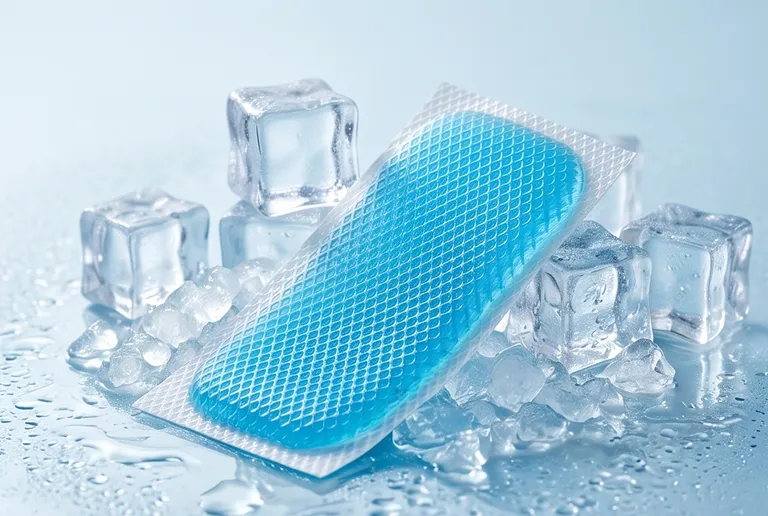
The Midnight Dilemma
It's 2 a.m. Your child has a fever. You reach for a cool cloth, place it on their forehead, and feel a momentary sense of control. But five minutes later, the cloth is warm, the bedding is damp, and your child is restless.
You repeat the process. The cycle of re-wetting, wringing, and replacing is a familiar, frustrating ritual. An ice pack is too harsh, causing shivers and discomfort.
This scenario isn't a failure of care; it's a failure of technology. We instinctively reach for these methods, but they are clumsy instruments for a delicate task. They fight a symptom with brute force, overlooking the deeper human need: sustained, gentle comfort.
Why "Colder" Isn't Better
Our intuition often misleads us when it comes to thermodynamics. We assume that applying something intensely cold is the fastest way to cool something warm. But the human body is a dynamic system, not a hot skillet.
Extreme cold from an ice pack can cause vasoconstriction, where blood vessels narrow, trapping heat deeper inside the body. It’s also profoundly uncomfortable, adding stress to an already difficult situation. The wet cloth is a marginal improvement, but its effectiveness plummets as it quickly matches skin temperature, requiring constant maintenance.
The real challenge isn't just lowering temperature. It's creating a stable, gentle gradient that allows the body to shed excess heat over hours, not minutes.
The Engineering of Simplicity: Enter the Hydrogel
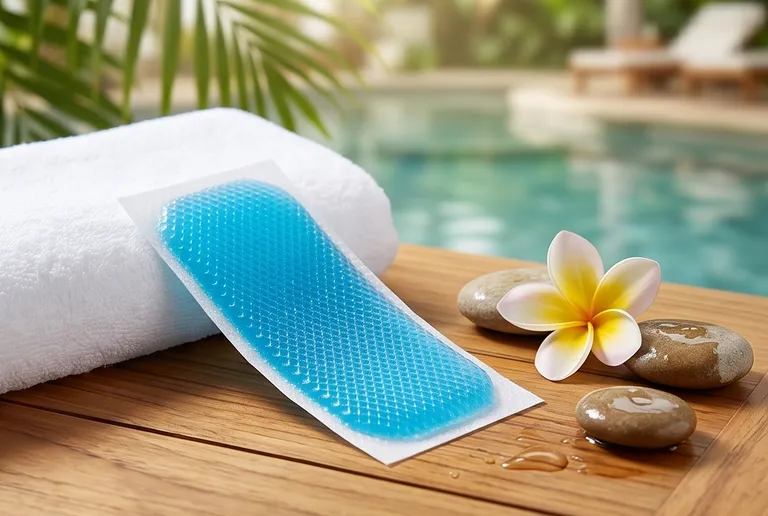
The solution is a marvel of material science, hidden in plain sight: the hydrogel cooling patch.
At its core, a hydrogel is a three-dimensional network of hydrophilic polymers—a sort of "smart sponge" designed to hold a vast amount of water within its structure. This isn't just wet material; it's a stable, cohesive gel that feels cool and dry to the touch.
The genius lies in its passive, predictable mechanism.
How It Works: The Physics of Evaporation
The cooling patch doesn't "project" coldness. Instead, it leverages one of nature's most fundamental processes: evaporation.
- Heat Sink: The high water content in the hydrogel acts as a heat sink, immediately absorbing thermal energy from the skin upon contact.
- Endothermic Process: As the water molecules in the gel slowly transition from liquid to vapor, they require energy. They draw this energy directly from the skin. This heat absorption—an endothermic process—is what creates the continuous cooling sensation.
- Sustained Release: The polymer matrix is the key. It controls the rate of evaporation, ensuring the cooling effect is gentle and lasts for up to eight hours. It’s a slow, steady, and reliable process that requires no external power or refrigeration.
It's not adding cold; it's intelligently subtracting heat.
The Unseen Advantages: A System-Level Solution
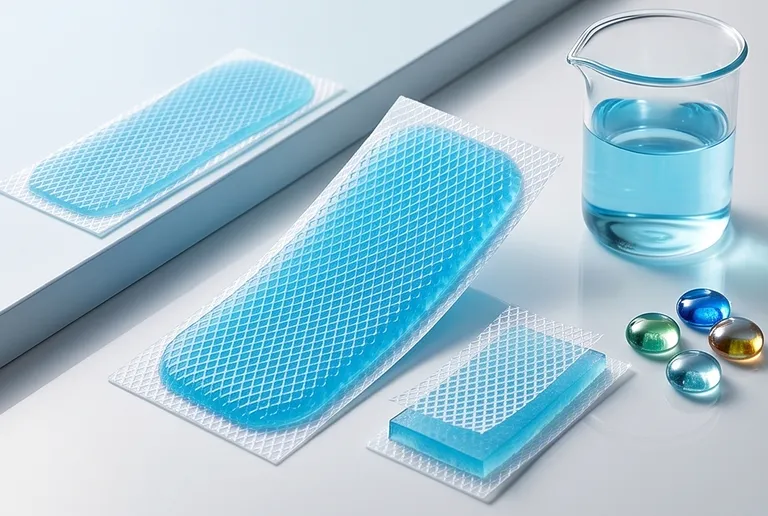
The true brilliance of a well-designed cooling patch extends beyond its physical mechanism. It solves the entire system of providing fever care.
-
Duration and Autonomy: An eight-hour duration means uninterrupted rest for both the patient and the caregiver. It transforms fever management from an active, high-maintenance task into a passive, set-it-and-forget-it solution.
-
Safety by Design: Because the cooling is purely physical, the patch is drug-free. This eliminates concerns about medication interactions, dosages, or side effects, reducing the cognitive load on a worried parent or caregiver. It works with the body's systems, not against them.
-
Engineered for Humans: Unlike a dripping cloth or a rigid ice pack, a hydrogel patch is designed for the real world. Its flexible material conforms to the body, and its gentle adhesive ensures it stays in place without irritating the skin. It delivers comfort without compromise.
| Feature Comparison | Wet Cloth | Ice Pack | Hydrogel Patch |
|---|---|---|---|
| Mechanism | Limited Evaporation | Conduction | Sustained Evaporation |
| Duration | 5-10 Minutes | 15-20 Minutes | Up to 8 Hours |
| Comfort Level | Low (messy, requires re-wetting) | Low (too intense, rigid) | High (gentle, flexible, dry) |
| Convenience | Low | Medium | High |
| Safety | High | Medium (risk of skin damage) | Very High (drug-free, hypoallergenic) |
Manufacturing Reliability into Comfort
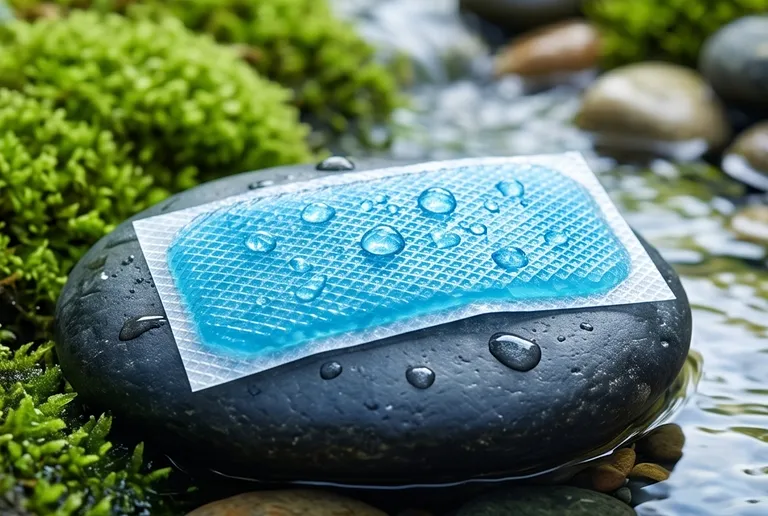
The simple elegance of the hydrogel patch is entirely dependent on the quality of its execution. A brilliant concept fails if the material science isn't precise.
The polymer composition must be exact to ensure optimal water retention and evaporation rate. The adhesive needs to be strong enough to hold yet gentle enough for sensitive skin. Consistency in manufacturing is not a detail; it is the product.
At Enokon, we specialize in the bulk manufacturing of these precisely engineered transdermal systems. We understand that for healthcare distributors and brands, reliability is non-negotiable. Our expertise in custom R&D and large-scale production ensures that every hydrogel patch delivers the same safe, consistent, and effective comfort.
For healthcare brands and distributors looking to provide this level of reliable, engineered comfort, the quality of the underlying technology is paramount. To explore custom development or secure a supply of high-performance hydrogel patches, Contact Our Experts.
Related Products
- Medical Cooling Gel Patches for Fever Cooling Patches
- Hydra Gel Health Care Eye Patch
- Lidocaine Hydrogel Pain Relief Patch for Pain Relief
- Cooling Fever Patches Color Change Cold Fever Patch
- Menthol Gel Pain Relief Patch
Related Articles
- The Quiet Engineering of Comfort: Decoding the 8-Hour Lifespan of a Cooling Patch
- The Silent Guardian: Deconstructing the Engineering of Nighttime Cooling Patches
- The Quiet Genius of the Cooling Patch: Beyond the Fever
- Beyond Size: The Hidden Physiology in Cooling Patch Design
- The Last Centimeter: Why How You Apply a Transdermal Patch Defines Its Success













