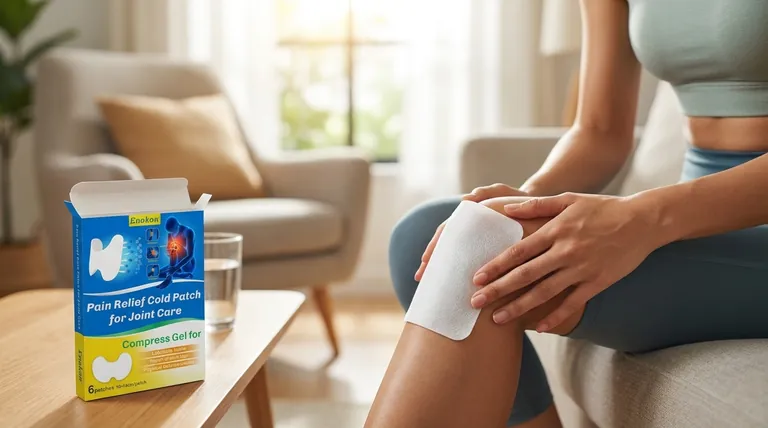
The Anatomy of an Injury
It starts with a single, wrong movement. A twisted ankle on the court, a strained muscle in the gym. The immediate problem is the sharp, localized pain.
But the secondary problem, the one that unfolds over the next few days and weeks, is the management of that pain. It's the recurring chore of treatment, a constant reminder of the injury that disrupts the rhythm of daily life.
Effective recovery isn't just about chemistry; it's about consistency. And consistency is a deeply human challenge.
The Treatment Dilemma: Application vs. Adherence
For decades, topical NSAID gels like diclofenac have been a mainstay for sports-related injuries. They work. But their efficacy is directly tied to a patient's discipline.
Applying a gel three times a day isn't just a medical instruction; it's a cognitive load. It's remembering to pack it, finding a place to apply it, the stickiness, the smell, the wait for it to dry. Each application is a small friction point.
This is where the transdermal patch, specifically the ketoprofen patch, enters the conversation. It proposes a different contract with the patient: apply it once and forget it. This seemingly small difference changes the entire dynamic of recovery.
A Head-to-Head Comparison: Deconstructing the Data
When ketoprofen patches are compared directly with diclofenac gel for sport-related injuries, the data reveals a compelling narrative that goes beyond simple pain reduction.
Efficacy: A Tale of Margins and Meaning
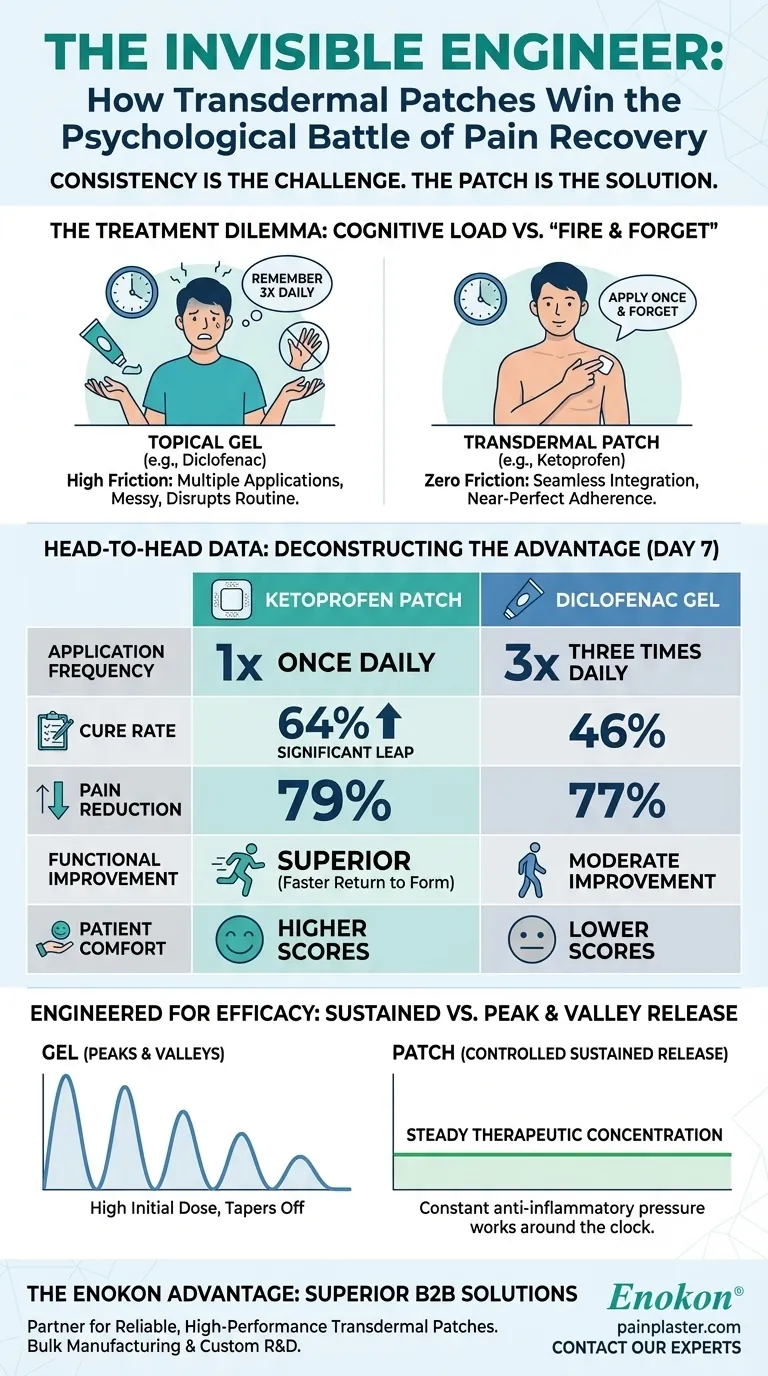
On the surface, the numbers seem close. After seven days, ketoprofen patches deliver a 79% reduction in pain, while diclofenac gel achieves 77%.
A 2% difference may seem trivial. But in the world of pain, every percentage point matters. More decisively, the cure rate tells a clearer story: 64% for the ketoprofen patch versus 46% for the diclofenac gel. This isn't a marginal gain; it's a significant leap in clinical resolution.
Functionality: More Than Just Numbing Pain
Pain relief is only half the battle. The true goal is returning to normal life.
Studies show ketoprofen patches provide superior improvement in functional disability by day 7. This means athletes regain mobility and the ability to perform daily activities faster. The patch is not just masking the pain; it's facilitating a quicker return to form.
The Human Factor: The Psychology of "Once-a-Day"
The most profound advantage may be the simplest one: application frequency.
- Ketoprofen Patch: Apply once daily.
- Diclofenac Gel: Apply three times daily.
The "fire and forget" nature of a patch removes the friction and mental load of treatment. This leads to near-perfect adherence. A therapy that is used consistently will always outperform a therapy that is used intermittently. Unsurprisingly, patients report higher scores for comfort, tolerance, and overall acceptability with the patch.
The Engineering Behind the Advantage
The patch's superiority isn't magic; it's elegant engineering. It’s a sophisticated drug delivery system masquerading as a simple adhesive.
A gel provides a high initial dose that tapers off. A patch, however, provides a controlled, sustained release of the active ingredient directly at the site of injury.
This creates a steady therapeutic concentration in the tissue, avoiding the peaks and valleys of multi-dose regimens. It’s a quiet, constant anti-inflammatory pressure that works around the clock, enhancing efficacy in reducing pain on passive motion and pressure.
Summary: Patch vs. Gel
| Metric | Ketoprofen Patch | Diclofenac Gel |
|---|---|---|
| Application Frequency | Once daily | Three times daily |
| Cure Rate | 64% | 46% |
| Pain Reduction (Day 7) | 79% | 77% |
| Functional Improvement | Superior by day 7 | Moderate improvement |
| Patient Comfort | Higher scores | Lower scores |
The Future of Topical Pain Management
The evidence points to a clear conclusion. While both treatments are effective, the transdermal patch represents a more advanced, human-centric approach to recovery. It acknowledges that the best treatment is the one that integrates seamlessly into a patient's life.
For healthcare distributors and pharmaceutical brands looking to provide solutions that offer superior clinical outcomes and patient preference, the choice is clear. Partnering with a manufacturer that possesses deep technical expertise in transdermal technology is paramount. At Enokon, we specialize in the bulk manufacturing of reliable, high-performance transdermal patches and offer custom R&D to meet your specific needs.
To elevate your product line with a solution engineered for efficacy and designed for real life, Contact Our Experts.
Visual Guide
Related Products
- Menthol Gel Pain Relief Patch
- Lidocaine Hydrogel Pain Relief Patch for Pain Relief
- Icy Hot Menthol Medicine Pain Relief Patch
- Herbal Medicated Anti Diarrhea Patch for Digestive Relief
- Capsaicin Chili Medicated Pain Relief Patches
Related Articles
- Beyond Efficacy: The Psychology of Adherence in Topical Pain Relief
- The 60-Minute Architecture: Engineering Predictability in Topical Pain Relief
- More Than a Feeling: The Precise Engineering of Cold vs. Hot Pain Relief
- Beyond the Molecule: The Behavioral Science of the Simple Pain Patch
- The Human Interface of Pain Relief: Why Delivery Systems Define Success



















