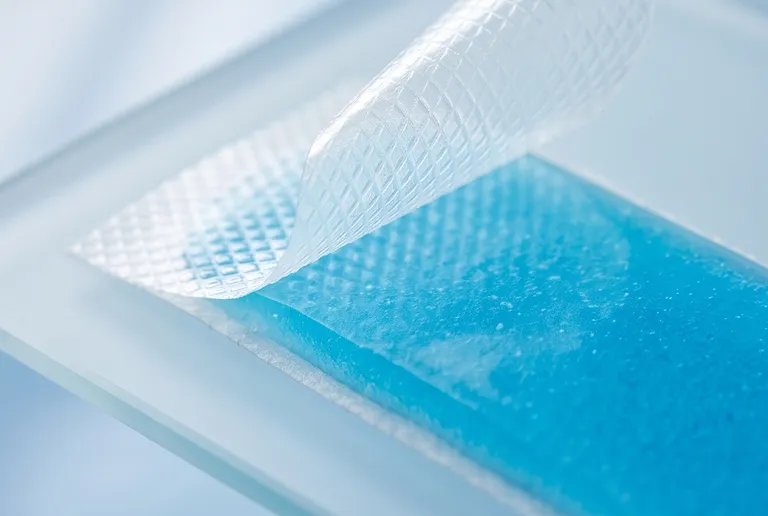
It's 2 a.m. A child has a fever. In the dim light of a nightlight, a parent fumbles with the packaging of a cooling patch. They peel it, press it onto a warm forehead, and hope for relief.
In these moments, the entire success of a sophisticated medical product—the result of countless hours of material science research, formulation, and quality control—comes down to a single, simple action. This is the "last centimeter" of healthcare delivery, and it’s where brilliant engineering often meets the friction of human reality.
The effectiveness of a transdermal patch isn't just stored in its hydrogel layer. It’s unlocked in the dialogue between the patch and the skin.
The Interface Problem: Where a Product Becomes a Solution
We tend to think of a patch as a self-contained object. But the moment it's applied, it becomes part of a system. The patch is one half; the skin is the other. If the connection between them is flawed, the system fails.
This isn't a design flaw in the user; it's a challenge for the engineer. The most common points of failure aren't chemical, but physical. They happen at the surface.
Preparing the Canvas: Skin Is Not a Passive Surface
The instruction to "clean and dry the skin" sounds trivial. We often skip it in our haste.
Psychologically, we're primed to focus on the goal (applying the patch) and minimize the prep work. But skin is a dynamic organ. It produces oils and sweat, creating a microscopic film that can cripple adhesion. Moisture acts as a barrier, preventing the patch's adhesive from achieving a proper molecular bond.
- The Enemy: Oils, lotions, and residual moisture.
- The Goal: Create a clean, dry interface for optimal contact.
- The Action: A simple wipe with a damp cloth, followed by thorough drying, isn't just about hygiene; it's about preparing the surface for a critical engineering task.
The Art of Handling: Preserving Stored Potential
A cooling patch is a vessel of potential energy. Its hydrogel matrix is designed to absorb and dissipate thermal energy efficiently. But that potential is fragile.
When you touch the adhesive side, you contaminate it with skin oils, weakening its bond. When you peel the backing film carelessly, you risk creating micro-tears in the gel. Each mistake slightly degrades the patch's peak performance before it even touches the skin.
Treating the patch with care is like an engineer handling a sensitive calibrated instrument. The goal is to transfer it from its sterile, controlled environment to its operational one with its potential fully intact.
Strategic Placement & The Final Bond
Why the forehead, temples, or back of the neck? Because the goal isn't just to cool the skin; it's to cool the blood circulating beneath it. These areas are dense with superficial blood vessels, acting as natural heat exchangers for the body.
Once the location is chosen, the final bond is everything.
An air bubble trapped between the patch and the skin is not an empty space. It’s a pocket of insulation. Air is a terrible conductor of heat. A single, small bubble can render a patch significantly less effective in that area, creating a "cold spot" in its performance.
Smoothing the patch from the center outwards is a deliberate act of removing this insulator and ensuring total contact. It's the final, crucial step in completing the thermal circuit.
| Stage | The Simple Instruction | The Underlying Engineering Principle |
|---|---|---|
| Preparation | Clean and dry skin. | Maximize surface adhesion and remove thermal barriers. |
| Handling | Don't touch the adhesive. | Preserve the integrity of the bonding agent. |
| Placement | Apply to the forehead/neck. | Target areas of high blood flow for efficient heat exchange. |
| Adhesion | Smooth out air bubbles. | Eliminate air pockets that act as thermal insulators. |
Designing for Reality
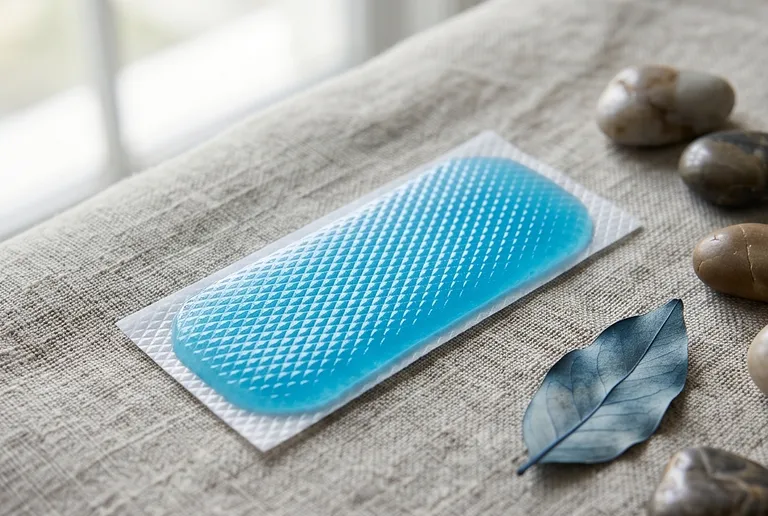
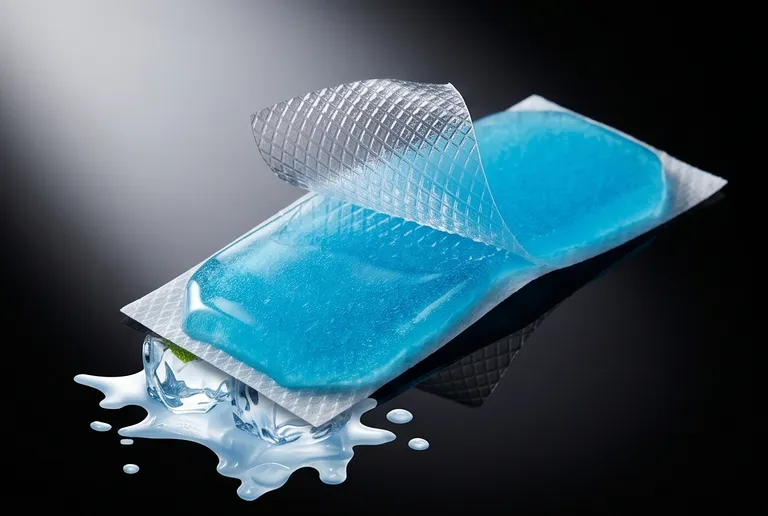
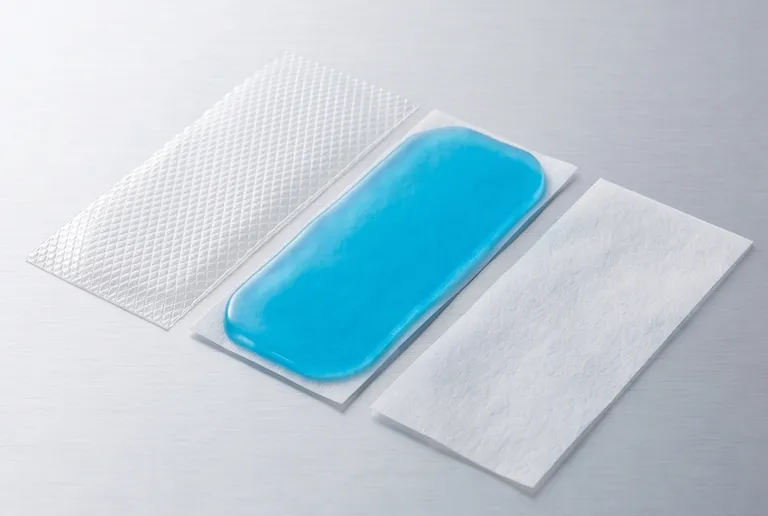
These user-dependent variables are precisely why the intrinsic quality of the patch itself is non-negotiable. A superior patch is designed with the "last centimeter" in mind. It must be forgiving of the imperfect, real-world conditions of that 2 a.m. scenario.
This is where manufacturing expertise becomes the ultimate feature. At Enokon, we specialize in the bulk manufacturing of transdermal patches where reliability is engineered into the core product.
Our R&D focuses on creating hydrogels that maintain stability and adhesives that offer tenacious yet gentle bonding. We design patches that are robust enough to handle fumbling fingers and flexible enough to conform perfectly to the skin, minimizing the risk of air bubbles. For our healthcare and pharmaceutical partners, this means delivering a product that works not just in a lab, but in the chaos of life.
Ultimately, the goal of great design is to make the correct application the easiest one. It’s about bridging that final, critical centimeter between the product and the person. If your brand needs a partner who understands this discipline, Contact Our Experts.
Related Products
- Cooling Fever Patches Color Change Cold Fever Patch
- Medical Cooling Gel Patches for Fever Cooling Patches
- Herbal Eye Protection Patch Eye Patch
- Hydra Gel Health Care Eye Patch
- Icy Hot Menthol Medicine Pain Relief Patch
Related Articles
- The Quiet Engineering of Comfort: Decoding the 8-Hour Lifespan of a Cooling Patch
- The Physics of Comfort: Why Engineered Cooling Patches Outperform Traditional Fever Care
- Beyond the Pill: The Engineering and Psychology of Modern Fever Relief
- Beyond Size: The Hidden Physiology in Cooling Patch Design
- The Silent Guardian: Deconstructing the Engineering of Nighttime Cooling Patches



















