The Allure of the Simple Fix
We all know the feeling. A dull ache in the lower back, a sharp twinge in the shoulder. In these moments, we crave a simple, direct solution.
The pain plaster, or transdermal patch, is the perfect answer. It’s a tangible, localized fix we can apply directly to the source of our discomfort. It’s an intuitive solution that bypasses the complexity of pills and systemic medicine.
This psychological pull toward simplicity is powerful. But it masks a deeper biological truth: the interaction between a patch and our body is anything but simple.
The Skin Is Not a Passive Barrier
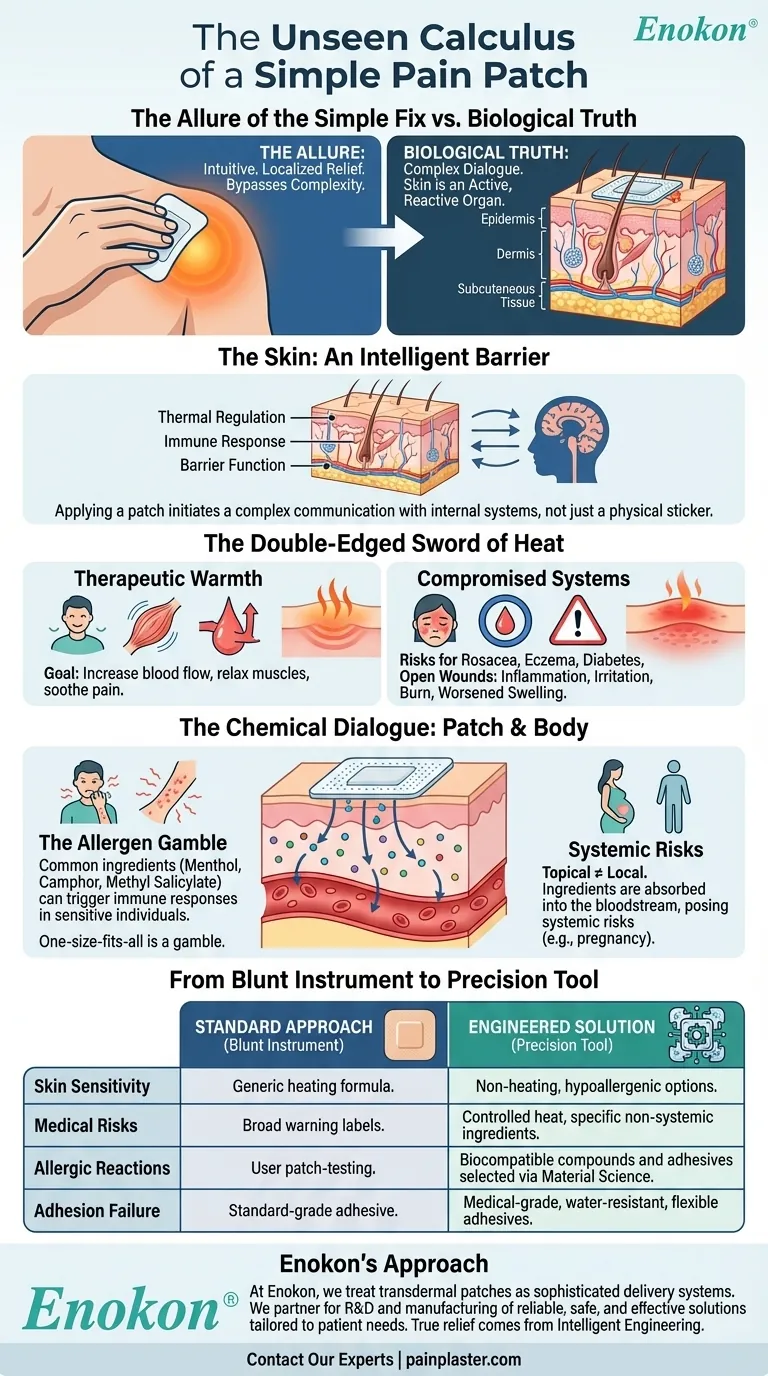
We tend to think of our skin as a simple wrapper. In reality, it's a dynamic, reactive organ—an intelligent barrier that communicates with our internal systems. Applying a medicated patch is not like placing a sticker on a wall; it's initiating a complex dialogue.
The Double-Edged Sword of Heat
Many pain plasters work by generating heat. The goal is to increase blood flow, relax muscles, and soothe pain. For most, this warmth is therapeutic.
But imagine you have rosacea or eczema. Your skin's thermal regulation system is already compromised. For you, this "soothing" heat isn't a relief; it's an antagonist. It can trigger inflammation, irritation, or even a mild burn. The simple solution has become the source of a new problem.
When Heat Meets a Compromised System
The calculus gets even more complex for individuals with underlying conditions. Someone with diabetes may have peripheral neuropathy, a condition that impairs their ability to sense temperature. They might not feel a patch becoming dangerously hot until a burn has already formed.
Similarly, applying heat to an area with acute inflammation or an open wound can worsen swelling and promote bacterial growth. It's like fanning the flames of a fire you're trying to put out. The patch doesn't know the difference; it only performs its one function.
The Chemical Dialogue Between Patch and Body
Beyond the physical effect of heat, there's the chemical delivery. A transdermal patch is a sophisticated drug delivery system, designed to release active ingredients through the skin barrier and into the bloodstream.
The Allergen Gamble
Common ingredients like menthol, camphor, and methyl salicylate are highly effective. They are also potential allergens. For a person with a sensitivity, the application of a patch initiates an immune response—a cascade of itching, redness, and discomfort.
This is why a one-size-fits-all formulation is inherently a gamble. What provides relief to millions can cause an adverse reaction in one.
Systemic Risks from a Topical Solution
The most overlooked aspect is that "topical" does not mean "local." Ingredients are absorbed into the body. For pregnant women, for instance, excessive absorption of certain compounds like methyl salicylate can pose risks.
The patch is a gateway to the entire body. Its design must account for this systemic responsibility.
From a Blunt Instrument to a Precision Tool
A generic pain plaster is a blunt instrument. It's designed for the "average" person, but in medicine and biology, the average is often a statistical fiction. True efficacy lies in precision and customization.
This is where the engineering mindset must take over. The challenge isn't just creating a patch that delivers a payload; it's designing a system that works in harmony with the vast diversity of human biology.
This requires deep technical expertise in:
- Formulation Chemistry: Developing hypoallergenic alternatives for sensitive skin.
- Adhesive Technology: Ensuring the patch stays on during intense activity or in humid environments without causing skin trauma upon removal.
- Controlled Release Mechanisms: Tailoring the dose and delivery rate to specific needs.
| Problem Area | Standard Approach | Engineered Solution |
|---|---|---|
| Skin Sensitivity | Generic heating formula | Non-heating options; hypoallergenic adhesives and formulations. |
| Medical Risks | Broad warning labels | Development of patches with lower, controlled heat or specific non-systemic ingredients. |
| Allergic Reactions | Relies on user patch-testing | Material science to select biocompatible compounds and adhesives from the start. |
| Adhesion Failure | Standard-grade adhesive | Medical-grade, water-resistant adhesives designed for flexibility and skin health. |
At Enokon, we treat transdermal patches not as simple products, but as sophisticated delivery systems. We partner with healthcare distributors and brands to move beyond the one-size-fits-all model, applying our R&D and manufacturing expertise to create reliable, safe, and effective solutions tailored to specific patient populations.
Because true relief comes not from a simple fix, but from an intelligent one. For brands committed to providing solutions that are as safe as they are effective, the conversation begins with precision engineering. Contact Our Experts
Visual Guide
Related Products
- Far Infrared Pain Patch Relief Pain Reliever for Back
- Mugwort Wormwood Pain Relief Patch for Neck Pain
- Far Infrared Knee Pain Patch Heat Patches for Pain Relief
- Icy Hot Menthol Medicine Pain Relief Patch
- Far Infrared Deep Heat Relief Patches Medicated Pain Relief Patches
Related Articles
- Beyond Efficacy: The Psychology of Adherence in Topical Pain Relief
- More Than a Sticker: The Hidden Engineering of a Safe Pain Patch
- The Architecture of Relief: Deconstructing the Modern Pain Patch
- Beyond the Molecule: The Behavioral Science of the Simple Pain Patch
- Beyond Pain Relief: The Compounding Returns of Restored Mobility



















