
When dealing with a new injury, you should not use a heat patch. Applying heat to a fresh, or acute, injury will increase blood flow to the area. This can significantly worsen the swelling and inflammation, which in turn can increase pain and prolong the healing process.
The core principle of initial injury treatment is to manage inflammation. For a fresh injury with swelling, always choose cold to constrict blood vessels. Heat should only be reserved for chronic stiffness and muscle soreness once the initial inflammatory phase has passed.
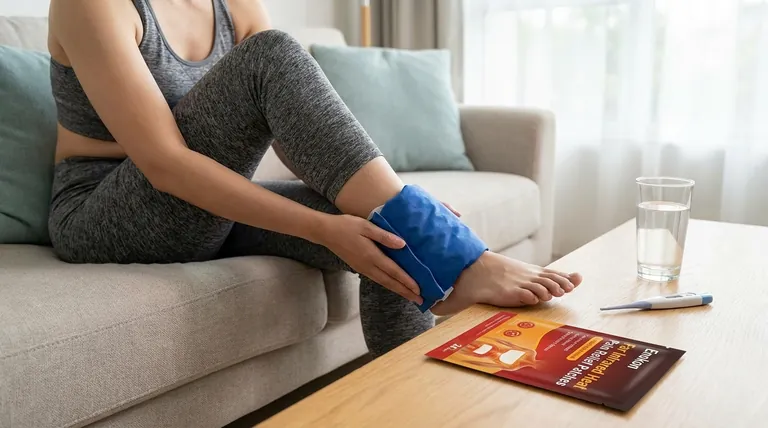
Understanding the First 48 Hours: The Acute Phase
What Happens When You Get Injured?
When you sprain an ankle or pull a muscle, tiny blood vessels in the area are damaged and begin to leak fluid into the surrounding tissue. This triggers an immediate inflammatory response from your body.
The Goal of Initial Treatment
While inflammation is a natural part of healing, excessive swelling can cause significant pain and limit your range of motion. The primary goal in the first 48 hours is to minimize this swelling to reduce pain and set the stage for a faster recovery.
Why Heat Worsens an Acute Injury
Heat is a vasodilator, meaning it opens up your blood vessels. Applying a heat patch to a new injury is like opening a floodgate. It encourages more blood and fluid to rush to the already damaged area, dramatically increasing swelling and inflammation.
The Correct Protocol for Fresh Injuries: Cold Therapy
The Role of Cold
Cold therapy, such as an ice pack, is the correct approach for an acute injury. Cold acts as a vasoconstrictor, which does the exact opposite of heat.
By narrowing the blood vessels, a cold pack restricts blood flow to the injured site. This directly combats swelling, helps numb nerve endings to reduce pain, and minimizes bruising.
When to Switch to Heat
The time to consider using a heat patch is typically after the initial 48-72 hours, once the acute inflammation has subsided. At this point, the swelling should have stabilized.
Heat can then be beneficial for soothing sore, stiff muscles and increasing circulation to bring oxygen and nutrients that aid in the later stages of healing.
Common Pitfalls and Key Considerations
Applying Heat Too Soon
The most common mistake is applying heat during the acute inflammatory phase. This single error can turn a minor injury into a much more painful and swollen one, extending the overall recovery timeline.
Don't Confuse Injury Types
Heat is excellent for chronic conditions like persistent muscle tightness, arthritis pain, or pre-activity warm-ups where there is no swelling. Do not apply this logic to a sudden sprain, strain, or impact injury.
When to See a Professional
Self-treatment is appropriate for minor injuries. However, if you experience severe pain, are unable to put weight on a limb, notice an obvious deformity, or if the swelling is extreme, it is crucial to seek medical advice from a doctor or physical therapist.
Making the Right Choice for Your Goal
- If your injury is new (less than 48 hours) and involves swelling: Use cold therapy (ice packs) for 15-20 minutes at a time to reduce inflammation and pain.
- If you are dealing with chronic muscle stiffness or soreness without swelling: Use a heat patch to relax tissues and improve blood flow.
- If you are ever in doubt about the nature of your injury: Avoid both heat and cold and consult a healthcare professional for an accurate diagnosis.
By understanding how temperature affects your body's healing process, you can make the correct choice to recover safely and effectively.
Summary Table:
| Injury Type | Recommended Therapy | Key Goal |
|---|---|---|
| Fresh Injury (<48 hours, with swelling) | Cold Therapy (Ice Pack) | Reduce inflammation and pain |
| Chronic Stiffness/Soreness (No swelling) | Heat Patch | Relax muscles, improve blood flow |
Need reliable, high-quality pain relief solutions for your customers?
As a bulk manufacturer of transdermal patches and pain plasters, Enokon partners with healthcare and pharma distributors and brands to deliver effective, custom-developed products. Whether you need standard heat patches for chronic pain or custom R&D for specialized formulations, our technical expertise ensures superior performance and patient satisfaction.
Contact our experts today to discuss your manufacturing needs and enhance your product line with trusted, therapeutic solutions.
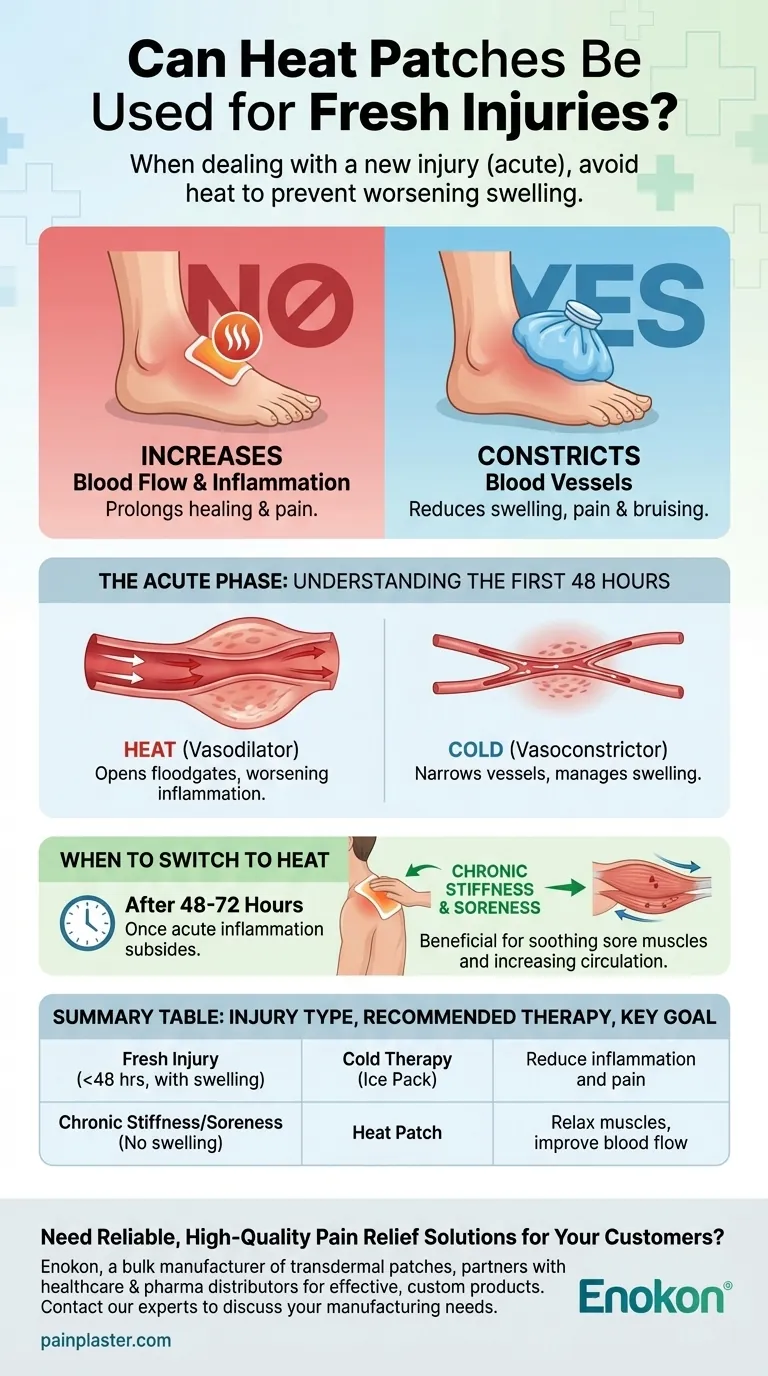
Visual Guide
Related Products
- Far Infrared Heat Pain Relief Patches Transdermal Patches
- Heating Pain Relief Patches for Menstrual Cramps
- Far Infrared Knee Pain Patch Heat Patches for Pain Relief
- Far Infrared Deep Heat Relief Patches Medicated Pain Relief Patches
- Heat Relief Capsicum Patch for Lower Back Pain Relief
People Also Ask
- Why is the selection of matrix materials critical when developing customized transdermal patches? Optimize Efficacy
- What role does a skin tolerance scoring system play in the safety evaluation of transdermal patches? Key Safety Metrics
- What are the clinical advantages of local transdermal delivery systems? Unlock Safer, More Effective Pain Relief Solutions
- What are the physical impacts of external heat exposure on the performance and safety of transdermal patches? - Guide
- How does high-purity far-infrared ceramic powder contribute to the efficacy of far-infrared physical therapy patches?



















