
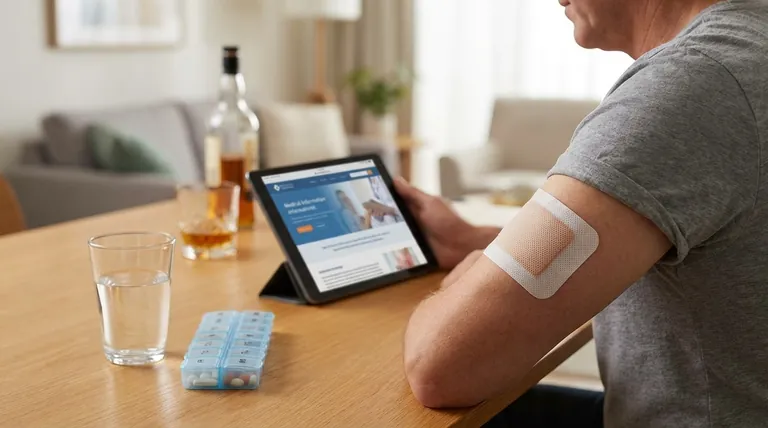
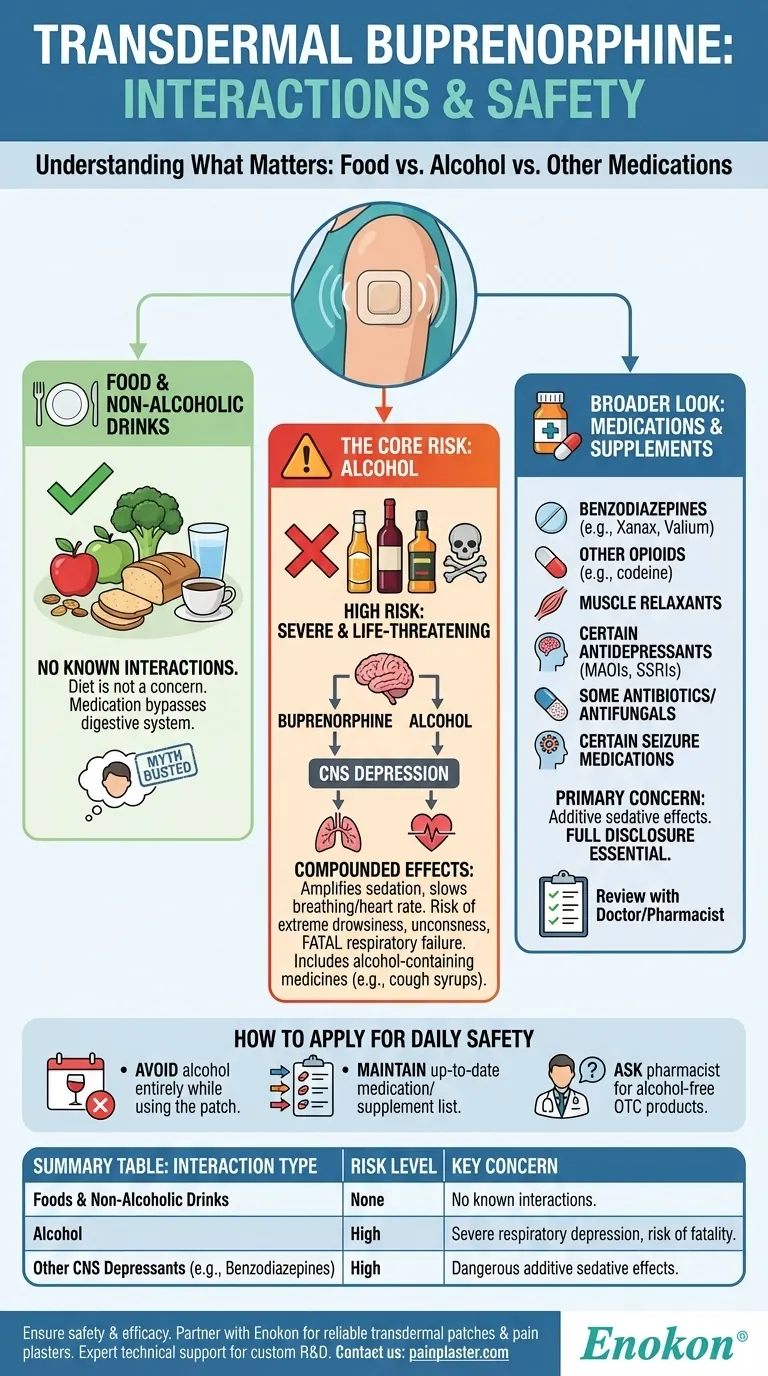
To be direct, there are no known interactions between transdermal buprenorphine and any foods or nonalcoholic drinks. However, the critical interaction to be aware of is with alcohol. Consuming alcohol while using a buprenorphine patch can amplify its sedative effects, potentially leading to severe and life-threatening breathing problems.
While your diet is not a concern, the central issue is avoiding the combined sedative effects of buprenorphine and other substances. Alcohol is the most common and dangerous substance in this category for most people.
The Core Risk: Central Nervous System Depression
The warning against alcohol isn't arbitrary; it's based on how buprenorphine and alcohol both function within your body. Understanding this mechanism is key to using the medication safely.
How Buprenorphine Works
Buprenorphine is a powerful opioid medication. Like other opioids, it works by depressing, or slowing down, the central nervous system (CNS). This action is what provides pain relief, but it also affects other critical functions, including your breathing rate.
The Additive Effect of Alcohol
Alcohol is also a potent CNS depressant. When you consume alcohol, it slows brain function, impairs judgment, and reduces respiratory drive.
The Critical Danger: Compounded Effects
When you combine buprenorphine and alcohol, you are layering one CNS depressant on top of another. This creates a compounded effect that can dangerously slow your breathing and heart rate, leading to extreme drowsiness, loss of consciousness, or even fatal respiratory failure.
Beyond Alcohol: A Broader Look at Interactions
Your concern for safety should extend beyond just food and drink. Buprenorphine can interact with a wide range of other medications, often for the same reason it interacts with alcohol—the risk of compounded CNS depression.
Why Drug Interactions Are the Primary Concern
The list of potential drug interactions is far more extensive and critical than any dietary consideration. It is essential to provide your healthcare provider with a complete list of everything you take.
Key Medications to Discuss with Your Doctor
Several classes of drugs are known to interact with buprenorphine. These include, but are not limited to:
- Benzodiazepines (e.g., Xanax, Valium, Ativan)
- Other Opioids (e.g., codeine, oxycodone, morphine)
- Muscle Relaxants
- Certain Antidepressants (MAOIs, SSRIs, tricyclics)
- Some Antibiotics and Antifungals (e.g., erythromycin, ketoconazole)
- Certain Seizure Medications (e.g., carbamazepine, phenytoin)
The Importance of Full Disclosure
Always inform your doctor and pharmacist about every prescription medication, over-the-counter drug, vitamin, and herbal supplement you use. This is the only way to screen for potentially dangerous interactions effectively.
Common Pitfalls and Misconceptions
Understanding what doesn't matter can be as important as understanding what does. Focusing on the wrong things can distract from the real safety measures you need to take.
The Myth of Food Interactions
Again, no specific foods have been shown to interfere with the absorption or effectiveness of transdermal buprenorphine. Because the medication is absorbed through the skin, it bypasses the digestive system, making food interactions highly unlikely.
"Alcohol-Containing Medicines"
Be aware that the warning extends to medicines that contain alcohol. Many liquid cough syrups, colds formulas, and mouthwashes contain significant amounts of alcohol. Always check the labels of over-the-counter products.
Underestimating Drowsiness
The initial signs of an interaction can be increased dizziness or sleepiness. Do not dismiss these symptoms. They are an early warning that your central nervous system is being overly suppressed.
How to Apply This to Your Treatment
Your goal is to get the full therapeutic benefit of buprenorphine while minimizing risk. This requires active participation and open communication with your healthcare team.
- If your primary focus is daily safety: Avoid consuming alcohol entirely while using transdermal buprenorphine.
- If you take other medications: Maintain an up-to-date list of all medications and supplements to review with your doctor and pharmacist at every visit.
- If you need a new over-the-counter product: Ask your pharmacist to help you select one that is free of alcohol and will not interact with your patch.
Ultimately, taking an active role in understanding your medication is the most effective way to ensure your safety and well-being.
Summary Table:
| Interaction Type | Risk Level | Key Concern |
|---|---|---|
| Foods & Non-Alcoholic Drinks | None | No known interactions. |
| Alcohol | High | Severe respiratory depression, risk of fatality. |
| Other CNS Depressants (e.g., Benzodiazepines) | High | Dangerous additive sedative effects. |
Ensure the safety and efficacy of your pain management products. Partner with Enokon, a bulk manufacturer of reliable transdermal patches and pain plasters. We provide expert technical support for custom R&D and development of pharmaceutical-grade patches, including complex formulations like buprenorphine. Let us help you deliver safe, effective solutions to your patients. Contact our specialists today to discuss your project needs.
Visual Guide
Related Products
- Menthol Gel Pain Relief Patch
- Far Infrared Heat Pain Relief Patches Transdermal Patches
- Icy Hot Menthol Medicine Pain Relief Patch
- Silicone Scar Sheets Patch Transdermal Drug Patch
- Mugwort Wormwood Pain Relief Patch for Neck Pain
People Also Ask
- How do pain relief patches compare to other pain relief methods? Discover Targeted, Long-Lasting Relief
- How effective are pain relief patches for muscle pain? Target Localized Pain with Transdermal Delivery
- Who should consult a healthcare professional before using pain relief patches? Ensure Your Safety with Medical Advice
- What are some common applications of pain relief patches? Effective Relief for Muscle & Joint Pain
- Can pregnant women use pain relief patches? Your Essential Guide to Safe Pain Management






