
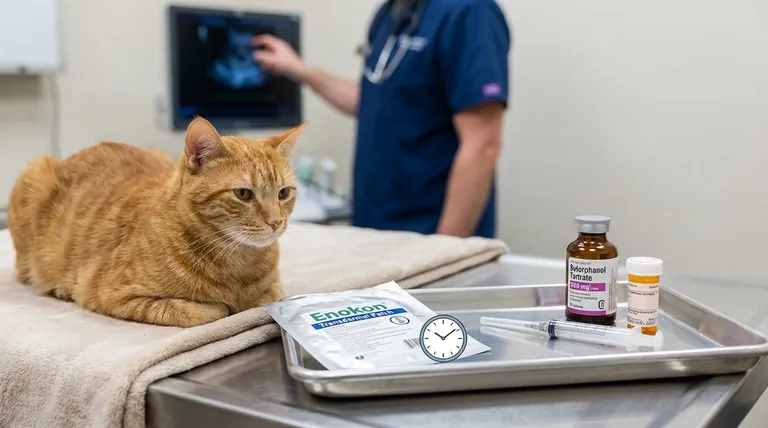
Transdermal fentanyl and butorphanol are both used for pain management in cats, but they differ significantly in duration and mechanism of action. Transdermal fentanyl, delivered via a Fentanyl Transdermal Patch, provides sustained analgesia for up to 72 hours, making it suitable for prolonged pain relief. Butorphanol, typically administered intermittently, offers shorter-term relief and requires more frequent dosing. While both drugs can achieve equivalent analgesia initially, fentanyl's extended duration reduces the need for repeated interventions, enhancing patient comfort and simplifying pain management protocols.
Key Points Explained:
-
Duration of Analgesia
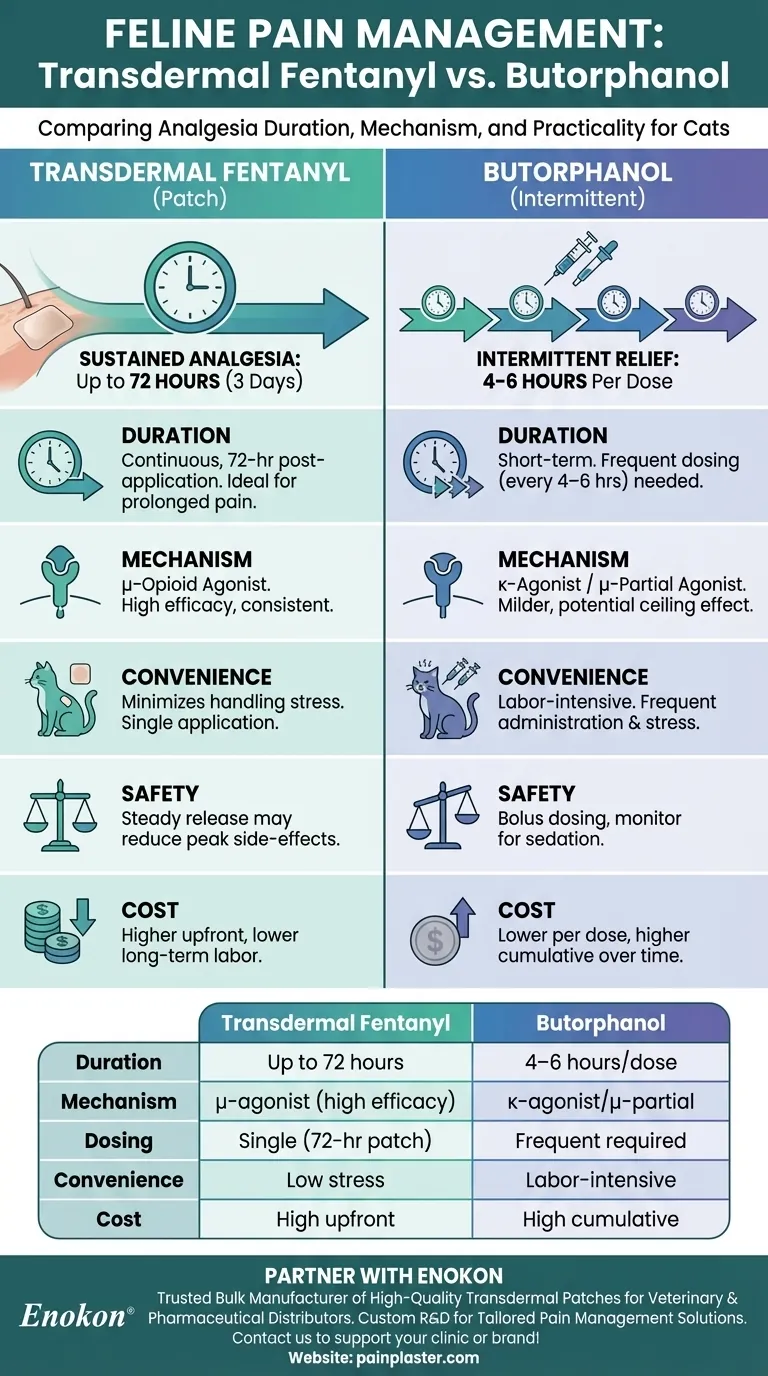
- Transdermal Fentanyl: Delivers continuous pain relief for 72 hours post-application, ideal for post-surgical or chronic pain.
- Butorphanol: Requires intermittent dosing (every 4–6 hours) due to its shorter half-life, making it less practical for long-term use.
-
Mechanism of Action
- Fentanyl: A potent μ-opioid agonist providing consistent, high-efficacy analgesia.
- Butorphanol: A κ-opioid agonist/μ-opioid partial agonist, offering milder analgesia with potential ceiling effects.
-
Clinical Convenience
- The Fentanyl Transdermal Patch minimizes handling stress and dosing errors, while butorphanol demands frequent administration, increasing workload and stress for both cat and caregiver.
-
Safety Considerations
- Both drugs require monitoring for sedation or respiratory depression, but fentanyl’s steady release may reduce peak-side-effect risks compared to butorphanol’s bolus dosing.
-
Cost and Accessibility
- Transdermal fentanyl patches are typically more expensive upfront but may offset costs by reducing labor-intensive dosing. Butorphanol is cheaper per dose but may incur higher cumulative costs over time.
For feline patients needing prolonged analgesia, transdermal fentanyl’s 72-hour efficacy offers a clear advantage, though butorphanol remains useful for acute, short-term pain. Always tailor the choice to the patient’s needs and caregiver capacity.
Summary Table:
| Feature | Transdermal Fentanyl | Butorphanol |
|---|---|---|
| Duration of Analgesia | Up to 72 hours | 4–6 hours per dose |
| Mechanism of Action | μ-opioid agonist (high efficacy) | κ-opioid agonist/μ-opioid partial agonist |
| Dosing Frequency | Single application (72-hour patch) | Frequent dosing required |
| Clinical Convenience | Minimizes handling stress | Labor-intensive |
| Cost Considerations | Higher upfront cost, lower long-term labor costs | Lower per dose, higher cumulative cost |
Need reliable, long-lasting pain relief for feline patients? Partner with Enokon, a trusted bulk manufacturer of high-quality transdermal patches and pain plasters for veterinary and pharmaceutical distributors. Our expertise in custom R&D ensures tailored solutions for your pain management needs. Contact us today to discuss how we can support your clinic or brand with advanced analgesic solutions!
Visual Guide
Related Products
- Silicone Scar Sheets Patch Transdermal Drug Patch
- Menthol Gel Pain Relief Patch
- Far Infrared Heat Pain Relief Patches Transdermal Patches
- Icy Hot Menthol Medicine Pain Relief Patch
- Mugwort Wormwood Pain Relief Patch for Neck Pain
People Also Ask
- What role does a silicone-based transdermal delivery system play in Parkinson's? Enhancing Early-Stage Patient Care
- How is the long-term skin tolerance of silicone-based transdermal patches evaluated in clinical settings? R&D and Safety
- Why is a polarizing microscope used to evaluate the long-term stability of transdermal drug patches? Ensure Efficacy.
- What are common adverse effects of transdermal drug delivery? Risks & Prevention Tips
- What are the advantages of transdermal drug patches? Optimize Medication Delivery with Patches

















