
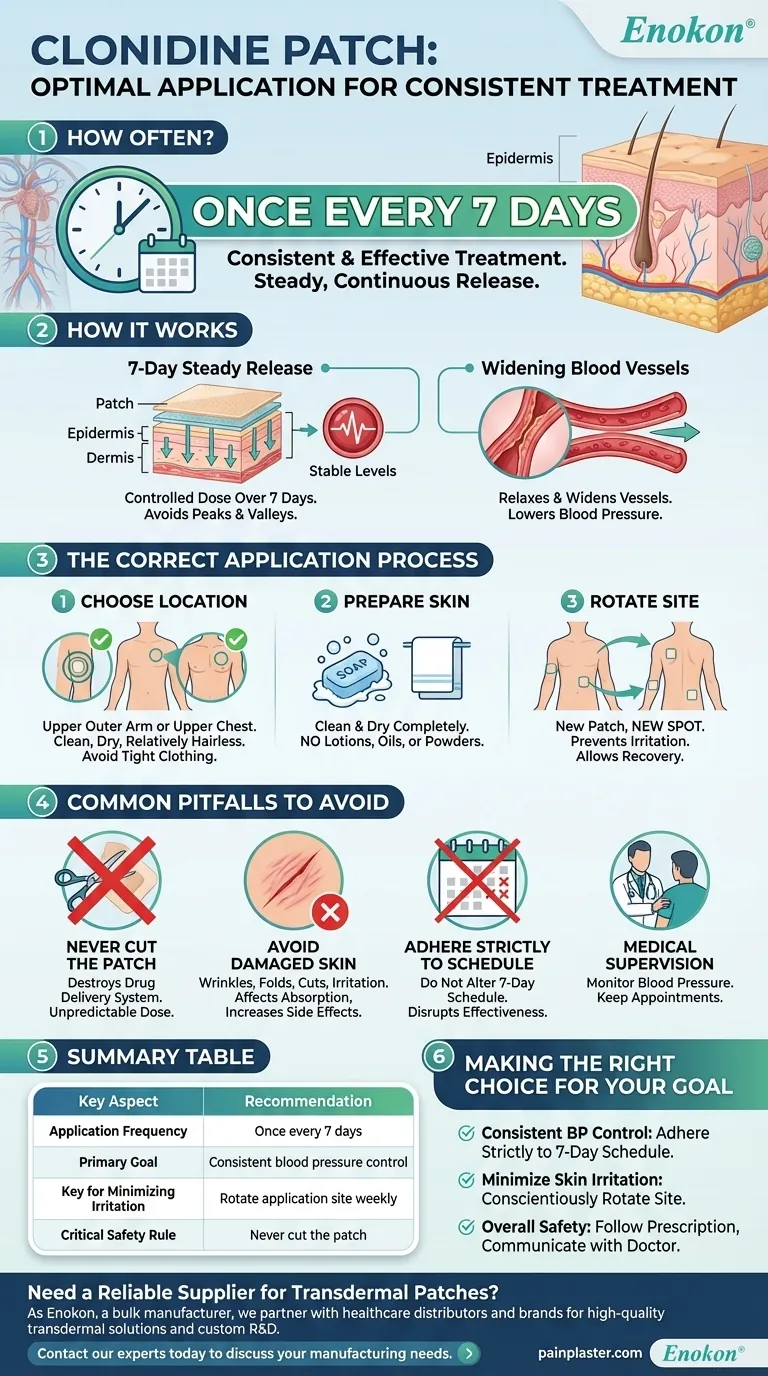
For consistent and effective treatment, the clonidine patch is designed to be applied to the skin once every 7 days. This weekly schedule ensures a steady, continuous release of medication into your bloodstream to manage your condition. It is critical to follow your doctor's prescribed frequency exactly.
The key to clonidine patch therapy is not just the weekly application, but the method of application. Proper site selection and rotation are essential for ensuring the medication works as intended while minimizing potential skin irritation.
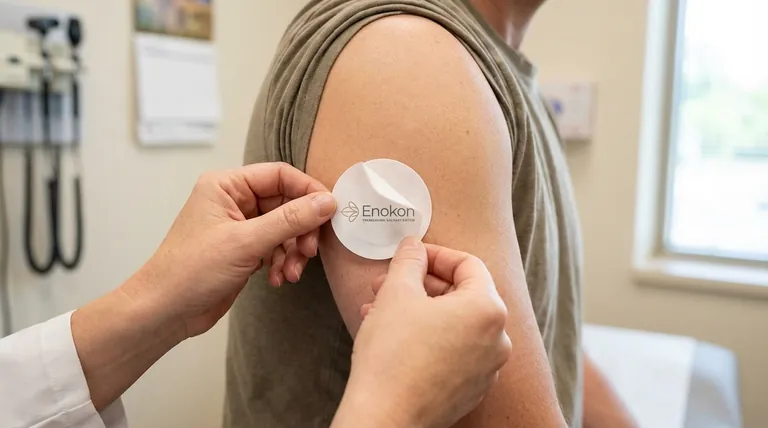
How the Clonidine Patch Works
A Steady, 7-Day Medication Release
The clonidine patch is a transdermal system, meaning it delivers medication directly through the skin. It is engineered to release a controlled, consistent dose over the entire 7-day period it is worn.
This steady delivery helps maintain stable levels of the drug in your body, which is crucial for managing conditions like high blood pressure without the peaks and valleys associated with oral medication.
Widening Blood Vessels for Better Flow
Clonidine belongs to a class of medications called centrally acting alpha-agonist hypotensive agents. It works by relaxing and widening your blood vessels.
This action allows blood to flow more easily, which in turn lowers blood pressure. It is this same mechanism that can also help alleviate symptoms like hot flushes.
The Correct Application Process
Choosing the Right Location
Proper placement is the most critical factor for success. The patch should be applied to a clean, dry, and relatively hairless area of skin.
The best locations are the upper outer arm or the upper chest. Avoid placing the patch where it can be rubbed by tight clothing, belts, or waistbands.
Preparing the Skin
The chosen site must be completely clean and dry before application. Do not use lotions, oils, or powders on the area, as they can prevent the patch from sticking properly.
If you need to wash the area, use only soap and water, and ensure the skin is thoroughly dry before applying the new patch.
The Importance of Site Rotation
To prevent skin irritation and ensure consistent absorption, you must rotate the application site with each new patch.
Never apply a new patch to the exact same spot you just used. Choosing a different location each week gives the previous site time to recover.
Common Pitfalls to Avoid
Never Cut the Patch
The clonidine patch contains a carefully calibrated drug delivery system. Cutting the patch destroys this system, which can lead to an unpredictable and incorrect dose of medication.
Avoid Damaged or Irritated Skin
Do not apply the patch to skin that has wrinkles, folds, cuts, scrapes, scars, or any form of irritation. Damaged skin can affect how the medication is absorbed and may increase side effects.
Adhere Strictly to the Schedule
Do not apply patches more or less often than prescribed by your doctor. Changing the 7-day schedule on your own can disrupt the medication's effectiveness and lead to unstable blood pressure.
The Need for Medical Supervision
Your doctor will need to monitor your blood pressure to ensure the treatment is working. Keep all your appointments and discuss any questions you have about your medication. Never let anyone else use your patch.
Making the Right Choice for Your Goal
- If your primary focus is consistent blood pressure control: Adhering strictly to the once-every-7-days schedule is the most important factor.
- If your primary focus is minimizing skin irritation: The most critical action is to conscientiously rotate the patch to a new, clean location each week.
- If your primary focus is overall safety and effectiveness: Follow your prescription precisely and maintain open communication with your healthcare provider about your progress.
Properly applying your clonidine patch is the key to managing your condition effectively and safely.
Summary Table:
| Key Aspect | Recommendation |
|---|---|
| Application Frequency | Once every 7 days |
| Primary Goal | Consistent blood pressure control |
| Key for Minimizing Irritation | Rotate application site weekly |
| Critical Safety Rule | Never cut the patch |
Need a reliable supplier for transdermal patches like clonidine?
As Enokon, a bulk manufacturer of reliable transdermal patches and pain plasters, we partner with healthcare and pharmaceutical distributors and brands. Benefit from our technical expertise for custom R&D and development to create high-quality, consistent transdermal solutions for your patients.
Contact our experts today to discuss your manufacturing needs.
Visual Guide
Related Products
- Lidocaine Hydrogel Pain Relief Patch for Pain Relief
- Menthol Gel Pain Relief Patch
- Capsaicin Chili Medicated Pain Relief Patches
- Herbal Medicated Anti Diarrhea Patch for Digestive Relief
- Icy Hot Menthol Medicine Pain Relief Patch
People Also Ask
- How does the aqueous base in a lidocaine patch contribute to drug delivery? Unlocking Sustained Pain Relief Technology
- What are the advantages of topical anesthetics over invasive Lidocaine infiltration? Discover Safer, Scalable Relief
- Which pain patch is most effective for arthritis? Find the Best Relief for Your Joint Pain
- Will a GP routinely continue prescribing lidocaine patches after the initial period? Understanding Short-Term Pain Relief
- Why are lidocaine patches preferred over oral medications? Targeted Relief & Scale Your Brand with OEM R&D Solutions



















