
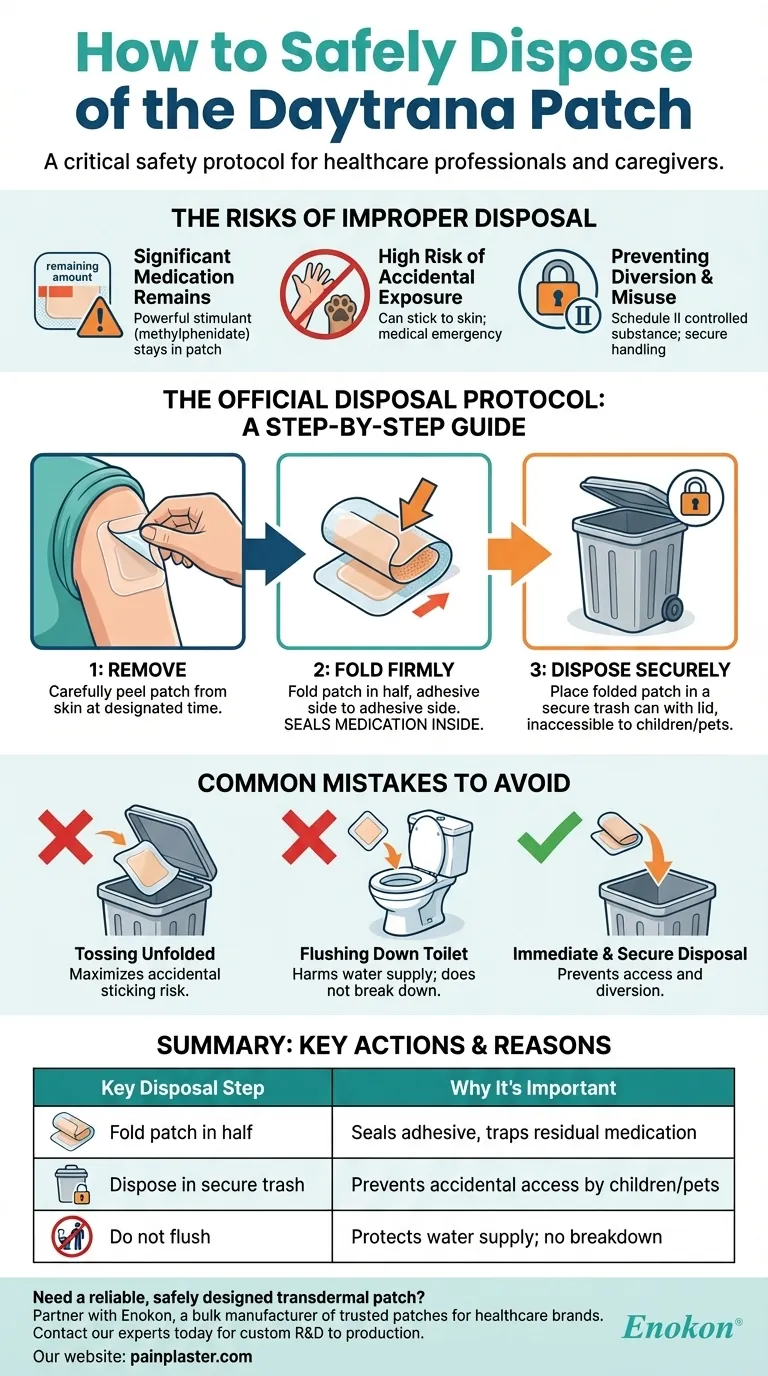
To properly dispose of a Daytrana patch, you must fold it in half so the adhesive side sticks to itself. This seals the remaining medication inside. You should then throw it away in a secure trash receptacle where it cannot be accidentally accessed by children or pets.
The core principle behind this specific disposal method is safety. A used Daytrana patch still contains a significant amount of methylphenidate, a powerful stimulant. Folding it seals the drug delivery surface, preventing accidental exposure or potential misuse.
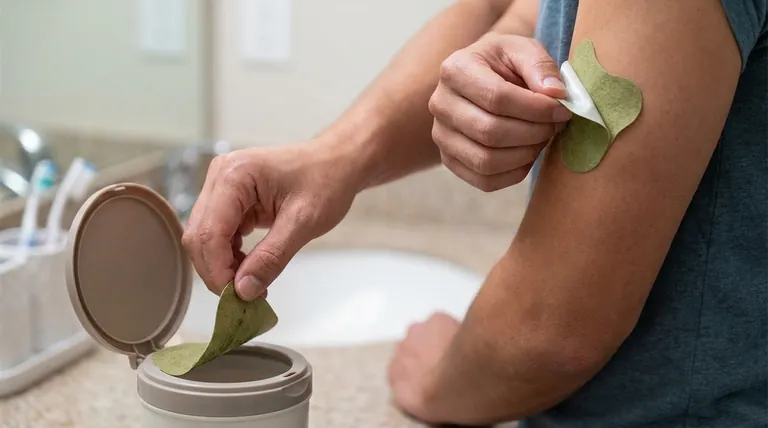
Why Proper Disposal is So Critical
Understanding the risks associated with a used medicated patch clarifies why the disposal instructions are not merely a suggestion, but a crucial safety protocol.
Significant Medication Remains After Use
Even after being worn for its intended duration of up to nine hours, a Daytrana patch is not "empty." A meaningful amount of the active ingredient, methylphenidate, remains in the patch matrix.
This residual medication is potent enough to cause serious effects if another person, especially a child, comes into contact with it.
The High Risk of Accidental Exposure
The primary danger of improper disposal is accidental exposure. A patch thrown loosely into the trash can stick to a child's or pet's skin, leading to unintended and uncontrolled absorption of the drug.
Given that methylphenidate is a powerful central nervous system stimulant, this can lead to a medical emergency.
Preventing Diversion and Misuse
Methylphenidate is a Schedule II controlled substance due to its potential for abuse. While the patch form delivers the drug slowly, making it less desirable for misuse than oral tablets, responsible handling is still paramount.
Securing the remaining medication by folding the patch and disposing of it properly is a key step in preventing diversion.
The Official Disposal Protocol: A Step-by-Step Guide
Following this precise method ensures you are handling the medication responsibly from application to disposal.
Step 1: Remove the Patch from the Skin
Carefully peel the patch off at the designated time. Avoid touching the adhesive side with your fingers if possible.
Step 2: Fold the Patch Firmly in Half
This is the single most important step. Take the patch and fold it over so that the sticky, medication-containing side folds onto itself.
Press the two halves together firmly. The adhesive will create a seal, trapping the remaining methylphenidate inside.
Step 3: Dispose of it in a Secure Trash Can
Place the folded patch in a trash can with a lid or one that is otherwise inaccessible to children and pets. Do not leave a used patch, even a folded one, lying on a counter or nightstand.
Common Mistakes to Avoid
Proper disposal is simple, but a few common errors can undermine its safety benefits.
Mistake: Tossing an Unfolded Patch in the Trash
This is the most dangerous mistake. It leaves the adhesive side exposed, maximizing the risk of it sticking to someone or something accidentally.
Mistake: Flushing the Patch Down the Toilet
You should not flush Daytrana patches. They can harm the water supply and are not designed to break down in sewer systems. Always follow the "fold and trash" method.
Mistake: Leaving a Used Patch Accessible
After removing the patch, dispose of it immediately. Leaving it on a surface is an unnecessary risk, as it can be forgotten, misplaced, or found by a child before it makes it to the trash.
Making the Right Choice for Safety
Your specific situation may change your primary focus, but the core action of folding the patch remains the same.
- If your primary focus is child and pet safety: Always dispose of the folded patch in a trash receptacle with a secure lid or in a container that is kept out of reach.
- If your primary concern is preventing misuse: The act of immediately folding the patch upon removal is your most effective tool for neutralizing the residual medication.
- If you are a caregiver for someone using the patch: Establish a strict daily routine for removal and disposal to ensure it is done correctly and consistently every time.
Following this simple disposal procedure is a critical part of using this medication safely and responsibly.
Summary Table:
| Key Disposal Step | Why It's Important |
|---|---|
| Fold patch in half | Seals the adhesive side, trapping residual medication inside. |
| Dispose in secure trash | Prevents accidental access by children or pets. |
| Do not flush | Protects the water supply; patches don't break down. |
Need a reliable, safely designed transdermal patch? Partner with Enokon, a bulk manufacturer of trusted transdermal patches and pain plasters for healthcare and pharma brands. Our technical expertise ensures your product is developed with safety and efficacy in mind, from custom R&D to final production. Contact our experts today to discuss your project requirements.
Visual Guide
Related Products
- Herbal Medicated Anti Diarrhea Patch for Digestive Relief
- Menthol Gel Pain Relief Patch
- Hydra Gel Health Care Eye Patch
- Icy Hot Menthol Medicine Pain Relief Patch
- Cooling Fever Patches Color Change Cold Fever Patch
People Also Ask
- What activities should be avoided while using this patch? Key Precautions for Safe & Effective Use
- What are the pharmacological effects of multi-target herbal patches in relieving joint inflammation? Science-Backed OEM
- What should be done if a patch falls off or a dose is missed? Quick Fixes & Safety Tips
- What should be avoided when using the patch? Key Safety Tips for Herbal Patch Users
- What should be done if a patch comes loose or falls off? Ensure Continuous & Effective Treatment



















