
To properly handle your medication, store the patches at room temperature in their original sealed pouch, away from heat, moisture, and direct sunlight. For disposal, fold the used patch in half with the sticky sides together, place it in a sturdy, child-proof container, and throw it in the household trash.
The core principle behind these specific instructions is safety. Proper storage protects the patch's effectiveness, while careful disposal is essential to prevent accidental exposure to potent hormones, which can be harmful to children, pets, and the environment.
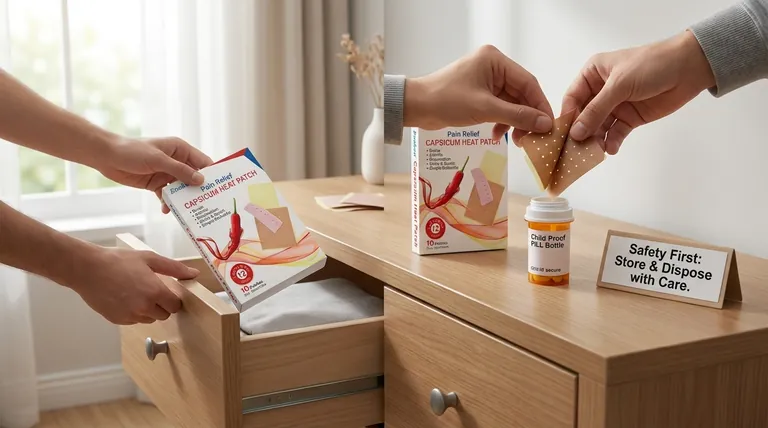
Proper Storage: Protecting Medication Integrity
Storing your patches correctly ensures that you receive the precise, intended dose of medication each time. The active hormones are sensitive to their environment.
Maintain a Consistent Temperature
The patches must be kept at room temperature, generally between 59°F and 86°F (15°C and 30°C).
Extreme heat or cold can degrade the medication and damage the adhesive, potentially altering how much hormone your body absorbs.
Avoid Moisture and Light
Store the patches in their original sealed pouch in a closed container until you are ready to use one.
A bathroom medicine cabinet is often a poor choice due to constant changes in heat and humidity. A dresser drawer or a closet shelf is a much better location.
Keep Out of Reach
Always store medications where children and pets cannot see or reach them. This is especially critical for hormonal patches, which can cause serious harm if ingested or applied accidentally.
Safe Disposal: Preventing Accidental Exposure
A used patch still contains a significant amount of active hormones that can be absorbed through the skin. This makes careful disposal a critical safety measure.
Step 1: Deactivate the Used Patch
Immediately after removing a patch, fold it in half so that the sticky, medication-containing sides press firmly together.
This action seals away most of the remaining medication, making accidental exposure much less likely.
Step 2: Securely Contain It
Place the folded patch into a sturdy, child-proof container. An empty pill bottle with a safety cap or a dedicated sharps container can work well.
This step prevents a child or pet from finding and handling the patch if they get into the trash.
Step 3: Place in Household Trash
Finally, throw the secured container into your household trash. Ensure the trash bin is not easily accessible to children or animals.
Critical Disposal Mistakes to Avoid
Deviating from the recommended disposal method creates unnecessary risks for your family and the wider community.
Why You Must Not Flush Patches
Flushing patches down the toilet introduces active hormones directly into the water supply.
Wastewater treatment facilities are not designed to filter out these compounds, which can harm aquatic wildlife and disrupt ecosystems.
The Danger of Unsecured Disposal
Simply tossing a used patch into an open trash can is hazardous.
Even a "used" patch contains enough residual hormone to cause significant medical effects in a child or pet who might handle or chew on it. The risks associated with this medication, such as blood clots or hormonal changes, underscore the need for caution.
A Simple Checklist for Safe Handling
Use these clear guidelines to ensure you are managing your medication safely and effectively.
- If you are storing new patches: Keep them in their original sealed pouches in a cool, dry place like a bedroom closet, away from sunlight.
- If you are disposing of a used patch: Immediately fold it sticky-side-in, place it in a secure container, and put it in a trash can that is inaccessible to others.
- If you have unused or expired patches: Do not let them accumulate. Dispose of them using the same fold-and-contain method to prevent accidental use or discovery.
Following these precise steps ensures the medication works as intended for you while protecting your family and the environment.
Summary Table:
| Action | Key Instructions | Why It's Important |
|---|---|---|
| Storage | Store in original pouch at room temperature (59°F-86°F), away from moisture and light. | Protects medication integrity and ensures correct dosage. |
| Disposal | Fold patch sticky-sides together, place in a child-proof container, then discard in household trash. | Prevents accidental exposure to potent hormones in children, pets, and the environment. |
| Avoid | Do not flush patches or throw them loosely in the trash. | Prevents water contamination and accidental contact. |
Ensure Patient Safety with Reliable Transdermal Solutions
Proper handling is critical for the safety and efficacy of any transdermal medication. As Enokon, a bulk manufacturer of reliable transdermal patches and pain plasters, we understand the importance of product integrity from production to patient use.
Partner with us to develop safe, effective, and user-friendly transdermal products for your healthcare or pharmaceutical brand. Our technical expertise in custom R&D and development ensures your patches meet the highest standards for stability, adhesion, and controlled delivery.
Let's collaborate to create a safer patient experience. Contact our experts today to discuss your custom patch requirements.
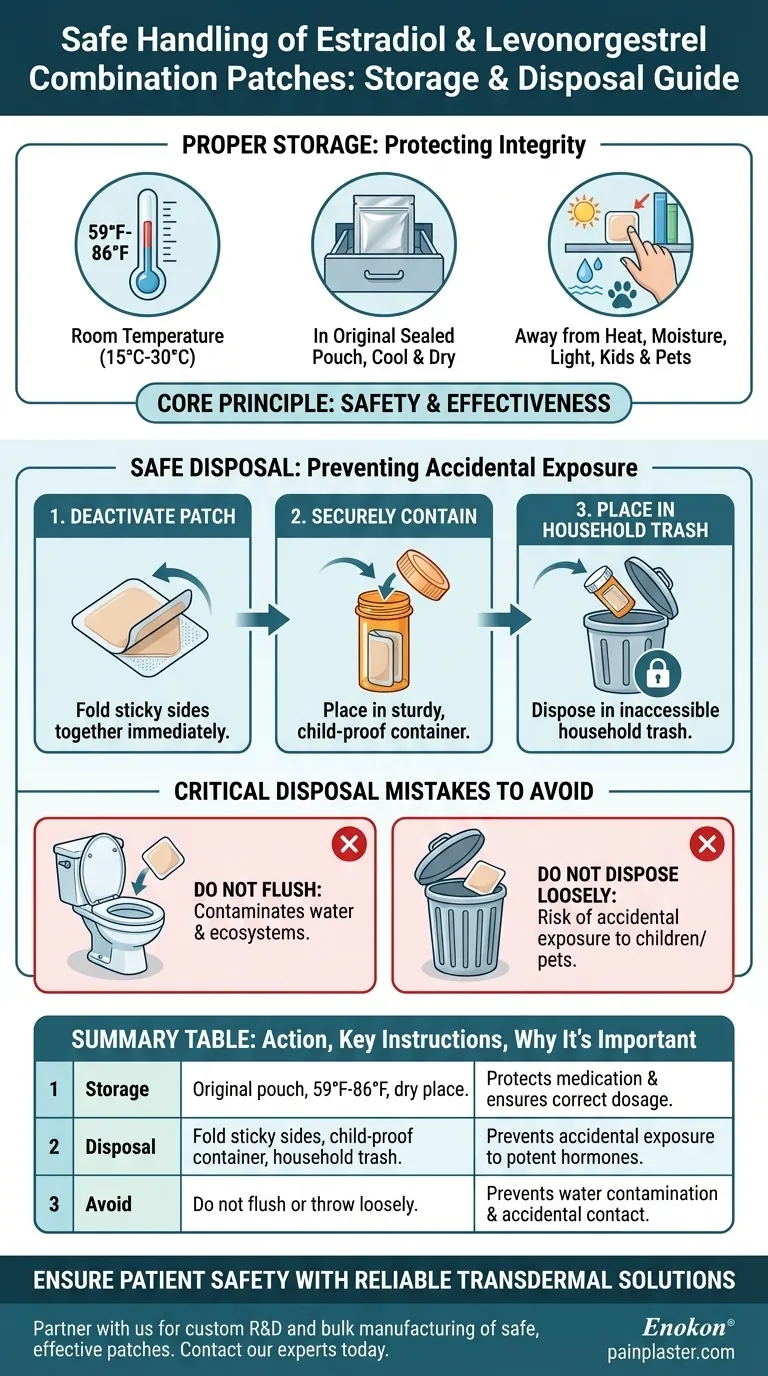
Visual Guide
Related Products
- Menthol Gel Pain Relief Patch
- Icy Hot Menthol Medicine Pain Relief Patch
- Heating Pain Relief Patches for Menstrual Cramps
- Cooling Fever Patches Color Change Cold Fever Patch
- Silicone Scar Sheets Patch Transdermal Drug Patch
People Also Ask
- How do pain relief patches compare to other pain relief methods? Discover Targeted, Long-Lasting Relief
- How effective are pain relief patches for muscle pain? Target Localized Pain with Transdermal Delivery
- Who should consult a healthcare professional before using pain relief patches? Ensure Your Safety with Medical Advice
- What are some common applications of pain relief patches? Effective Relief for Muscle & Joint Pain
- What are pain relief patches and how do they work? Discover Non-Invasive Pain Management









