
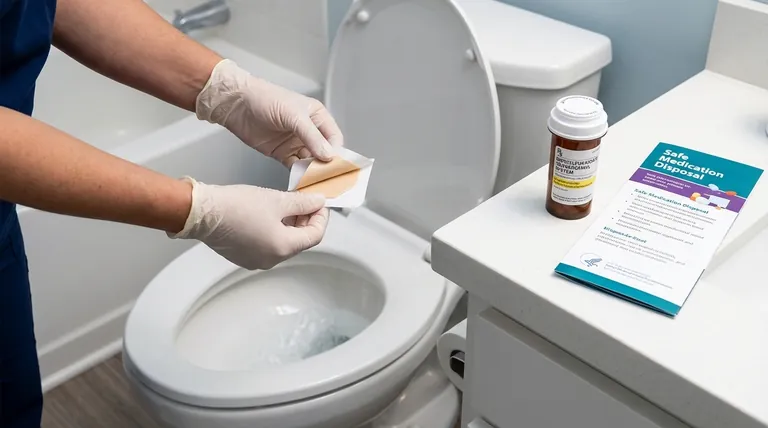
To properly dispose of a methylphenidate transdermal patch, you must first fold it in half so the adhesive, medicated side sticks firmly to itself. The safest and most commonly recommended final step for this specific medication is to then flush the folded patch down the toilet to immediately remove the risk of accidental exposure.
The central takeaway is that a used methylphenidate patch still contains a significant amount of potent medication. Proper disposal is not just about being tidy; it is a critical safety measure to prevent accidental and potentially fatal poisoning of children, pets, or misuse by others.
The Critical First Step: Neutralizing the Patch
Before you consider the final destination of the patch, the most important action is to render it inert. This is accomplished through a simple but vital folding technique.
Why Folding is Non-Negotiable
The adhesive side of the patch is the delivery system for the methylphenidate. Even after a full day of use, a large amount of the active drug remains in the patch. Folding it ensures this medicated surface is sealed off.
The Correct Folding Technique
Immediately after removing the patch from the skin, take it and fold it exactly in half. Press the two sticky sides firmly together so they create a tight seal. This action traps the remaining medication inside.
The Final Disposal Dilemma: Trash vs. Toilet
You will find conflicting advice on the final disposal of these patches, and it is important to understand the reasoning behind both methods. The choice hinges on balancing immediate safety risks with long-term environmental concerns.
The Rationale for Flushing
For a few specific, powerful controlled substances like methylphenidate, regulatory bodies like the FDA often recommend flushing. The logic is that the risk of a child or pet finding a used patch in the trash and suffering a fatal overdose is immediate and severe. Flushing removes this danger from the home permanently.
The Argument for Trash Disposal
General pharmaceutical guidance often advises against flushing any medication to prevent contamination of the water supply. Sources recommending trash disposal for methylphenidate patches emphasize placing the folded patch in a lidded, secure container to make it inaccessible.
Reconciling the Conflicting Advice
The conflicting advice exists because of the unique danger posed by this specific medication. While not flushing is a good general rule, the immediate, high-stakes risk of accidental poisoning from a methylphenidate patch often makes flushing the most recommended method to ensure safety.
Understanding the Risks: Why Proper Disposal Matters
Failing to dispose of a methylphenidate patch correctly creates preventable dangers. The core issue is the significant amount of drug remaining after use.
Significant Residual Medication
A transdermal patch is designed with more medication than is needed for a single dose to ensure a consistent delivery rate. A "used" patch is not empty and contains enough methylphenidate to be extremely dangerous if ingested.
The Danger to Children and Pets
The primary goal of these disposal procedures is to protect the most vulnerable. A child or pet might be attracted to a discarded patch, and ingesting or even just handling it can lead to a severe medical emergency.
Preventing Diversion and Misuse
Methylphenidate is a Schedule II controlled substance. Leaving used patches in an open trash can creates an opportunity for diversion and misuse by others who might attempt to extract the remaining drug.
Your Disposal Checklist for Maximum Safety
Follow these steps to ensure you are handling the disposal of your methylphenidate patch with the highest degree of care.
- If your primary focus is the immediate removal of all risk from your home: Fold the patch adhesive-to-adhesive and flush it down the toilet, as this is the most secure method for this specific drug.
- If flushing is not an option or you are following guidance to avoid it: Fold the patch adhesive-to-adhesive and place it in a durable, lidded container before putting it in a trash can inaccessible to others.
- Regardless of the method: Always perform the disposal immediately after removing the patch and ensure it is out of the sight and reach of any children or pets.
Proper disposal is the final, crucial step in using this medication safely and responsibly.
Summary Table:
| Step | Action | Purpose |
|---|---|---|
| 1. Fold | Fold patch in half, sticky sides together. | Seals in residual medication. |
| 2. Dispose | Flush down toilet or place in sealed container in trash. | Removes immediate risk of accidental exposure. |
Ensure the safety of your patients and their families with properly manufactured transdermal patches. As Enokon, a bulk manufacturer of reliable transdermal patches and pain plasters, we provide healthcare and pharma distributors and brands with products developed under stringent safety and quality standards. Benefit from our technical expertise for custom R&D and development to create solutions that prioritize end-user safety from application to disposal. Contact our experts today to discuss your transdermal patch needs.
Visual Guide

Related Products
- Menthol Gel Pain Relief Patch
- Silicone Scar Sheets Patch Transdermal Drug Patch
- Far Infrared Heat Pain Relief Patches Transdermal Patches
- Icy Hot Menthol Medicine Pain Relief Patch
- Mugwort Wormwood Pain Relief Patch for Neck Pain
People Also Ask
- How effective are pain relief patches for muscle pain? Target Localized Pain with Transdermal Delivery
- How do pain relief patches compare to other pain relief methods? Discover Targeted, Long-Lasting Relief
- Who should consult a healthcare professional before using pain relief patches? Ensure Your Safety with Medical Advice
- Can pregnant women use pain relief patches? Your Essential Guide to Safe Pain Management
- What are some common applications of pain relief patches? Effective Relief for Muscle & Joint Pain














