
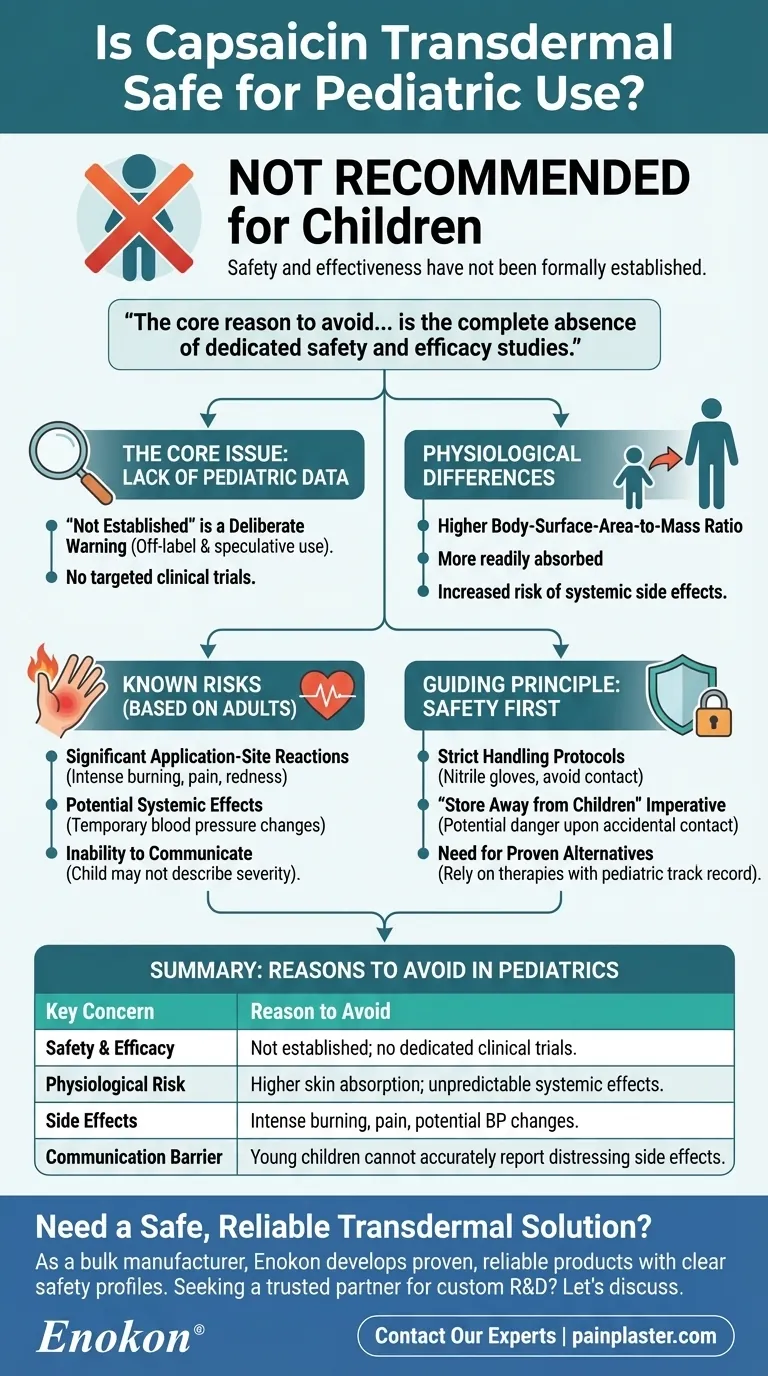
The use of transdermal capsaicin in children is not recommended. Based on current medical knowledge, its safety and effectiveness have not been formally established in pediatric populations. This lack of specific research and data means the potential risks, appropriate dosage, and therapeutic benefits for children are unknown.
The core reason to avoid transdermal capsaicin in pediatrics is the complete absence of dedicated safety and efficacy studies. The known side effects in adults, such as intense burning and potential blood pressure changes, present unacceptable and unpredictable risks for children.
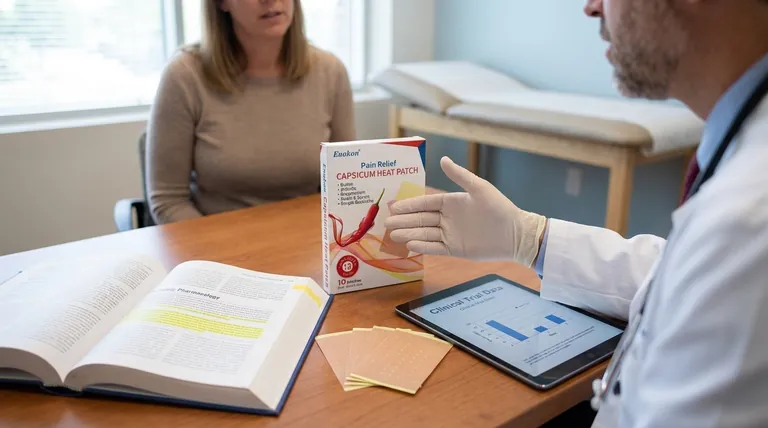
The Core Issue: A Lack of Pediatric Data
The primary reason medical guidance cautions against using transdermal capsaicin in children is the absence of targeted clinical trials. Without this data, risks cannot be properly quantified or managed.
"Not Established" Is a Deliberate Warning
The phrase "safety and efficacy have not been established" is a formal declaration by regulatory bodies and manufacturers. It serves as a direct warning that the drug has not been tested in that specific population, and its use would be considered off-label and speculative.
Children Are Not Small Adults
Pediatric physiology differs significantly from that of adults. Children have a higher body-surface-area-to-mass ratio, meaning drugs applied to the skin can be absorbed more readily and lead to higher systemic concentrations, increasing the risk of side effects.
The Inability to Communicate Side Effects
A young child may not be able to accurately describe the nature or severity of side effects like the intense burning sensation common with capsaicin. This makes it impossible for a caregiver to properly monitor for adverse reactions.
Understanding the Known Risks in Adults
The side effects documented in adult use highlight the potential dangers for a child. These reactions are likely to be more pronounced and less tolerated in a pediatric patient.
Significant Application-Site Reactions
The most common side effect is a localized burning sensation, pain, and redness at the application site. For a child, this experience could be highly distressing and difficult to manage.
Potential for Systemic Effects
Transdermal absorption can lead to systemic effects. Capsaicin has been noted to cause temporary elevations in blood pressure, an effect that has not been studied or deemed safe in the developing cardiovascular systems of children.
Strict Handling and Application Protocols
The required safety measures for capsaicin underscore its potency. Application requires wearing nitrile gloves, avoiding contact with the face or mucous membranes, and careful disposal to prevent accidental exposure—protocols that are challenging to guarantee around children.
The Guiding Principle of Pediatric Drug Safety
When considering any medication for a child, the standard of evidence required is exceptionally high. The imperative is always to protect this vulnerable population from unforeseen harm.
The "Store Away from Children" Imperative
Product warnings explicitly state to keep capsaicin patches stored safely away from children. This is a clear indicator of the substance's potential danger upon accidental contact or ingestion and reinforces that it is not intended for pediatric application.
The Need for Proven Alternatives
For neuropathic or musculoskeletal pain in children, clinicians must rely on therapies with a proven track record of safety and efficacy in pediatric clinical trials. Using an unstudied agent like transdermal capsaicin introduces unnecessary risk.
Making the Safest Choice for a Child in Pain
When evaluating pain management options for a pediatric patient, the guiding principle must be established safety and proven effectiveness.
- If your primary focus is clinical treatment: Adhere strictly to therapies with robust pediatric data and regulatory approval. Transdermal capsaicin does not meet this critical standard.
- If your primary focus is caregiving: Never apply medications intended for adults to a child without explicit guidance from a pediatrician. Always discuss pain management with a qualified healthcare provider to find a proven and safe solution.
Ultimately, you must prioritize treatments that have been specifically studied and approved for pediatric use to ensure both patient safety and therapeutic benefit.
Summary Table:
| Key Concern | Reason to Avoid in Pediatrics |
|---|---|
| Safety & Efficacy | Not established; no dedicated clinical trials for children. |
| Physiological Risk | Higher skin absorption can lead to unpredictable systemic effects. |
| Side Effects | Intense burning, pain, and potential blood pressure changes. |
| Communication Barrier | Young children cannot accurately report distressing side effects. |
Need a Safe, Reliable Transdermal Solution for Your Patients?
As a bulk manufacturer of transdermal patches for healthcare and pharmaceutical brands, Enokon understands that patient safety is paramount. Our technical expertise is focused on developing proven, reliable products with clear safety profiles.
If you are a distributor or brand seeking a trusted partner for custom R&D and development of transdermal delivery systems, let's discuss your requirements. We are committed to providing solutions backed by rigorous development and quality control.
Contact our experts today to explore how we can support your product development goals.
Visual Guide
Related Products
- Capsaicin Chili Medicated Pain Relief Patches
- Silicone Scar Sheets Patch Transdermal Drug Patch
- Far Infrared Heat Pain Relief Patches Transdermal Patches
- Menthol Gel Pain Relief Patch
- Icy Hot Menthol Medicine Pain Relief Patch
People Also Ask
- What conditions should be reported to a care team before using capsaicin patches? Ensure Safe Pain Relief
- What conditions can capsaicin creams and patches help relieve? Find Targeted Pain Relief for Nerves & Joints
- What are the uses of nonprescription capsaicin patches? Natural Pain Relief for Muscles & Joints
- What should be avoided while using capsaicin patches? Essential Safety Tips for Effective Pain Relief
- How are capsaicin patches administered? A Guide to Clinical vs. At-Home Use



















