
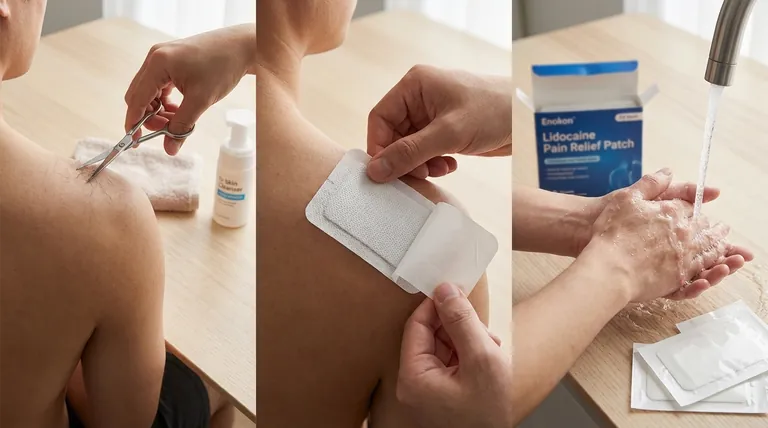
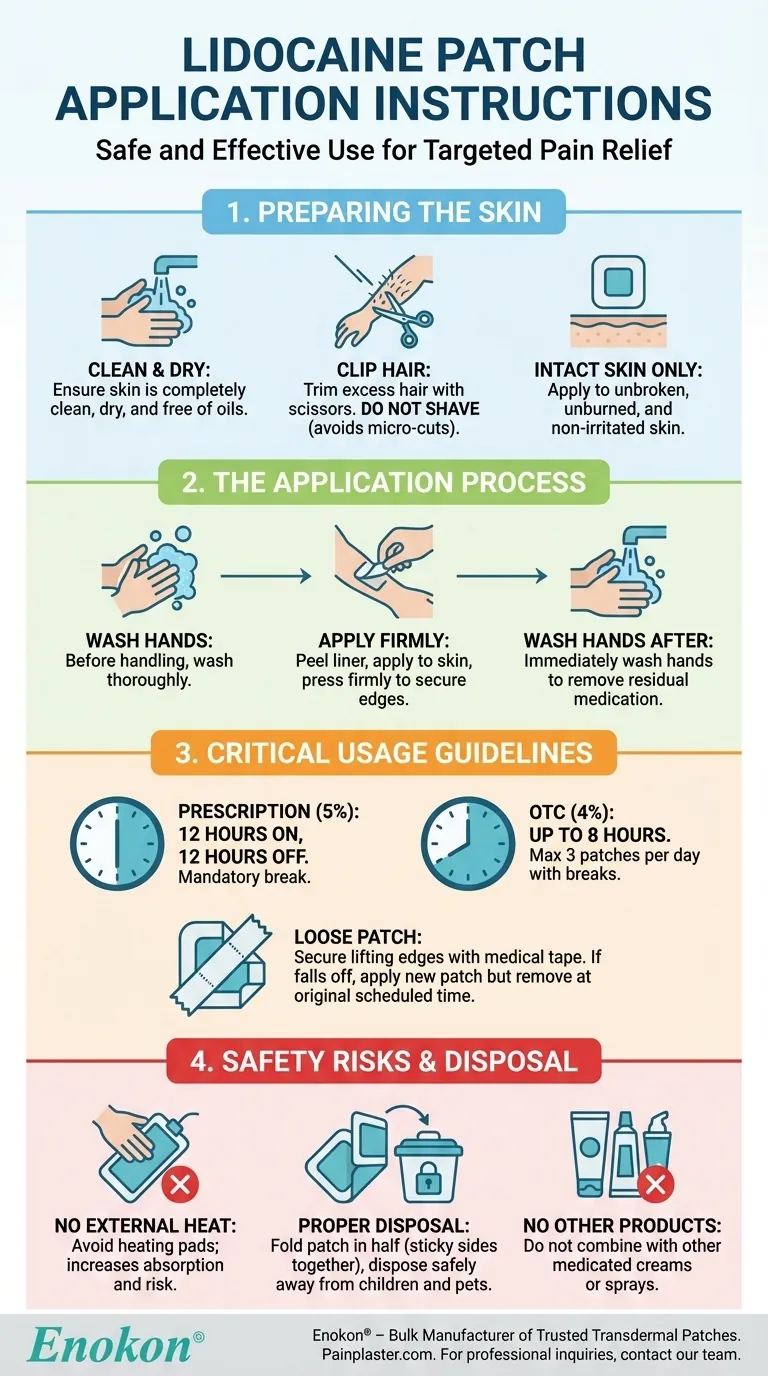
To apply a lidocaine patch, you must first ensure the target skin area is clean, dry, and completely intact. After washing your hands, trim any excess hair with scissors—do not shave the area. Apply the patch firmly to the skin, pressing down to ensure it adheres properly, and then wash your hands again to remove any residual medication.
The core principle of using a lidocaine patch is to create a secure, direct-contact delivery system. Proper application ensures the medication is absorbed steadily into the targeted area for effective pain relief while preventing accidental over-absorption and minimizing safety risks.
Preparing the Skin for Application
Proper skin preparation is the critical first step. It ensures the patch adheres correctly and delivers the medication as intended without causing irritation or unintended side effects.
Clean and Dry the Area
The skin must be completely clean and dry before application. Any oils, lotions, or moisture can interfere with the patch's adhesive, causing it to lift or fall off prematurely.
Manage Hair Correctly
If the application area is hairy, clip the hair with scissors as short as possible. Do not shave the area. Shaving creates microscopic cuts and abrasions in the skin, which can lead to excessive absorption of lidocaine and increase the risk of side effects.
Ensure Skin is Intact
Never apply a lidocaine patch to skin that is broken, cut, burned, irritated, or has open wounds or unhealed blisters. Applying the medication to compromised skin can cause it to enter the bloodstream too quickly.
The Application Process: Step-by-Step
Follow these steps precisely to ensure a safe and effective application every time.
Handling the Patch
Wash your hands thoroughly with soap and water before touching the patch. If the patch is too large for the area, you can cut it to the required size before removing the protective backing.
Applying Firmly
Peel the liner from the patch and apply the sticky side directly to the prepared skin area. Press down firmly and smooth it out to ensure the entire patch, including the edges, is in secure contact with your skin.
Washing Hands After
Immediately after applying the patch, wash your hands again with soap and water. This removes any medication that may have gotten on your fingers and prevents you from accidentally transferring it to your eyes, mouth, or other sensitive areas.
Critical Usage Guidelines
The timing and duration of use are just as important as the application itself. These rules are in place for your safety and to maximize the patch's effectiveness.
Adhering to the "On-Off" Cycle
The most important rule is the "on-off" cycle, which prevents your body from absorbing too much medication.
- Prescription (5%) patches: Wear for up to 12 hours, followed by a mandatory 12-hour period with no patch on.
- Over-the-Counter (4%) patches: Wear for up to 8 hours. You can use up to three patches per day, but you should always have a break between applications.
If a Patch Comes Loose
While you should avoid prolonged exposure to water (like swimming or bathing), a patch may sometimes loosen. If the edges lift, you can try securing them with medical tape. If the entire patch falls off before its time is up, apply a new one but be sure to remove it at the originally scheduled time to maintain the proper "on-off" cycle.
Understanding the Trade-offs and Safety Risks
Lidocaine patches are generally safe when used correctly, but ignoring the guidelines can lead to serious issues. Understanding why the rules exist is key to using them safely.
The Danger of External Heat
Never apply a heating pad or any other external heat source over a lidocaine patch. Heat dramatically increases blood flow to the skin, which can cause the medication to be absorbed much faster and in higher quantities than intended. This elevates the risk of systemic side effects.
Proper Disposal is Non-Negotiable
Even after use, a patch contains a significant amount of lidocaine. To dispose of it, fold the patch in half so the sticky sides press together. This seals in the remaining medication. Dispose of it in a trash can that is safely out of reach of children and pets, for whom accidental ingestion can be extremely dangerous.
Avoiding Other Topical Products
Do not use other medicated creams, gels, or sprays on the same area where you are wearing a lidocaine patch. Combining products can lead to unpredictable interactions and alter the absorption of the lidocaine.
How to Apply This to Your Goal
Your specific usage will depend on whether your patch is a prescription or an over-the-counter product.
- If your primary focus is managing chronic pain with a prescription (5%) patch: Strictly follow the "12 hours on, 12 hours off" schedule to ensure consistent relief and prevent overexposure.
- If your primary focus is managing acute pain with an OTC (4%) patch: Do not exceed 8 hours for a single application and never use more than three patches in a 24-hour period.
- If you experience any redness, swelling, or irritation: Remove the patch immediately and do not reapply one to that area until the skin has completely returned to normal.
By following these precise instructions, you can safely and effectively control your localized pain.
Summary Table:
| Key Step | Important Guideline |
|---|---|
| Skin Prep | Clean, dry, and intact skin. Clip hair; do not shave. |
| Application | Apply firmly to skin. Wash hands before and after. |
| Usage Cycle | Prescription (5%): 12 hours on, 12 hours off. OTC (4%): Up to 8 hours. |
| Safety | No external heat. Fold used patch for safe disposal. |
Need a reliable supplier for high-quality lidocaine patches?
As Enokon, a bulk manufacturer of trusted transdermal patches, we provide healthcare and pharmaceutical distributors with consistent, effective pain relief solutions. Our technical expertise ensures every patch meets the highest standards for safety and performance.
Let us support your product line with our custom R&D and development capabilities. Contact our team today to discuss your requirements.
Visual Guide
Related Products
- Lidocaine Hydrogel Pain Relief Patch for Pain Relief
- Menthol Gel Pain Relief Patch
- Herbal Medicated Anti Diarrhea Patch for Digestive Relief
- Icy Hot Menthol Medicine Pain Relief Patch
- Asthma Cough and Pain Relief Patch for Adults and Kids
People Also Ask
- How does the aqueous base in a lidocaine patch contribute to drug delivery? Unlocking Sustained Pain Relief Technology
- What are the advantages of topical anesthetics over invasive Lidocaine infiltration? Discover Safer, Scalable Relief
- Which pain patch is most effective for arthritis? Find the Best Relief for Your Joint Pain
- Will a GP routinely continue prescribing lidocaine patches after the initial period? Understanding Short-Term Pain Relief
- How should lidocaine patches be applied for optimal use? Maximize Pain Relief with Proper Application



















