
When using lidocaine patches, the vast majority of side effects are mild and localized to the area of application. These typically include temporary skin reactions like redness, swelling, burning, or itching. While systemic side effects affecting the whole body are much less common, they can occur and require careful attention.
The core principle to understand is the difference between a localized reaction and a systemic one. Mild skin irritation is expected, but any symptom affecting your breathing, heart rate, or mental state is a clear signal to seek immediate medical help.

The Two Tiers of Side Effects: Local vs. Systemic
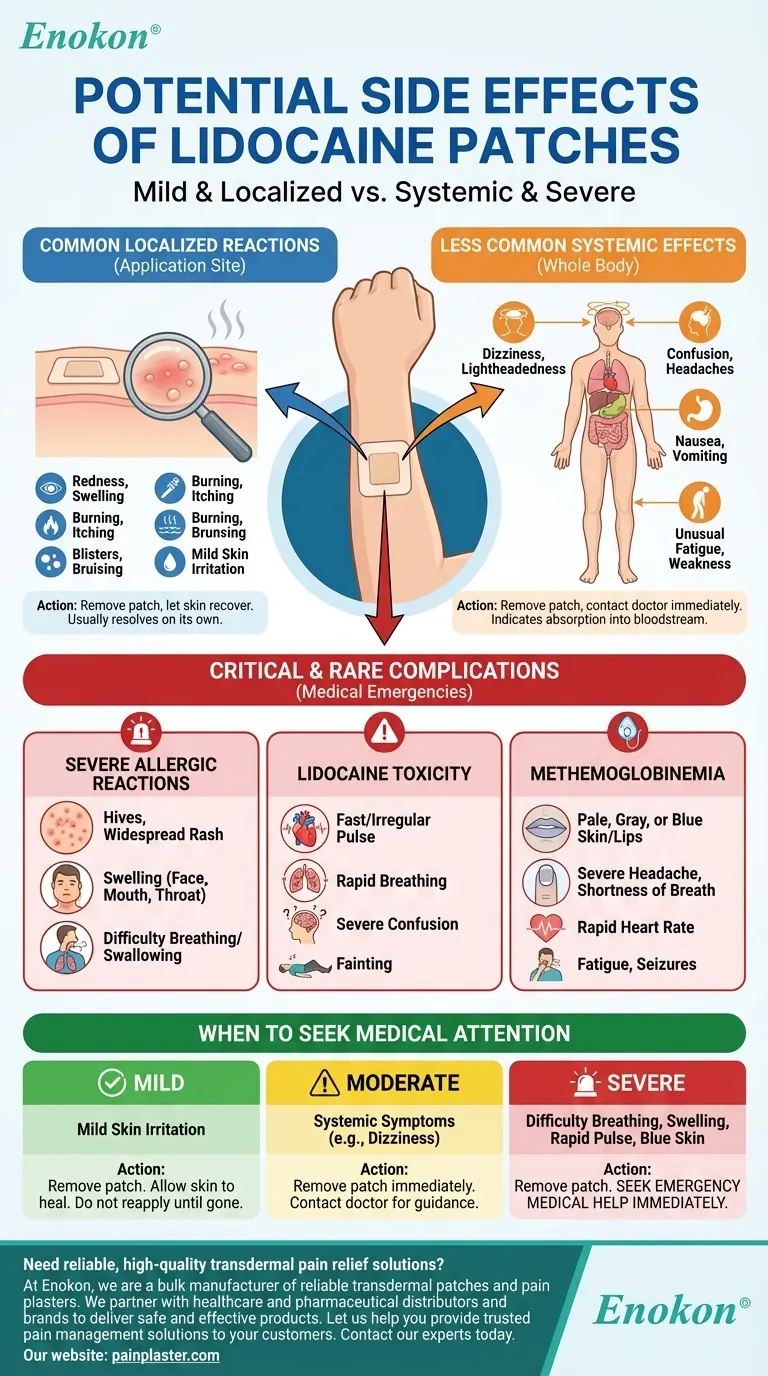
The potential side effects of lidocaine patches fall into two distinct categories. The difference depends on whether the medication affects only the skin it touches or if it gets absorbed into your bloodstream.
Common Localized Reactions (At the Application Site)
These are the most frequently reported side effects and are generally not a cause for serious concern. They occur directly under and around the patch.
Common reactions include redness, a burning sensation, swelling, itching, or general skin irritation. You might also notice blisters, bruising, or slight changes in skin color where the patch was applied.
If these effects are mild, they often resolve on their own after you remove the patch. However, you should remove the patch if the irritation is significant and wait for the skin to recover before applying a new one.
Less Common Systemic Effects (Throughout the Body)
Systemic effects happen if enough lidocaine is absorbed through the skin and enters your bloodstream. This is more likely if the patch is applied to broken skin, used for longer than prescribed, or if multiple patches are used at once.
Symptoms can include dizziness, lightheadedness, confusion, nausea, vomiting, or unusual fatigue. Some people may also experience headaches or weakness. These symptoms indicate the medication is affecting your central nervous system.
Recognizing Critical and Rare Comulations
While extremely rare, some side effects are medical emergencies that require immediate attention. Understanding these signs is critical for using lidocaine patches safely.
Severe Allergic Reactions
An allergic reaction to lidocaine is serious. Seek emergency medical help if you experience hives, a widespread rash, severe itching, or blisters.
Other critical signs include swelling of the face, lips, tongue, or throat, which can cause difficulty breathing or swallowing and hoarseness.
Signs of Lidocaine Toxicity
Using too much lidocaine can lead to toxicity, which affects the heart and brain. Symptoms include a fast or irregular pulse, rapid breathing, severe confusion, or fainting.
Pay close attention to any changes in your heartbeat or mental state, as these can be signs that a dangerous amount of the drug has entered your system.
Methemoglobinemia: An Oxygen Transport Issue
Methemoglobinemia is a very rare but life-threatening condition where the blood cannot carry oxygen effectively.
The most distinct sign is pale, gray, or blue-colored skin, lips, or nailbeds. Other symptoms include severe headache, shortness of breath, rapid heart rate, and fatigue, which can progress to seizures.
When to Seek Medical Attention
Knowing how to respond to different side effects is crucial for your safety.
- If you experience mild skin irritation: Remove the patch and allow the skin to heal. Do not reapply a patch to that area until the irritation is gone.
- If you experience systemic symptoms like dizziness or confusion: Remove the patch immediately and contact your doctor for guidance.
- If you experience severe symptoms like difficulty breathing, facial swelling, a rapid pulse, or blue skin: Remove the patch and seek emergency medical help without delay.
By understanding these distinctions, you can use lidocaine patches safely while remaining vigilant for any signs of a more serious reaction.
Summary Table:
| Type of Side Effect | Common Symptoms | Severity & Action |
|---|---|---|
| Localized (Common) | Redness, itching, burning, swelling at the site | Usually mild; remove patch and let skin heal. |
| Systemic (Less Common) | Dizziness, confusion, nausea, headache | Moderate; remove patch and contact your doctor. |
| Severe (Rare/Emergency) | Difficulty breathing, facial swelling, rapid pulse, blue skin | Critical; remove patch and seek emergency help immediately. |
Need reliable, high-quality transdermal pain relief solutions?
At Enokon, we are a bulk manufacturer of reliable transdermal patches and pain plasters. We partner with healthcare and pharmaceutical distributors and brands to deliver safe and effective products. Our technical expertise ensures rigorous quality control and supports custom R&D for your specific needs.
Let us help you provide trusted pain management solutions to your customers. Contact our experts today to discuss your requirements.
Visual Guide
Related Products
- Lidocaine Hydrogel Pain Relief Patch for Pain Relief
- Menthol Gel Pain Relief Patch
- Herbal Medicated Anti Diarrhea Patch for Digestive Relief
- Icy Hot Menthol Medicine Pain Relief Patch
- Asthma Cough and Pain Relief Patch for Adults and Kids
People Also Ask
- How does the aqueous base in a lidocaine patch contribute to drug delivery? Unlocking Sustained Pain Relief Technology
- What are the advantages of topical anesthetics over invasive Lidocaine infiltration? Discover Safer, Scalable Relief
- Which pain patch is most effective for arthritis? Find the Best Relief for Your Joint Pain
- How should lidocaine patches be applied for optimal use? Maximize Pain Relief with Proper Application
- Will a GP routinely continue prescribing lidocaine patches after the initial period? Understanding Short-Term Pain Relief



















