
Beyond localized numbness, other systemic effects reported with topical lidocaine include rare but serious reactions affecting the central nervous system, blood, and allergic responses. Key reported effects range from confusion and visual disturbances to methemoglobinemia, a condition where blood cannot properly carry oxygen.
While topical lidocaine is generally safe when used as directed, it can be absorbed into the bloodstream. This systemic absorption is the root cause of potential side effects, underscoring the critical importance of proper application to prevent toxicity.

How a Topical Product Causes Systemic Effects
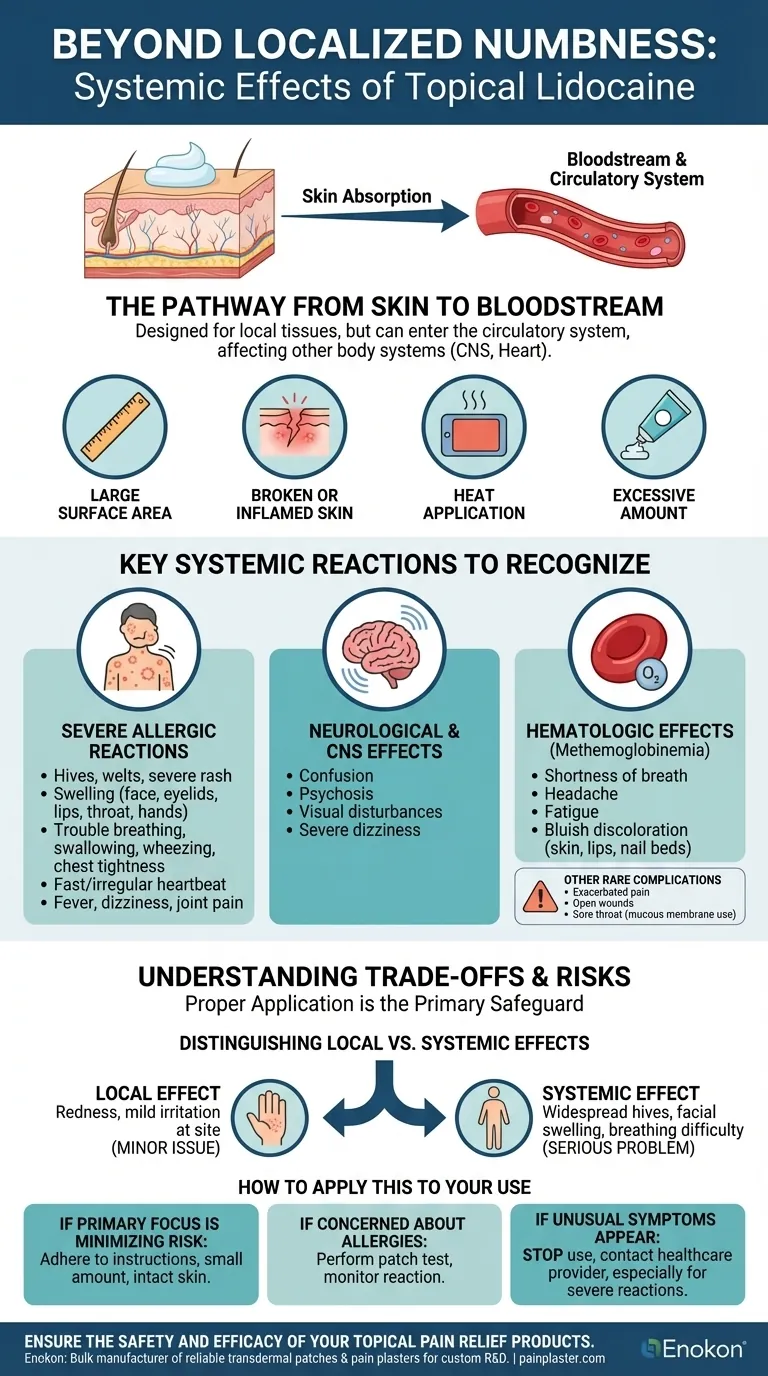
The Pathway from Skin to Bloodstream
Topical lidocaine is designed to stay in the local tissues of the skin to block pain signals. However, the drug can and does pass through the skin into your circulatory system.
Once in the bloodstream, it can travel throughout the body and affect other systems, such as the central nervous system (CNS) and the heart, just as an injected dose would.
Factors That Increase Systemic Absorption
The risk of systemic effects isn't uniform; it increases significantly under certain conditions.
Factors that enhance absorption include applying it over a large surface area, using it on broken or inflamed skin, applying heat over the area, or using an excessive amount of the product.
Key Systemic Reactions to Recognize
Severe Allergic Reactions
This is one of the most critical potential side effects. An allergic reaction is a body-wide immune response that requires immediate medical attention.
Symptoms can include:
- Hives, welts, or severe rash
- Swelling of the face, eyelids, lips, throat, or hands
- Trouble breathing or swallowing, wheezing, or chest tightness
- A fast or irregular heartbeat
- Fever, dizziness, or joint pain
Neurological and CNS Effects
When enough lidocaine reaches the central nervous system, it can cause significant disturbances. These symptoms indicate the drug is affecting brain function.
Look for signs such as confusion, psychosis, visual disturbances, or severe dizziness.
Hematologic Effects (Methemoglobinemia)
Though rare, this is a serious condition that has been reported. Methemoglobinemia prevents your red blood cells from releasing oxygen to the tissues effectively.
This can lead to symptoms like shortness of breath, headache, fatigue, and a bluish discoloration of the skin, lips, or nail beds.
Understanding the Trade-offs and Risks
Proper Application is the Primary Safeguard
The most significant risk factor for systemic effects is user error. The convenience of a topical anesthetic is traded against the responsibility to use it correctly.
Following package directions—specifically regarding the amount, area of application, and avoidance of broken skin—is the single most effective way to prevent adverse events.
Distinguishing Local vs. Systemic Effects
It is crucial to know the difference between a minor local issue and a dangerous systemic one.
Redness or mild irritation at the application site is a local effect. In contrast, hives appearing all over your body, swelling in your face, or difficulty breathing are systemic effects that signal a much more serious problem.
Other Reported Complications
Post-marketing reports have noted other unusual effects, though they are very rare.
These include cases of exacerbated pain at the application site and the development of open wounds. Contexts involving mucous membranes, like the throat, have led to reports of sore throat and hoarseness.
How to Apply This to Your Use
To balance the benefits of pain relief with safety, consider your primary goal.
- If your primary focus is minimizing risk: Adhere strictly to the dosing instructions, apply only to intact skin, and use the smallest amount needed for the smallest possible area.
- If you are concerned about allergies: Perform a patch test on a very small area of skin first and watch for any signs of reaction before applying it more broadly.
- If you notice any unusual symptoms after application: Stop using the product immediately and contact a healthcare provider, especially if you experience difficulty breathing, widespread hives, or swelling.
Informed and cautious use is the key to leveraging the benefits of topical lidocaine while avoiding its potential risks.
Summary Table:
| Systemic Effect Category | Key Symptoms to Watch For |
|---|---|
| Severe Allergic Reaction | Widespread hives, facial swelling, trouble breathing, fast heartbeat. |
| Neurological/CNS Effects | Confusion, psychosis, visual disturbances, severe dizziness. |
| Hematologic Effects (Methemoglobinemia) | Shortness of breath, headache, bluish skin/lips, fatigue. |
| Other Rare Complications | Exacerbated pain, open wounds, sore throat (with mucous membrane use). |
Ensure the safety and efficacy of your topical pain relief products. As a bulk manufacturer of reliable transdermal patches and pain plasters, Enokon provides healthcare and pharma distributors and brands with the technical expertise for custom R&D and development. Let us help you create safe, effective solutions. Contact our experts today to discuss your needs.
Visual Guide
Related Products
- Lidocaine Hydrogel Pain Relief Patch for Pain Relief
- Menthol Gel Pain Relief Patch
- Icy Hot Menthol Medicine Pain Relief Patch
- Capsaicin Chili Medicated Pain Relief Patches
- Herbal Medicated Anti Diarrhea Patch for Digestive Relief
People Also Ask
- How does the aqueous base in a lidocaine patch contribute to drug delivery? Unlocking Sustained Pain Relief Technology
- What are the advantages of topical anesthetics over invasive Lidocaine infiltration? Discover Safer, Scalable Relief
- Which pain patch is most effective for arthritis? Find the Best Relief for Your Joint Pain
- Will a GP routinely continue prescribing lidocaine patches after the initial period? Understanding Short-Term Pain Relief
- Why are lidocaine patches preferred over oral medications? Targeted Relief & Scale Your Brand with OEM R&D Solutions















