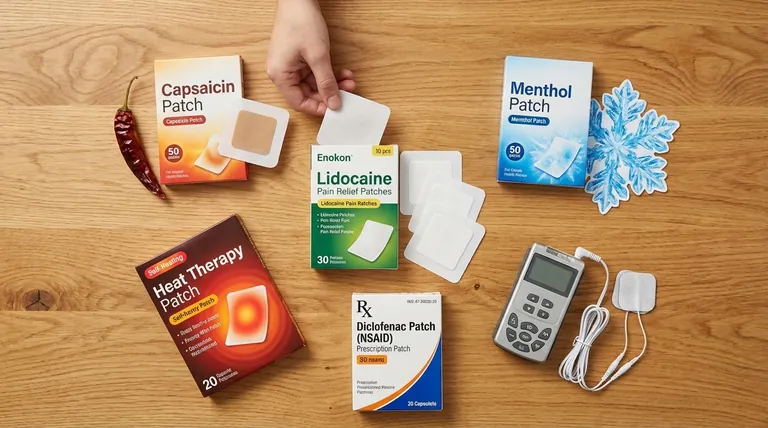
For lower back pain, several effective alternatives to lidocaine patches are available, each working through a different mechanism. The most common alternatives include capsaicin patches, menthol patches, heat therapy patches, prescription NSAID patches, and Transcutaneous Electrical Nerve Stimulation (TENS) units. These options offer distinct approaches, from creating a distracting sensation to reducing inflammation directly.
While a lidocaine patch works by numbing a specific area, its alternatives address pain differently. The key is to match the treatment's mechanism—be it reducing inflammation, relaxing muscles, or distracting nerve signals—to the underlying cause of your specific back pain.
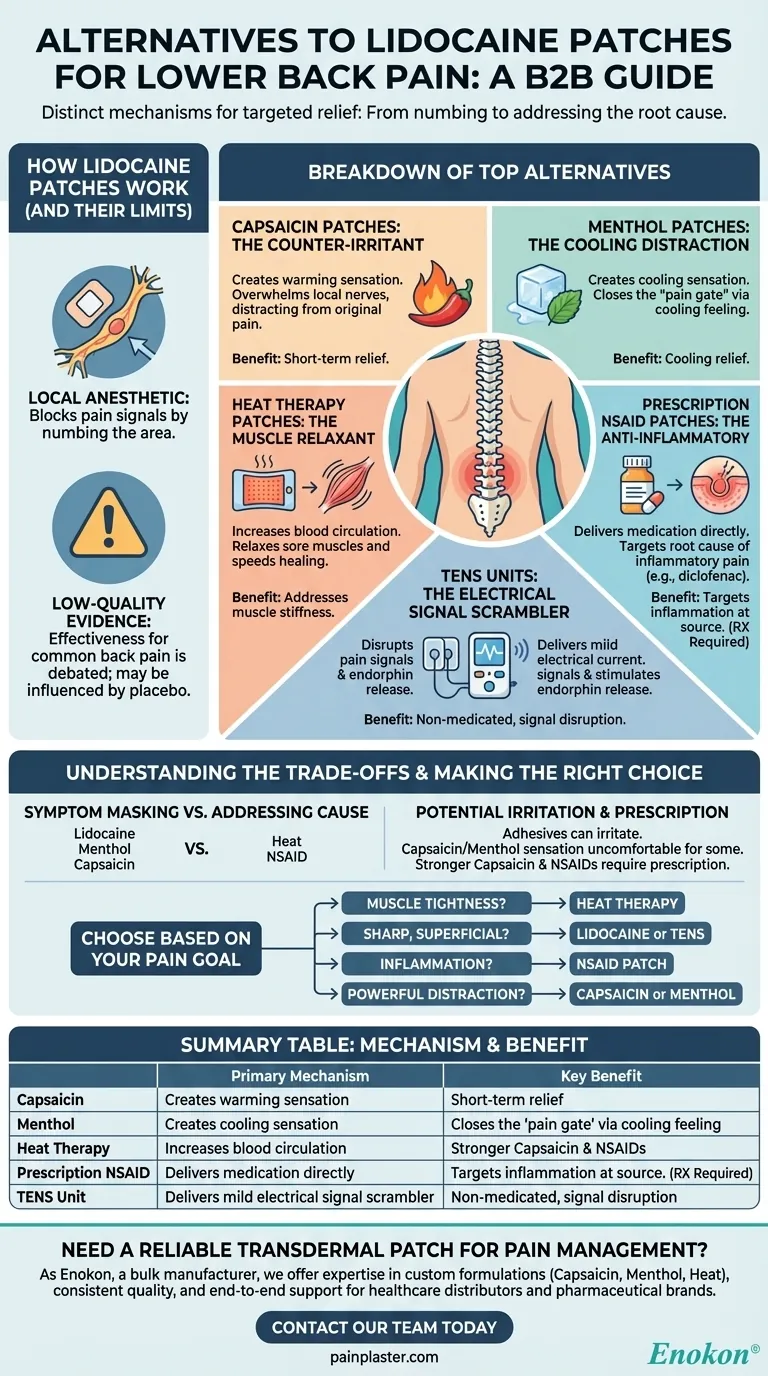
How Lidocaine Patches Work (and Their Limits)
The Numbing Mechanism
Lidocaine is a local anesthetic. When applied via a patch, it seeps into the skin and blocks the nerve channels that transmit pain signals from that area to your brain.
Essentially, it tells the nerves in that specific spot to stop reporting pain. This makes it potentially useful for localized pain that is very near the surface of the skin.
The Evidence for Back Pain
It's crucial to understand that while lidocaine patches are used for back pain, the scientific evidence supporting this specific use is considered low-quality.
Some studies show positive results, but researchers note that these could be influenced by a placebo effect. More rigorous studies are needed to confirm their true effectiveness for common low back pain.
A Breakdown of the Top Alternatives
Each alternative offers a different strategy for pain management. Understanding how they work is key to choosing the right one.
Capsaicin Patches: The Counter-Irritant
Capsaicin is the compound that makes chili peppers hot. When used in a patch, it creates a warming or burning sensation on the skin.
This intense sensation overwhelms the local nerves, effectively distracting them from sending the original pain signals. Some experts recommend it for short-term pain relief.
Menthol Patches: The Cooling Distraction
Menthol-based patches work on a similar principle to capsaicin but create a cooling sensation instead of heat.
This works based on the "gate control theory" of pain. The prominent cooling feeling closes the "gate" that would otherwise allow the deeper pain signals to reach the brain.
Heat Therapy Patches: The Muscle Relaxant
For back pain caused by muscle tightness or stiffness, simple heat can be highly effective. These patches provide continuous, low-level heat to the area.
Heat increases blood circulation to the sore muscles, which helps them relax and can speed up the healing process. This addresses muscle soreness directly, a common component of back pain.
Prescription NSAID Patches: The Anti-Inflammatory
If your back pain is caused by inflammation, an NSAID (Nonsteroidal Anti-Inflammatory Drug) patch may be a better choice. These require a prescription.
Patches containing drugs like diclofenac deliver the medication directly through the skin to the inflamed tissue. This targets the root cause of inflammatory pain, unlike lidocaine which only masks the symptom.
TENS Units: The Electrical Signal Scrambler
A TENS (Transcutaneous Electrical Nerve Stimulation) unit isn't a medicated patch, but it uses patches (electrodes) to deliver a mild electrical current through the skin.
This current can disrupt the pain signals on their way to the brain and may also stimulate the body to release its own natural painkillers, called endorphins.
Understanding the Trade-offs
Symptom Masking vs. Addressing the Cause
Lidocaine, menthol, and capsaicin primarily work by interrupting or distracting from the pain signal. They mask the symptom.
Heat therapy and NSAID patches can help address an underlying cause, such as muscle tension or inflammation. Choosing between them depends on a proper diagnosis of your pain source.
Potential for Skin Irritation
Any adhesive patch can cause skin irritation. However, capsaicin and menthol patches are designed to create a sensation, which can be uncomfortable or irritating for some people, especially with sensitive skin.
Prescription vs. Over-the-Counter
Most heat, menthol, and low-concentration capsaicin patches are available over-the-counter. Stronger capsaicin patches and all NSAID patches require a doctor's prescription and guidance.
Making the Right Choice for Your Goal
Always work with a healthcare professional to determine the cause of your pain. Once you have a better understanding, you can select the most appropriate topical treatment.
- If your primary focus is muscle tightness and stiffness: A heat therapy patch is likely the most direct and effective starting point.
- If your pain is sharp, superficial, and highly localized: A lidocaine patch or TENS unit might be effective at targeting those specific nerve signals.
- If you know your pain is driven by inflammation: A prescription NSAID patch targets the underlying cause more effectively than a simple numbing agent.
- If you need a powerful, non-medicated distraction for chronic pain: A capsaicin or menthol patch can provide temporary relief by creating a competing sensation.
Finding the right solution requires understanding that not all back pain is the same, and neither are the patches designed to treat it.
Summary Table:
| Alternative | Primary Mechanism | Key Benefit |
|---|---|---|
| Capsaicin Patch | Creates a distracting warming sensation | Overwhelms local nerve signals |
| Menthol Patch | Creates a distracting cooling sensation | Closes the 'gate' for pain signals |
| Heat Therapy Patch | Increases blood flow, relaxes muscles | Addresses muscle stiffness directly |
| Prescription NSAID Patch | Reduces inflammation at the source | Targets the root cause of inflammatory pain |
| TENS Unit | Delivers mild electrical current | Disrupts pain signals and may release endorphins |
Need a Reliable Transdermal Patch for Pain Management?
As Enokon, a bulk manufacturer of reliable transdermal patches and pain plasters, we understand that effective pain relief requires the right technology and formulation. Our expertise is ideal for healthcare distributors and pharmaceutical brands looking to develop or source high-quality alternatives to lidocaine patches.
We can help you:
- Develop Custom Formulations: Leverage our technical expertise for custom R&D on patches containing capsaicin, menthol, or heat therapy agents.
- Ensure Consistent Quality: Benefit from our reliable, bulk manufacturing processes for consistent patch performance.
- Bring Your Product to Market: From initial concept to final production, we provide end-to-end support.
Let's develop the right pain relief solution for your market. Contact our team today to discuss your project needs.
Visual Guide
Related Products
- Heat Relief Capsicum Patch for Lower Back Pain Relief
- Capsaicin Chili Medicated Pain Relief Patches
- Far Infrared Pain Patch Relief Pain Reliever for Back
- Icy Hot Menthol Medicine Pain Relief Patch
- Menthol Gel Pain Relief Patch
People Also Ask
- What were the inclusion criteria for the study on capsicum plaster for back pain? Key Requirements Explained
- What is Capsicum Plaster used for? Targeted Pain Relief for Musculoskeletal Discomfort
- How does the active ingredient Capsicum in the Heat Patch work? A Dual-Action Path to Pain Relief
- What conditions can capsicum plasters be used for? Natural Pain Relief for Muscles & Joints
- What are the main components of capsicum plasters? Discover the Natural Pain Relief Formula