
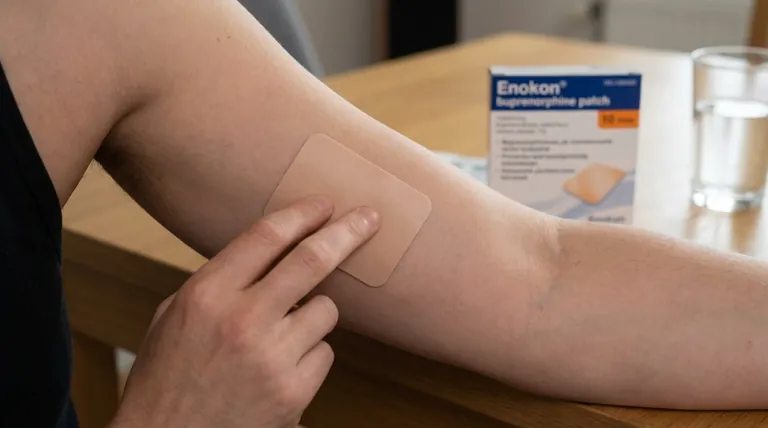
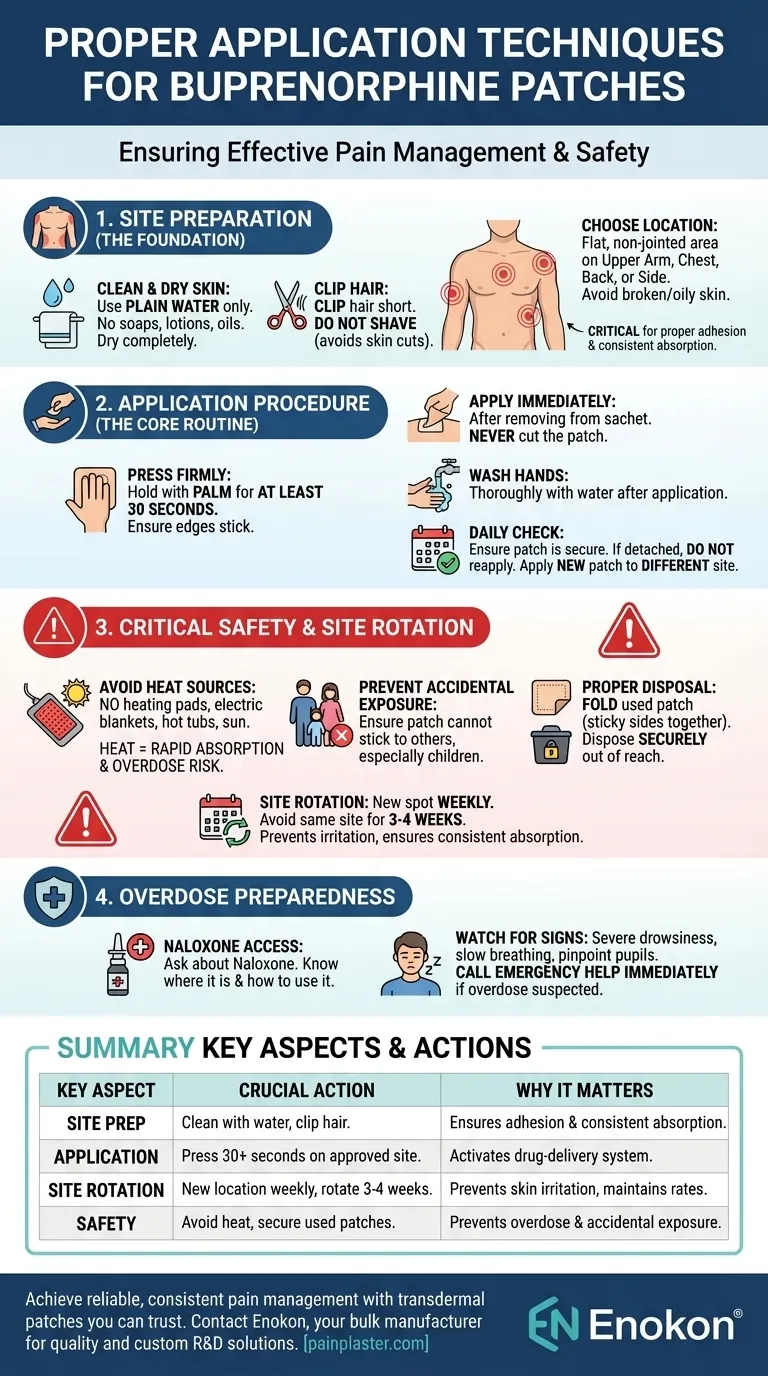
To properly apply a buprenorphine patch, you must select a clean, dry, and relatively hairless area on your upper arm, chest, back, or the side of your chest. Clean the area with water only, press the patch firmly in place for at least 30 seconds to ensure it is fully adhered, and then wash your hands. Always apply a new patch to a different location, avoiding the same spot for at least three to four weeks.
The physical steps of applying the patch are straightforward, but achieving safe and effective pain management depends entirely on understanding the principles behind them: maintaining consistent skin contact, ensuring controlled medication release, and actively preventing accidental overdose.
The Foundation: Preparing the Application Site
Proper preparation of the skin is the first and most critical step for ensuring the medication is absorbed correctly and consistently throughout the time you wear the patch.
Choosing the Right Location
The ideal location is a flat, non-jointed area of skin that is not subject to frequent rubbing by clothing. The approved sites are the upper outer arm, upper chest, upper back, or the side of the chest.
Avoid skin that is broken, irritated, oily, or has large scars. These conditions can interfere with both patch adhesion and the rate at which the medication is absorbed.
Why Skin Preparation is Non-Negotiable
Before application, the selected area must be cleaned with plain water only and then dried completely. Soaps, lotions, alcohol, or oils can leave a residue that prevents the patch from sticking properly.
If the area has hair, clip it as short as possible with scissors. Do not shave the area, as shaving can create tiny cuts or abrasions in the skin that may cause too much medication to be absorbed too quickly.
The Core Procedure: Applying and Changing the Patch
The routine of applying, wearing, and changing your patch is designed to provide a steady, consistent dose of medication. Deviating from this process can impact its effectiveness and safety.
The Application Steps
Apply the patch immediately after removing it from its sealed sachet. Never cut or damage the patch, as this can destroy the drug-delivery mechanism.
Press the patch firmly onto the prepared skin with the palm of your hand for at least 30 seconds. Ensure the edges are stuck down securely. After application, wash your hands thoroughly with water.
The Importance of Site Rotation
Each time you apply a new patch (typically once every seven days), you must use a different spot. This practice is known as site rotation.
Do not apply a patch to the same area of skin for at least three to four weeks. This gives the skin time to recover, preventing irritation and ensuring the absorption rate remains consistent with each new patch.
Handling a Detached Patch
Check the patch daily to make sure it is still adhering well. If a patch falls off before it is time to be changed, do not try to reapply it. Instead, apply a new patch to a different, properly prepared site.
Critical Safety Risks and How to Mitigate Them
Buprenorphine is a powerful opioid, and the patch delivery system has unique risks that you must manage carefully to prevent serious harm to yourself and others.
The Danger of Heat Exposure
You must avoid exposing the patch to direct heat sources. This includes heating pads, electric blankets, hot tubs, saunas, and prolonged, direct sunlight.
Heat significantly increases the rate at which your body absorbs the medication, which can lead to a dangerous and potentially fatal overdose.
Preventing Accidental Exposure
Ensure the patch cannot accidentally stick to another person, especially a child, through close physical contact. This can cause a life-threatening overdose in someone who is not prescribed the medication.
Proper Disposal of Used Patches
As soon as you remove a used patch, fold it in half with the sticky sides together. Dispose of it immediately in a secure location that is out of the reach of children and pets. Follow your pharmacist's instructions or local guidelines for medication disposal.
Recognizing and Preparing for an Overdose
Even when used correctly, it is essential to be prepared for the risk of an opioid overdose.
The Role of Naloxone
Ask your doctor or pharmacist about obtaining naloxone, a medication that can temporarily reverse the effects of an opioid overdose.
Ensure that you and your household members know where the naloxone is and how to use it in an emergency.
Key Symptoms to Watch For
Signs of an overdose include severe drowsiness or unresponsiveness, slow or shallow breathing, and pinpoint pupils. If you suspect an overdose, administer naloxone if available and call for emergency medical help immediately.
Making the Right Choice for Your Goal
By following these procedures, you take an active role in the success and safety of your pain management plan.
- If your primary focus is consistent pain relief: Faithful site rotation and daily checks for patch adhesion are your most important tasks.
- If your primary focus is personal safety: Avoiding all external heat sources on or near the patch is the single most critical rule to prevent accidental overdose.
- If your primary focus is protecting others: Secure and immediate disposal of used patches is non-negotiable to prevent accidental exposure to children, pets, or other adults.
Mastering these techniques ensures you receive the intended benefit of your medication while actively minimizing its inherent risks.
Summary Table:
| Key Aspect | Crucial Action | Why It Matters |
|---|---|---|
| Site Preparation | Clean skin with water only; clip hair (don't shave). | Ensures proper patch adhesion and consistent medication absorption. |
| Application | Press firmly for 30+ seconds on upper arm, chest, or back. | Activates the drug-delivery system for a steady dose. |
| Site Rotation | Use a new location each week; avoid same spot for 3-4 weeks. | Prevents skin irritation and maintains consistent absorption rates. |
| Safety | Avoid heat sources; dispose of used patches folded and securely. | Prevents overdose from rapid drug release and accidental exposure. |
Achieve reliable, consistent pain management with transdermal patches you can trust. As Enokon, a bulk manufacturer of reliable transdermal patches and pain plasters, we provide healthcare and pharmaceutical distributors and brands with high-quality, consistent products. Benefit from our technical expertise for custom R&D and development to create a solution tailored to your patients' needs. Contact our experts today to discuss your requirements.
Visual Guide
Related Products
- Menthol Gel Pain Relief Patch
- Lidocaine Hydrogel Pain Relief Patch for Pain Relief
- Icy Hot Menthol Medicine Pain Relief Patch
- Far Infrared Pain Patch Relief Pain Reliever for Back
- Asthma Cough and Pain Relief Patch for Adults and Kids
People Also Ask
- How do pain relief patches compare to other pain relief methods? Discover Targeted, Long-Lasting Relief
- How effective are pain relief patches for muscle pain? Target Localized Pain with Transdermal Delivery
- Who should consult a healthcare professional before using pain relief patches? Ensure Your Safety with Medical Advice
- Can pregnant women use pain relief patches? Your Essential Guide to Safe Pain Management
- What are some common applications of pain relief patches? Effective Relief for Muscle & Joint Pain



















