
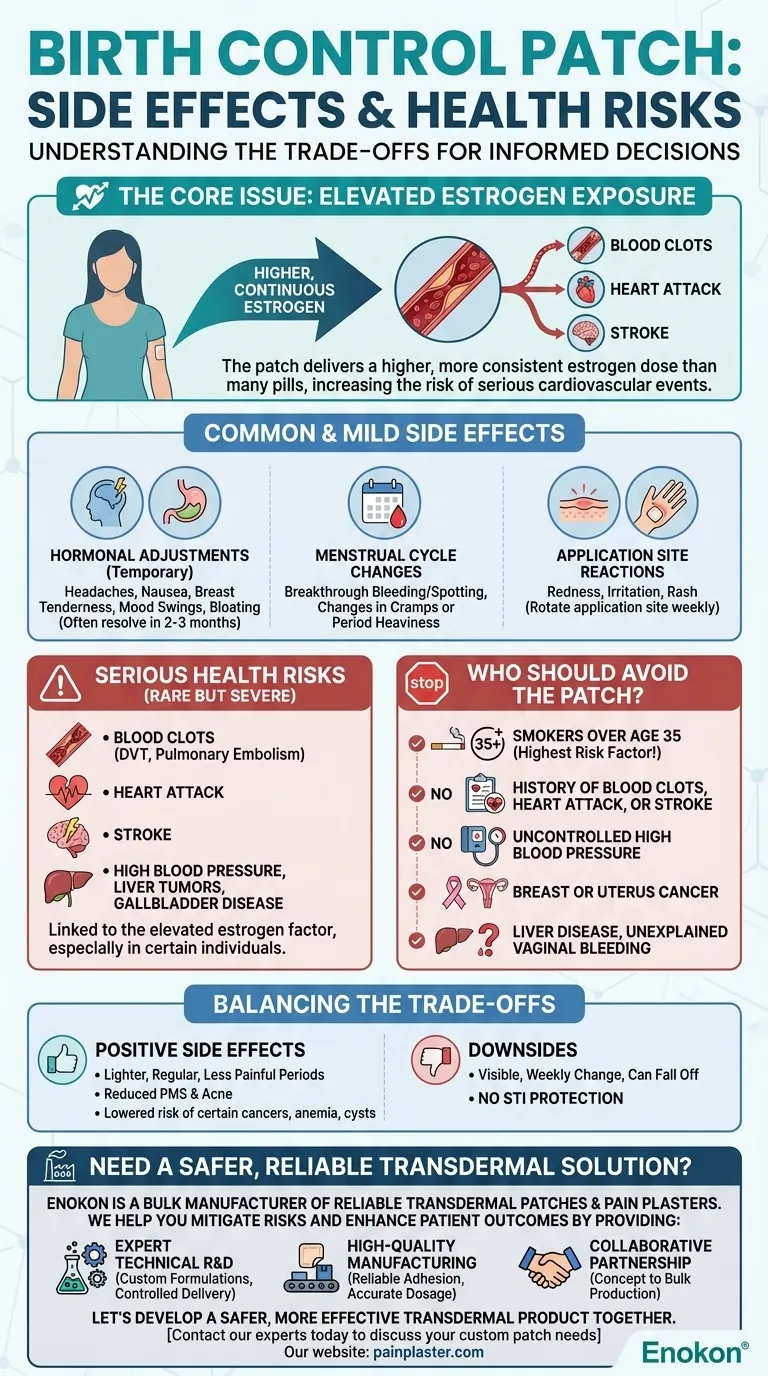
The birth control patch is effective, but it comes with a range of potential side effects. These effects vary from common, mild hormonal adjustments like breast tenderness, headaches, and nausea to rare but very serious health risks. The most significant concern is an increased risk of blood clots, heart attack, and stroke, primarily because the patch exposes the body to higher levels of estrogen than many birth control pills.
The core issue to understand is the trade-off: while most side effects are minor and often temporary, the patch's delivery method creates a higher, more consistent estrogen exposure, which elevates the risk of serious cardiovascular events for certain individuals.

Common and Mild Side Effects: What to Expect
When you begin using the patch, your body needs time to adjust to the hormones. Many of the most common side effects are mild and tend to resolve on their own after the first two or three months of use.
Hormonal Adjustment Symptoms
The most frequently reported side effects are related to your body adapting to the estrogen and progestin. These can include headaches, nausea, breast tenderness, mood swings, and bloating.
Changes to Your Menstrual Cycle
It is very common to experience breakthrough bleeding or spotting, especially during the initial cycles. You might also notice changes in your menstrual cramps or the heaviness of your period.
Skin and Application Site Reactions
Because the patch adheres to your skin, it's possible to experience redness, irritation, or a rash where it is applied. Rotating the location of the patch each week can help minimize this.
Serious Health Risks: Understanding the Concerns
While rare, the birth control patch carries serious risks that you must understand before deciding if it is the right method for you. These are primarily linked to the effects of estrogen on blood clotting.
The Elevated Estrogen Factor
The key difference between the patch and many combination pills is that the patch delivers a continuous, higher overall dose of estrogen into your bloodstream. This elevated exposure is the primary driver behind its more serious risks.
Cardiovascular Risks
This higher estrogen level significantly increases the risk of developing blood clots. A clot can lead to life-threatening conditions such as deep vein thrombosis (DVT) in the leg, a pulmonary embolism in the lungs, a stroke, or a heart attack.
Other Potential Serious Conditions
In rare cases, use of hormonal contraceptives like the patch has been linked to high blood pressure, liver tumors, and gallbladder disease.
Who Should Avoid the Patch? Key Risk Factors
The serious risks associated with the patch are not the same for everyone. Certain factors dramatically increase the likelihood of a dangerous complication, making the patch an unsafe choice for some individuals.
Smoking and Age
The risk of cardiovascular side effects is significantly higher for women who smoke, especially those over the age of 35. This combination is the single greatest risk factor for a serious event.
Pre-existing Medical Conditions
You should not use the birth control patch if you have a history of:
- Blood clots, heart attack, or stroke
- Uncontrolled high blood pressure
- Breast cancer or cancer of the uterus
- Liver disease or liver tumors
- Unexplained vaginal bleeding
Understanding the Trade-offs
Choosing a contraceptive method requires balancing its effectiveness and convenience against its potential downsides and your personal health profile.
The Downsides of Use
Beyond health risks, there are practical disadvantages. The patch is visible on the body, must be remembered and changed weekly, and can sometimes fall off. It also offers no protection against sexually transmitted infections (STIs).
The Positive Side Effects
For many users, the patch offers significant benefits beyond pregnancy prevention. It can lead to lighter, more regular, and less painful periods, reduce symptoms of PMS, and help prevent acne. It has also been shown to lower the risk of developing certain cancers, anemia, and cysts in the breasts and ovaries.
Making an Informed Decision
Your choice should be based on a clear understanding of your personal health profile and priorities.
- If your primary focus is convenience and you have no major health risks: The patch can be a highly effective option, but be prepared for potential mild side effects in the first few months.
- If you are a smoker over 35 or have a history of cardiovascular issues: The patch's elevated estrogen exposure makes it a high-risk choice, and you must discuss safer alternatives with your healthcare provider.
- If you are concerned about any side effects: Monitor your symptoms closely and remember that while many mild effects resolve, any signs of serious risks (like severe leg pain, sudden shortness of breath, or severe chest pain) warrant immediate medical attention.
Ultimately, the safest choice is one made in partnership with a doctor who understands your full health history.
Summary Table:
| Side Effect Category | Examples | Key Details |
|---|---|---|
| Common & Mild | Headaches, nausea, breast tenderness, skin irritation | Often temporary, usually resolve after 2-3 months of use. |
| Serious Health Risks | Blood clots, heart attack, stroke, high blood pressure | Linked to higher, continuous estrogen exposure from the patch. |
| Who is at Higher Risk? | Smokers over 35, individuals with a history of blood clots, heart disease, or stroke. | These groups should avoid the patch due to significantly elevated risk. |
Need a Safer, Reliable Transdermal Solution?
If you are a healthcare distributor or brand developing hormone-based or other transdermal therapies, ensuring product safety and consistent delivery is paramount. Enokon is a bulk manufacturer of reliable transdermal patches and pain plasters.
We help you mitigate risks and enhance patient outcomes by providing:
- Expert Technical R&D: Our team can assist in developing custom formulations with controlled, consistent hormone delivery to help minimize side effects.
- High-Quality Manufacturing: We produce patches that adhere reliably and deliver medication as intended, reducing the risk of user error.
- Collaborative Partnership: We work with you from concept to bulk production, ensuring your product meets the highest standards of safety and efficacy.
Let's develop a safer, more effective transdermal product together.
Contact our experts today to discuss your custom patch needs
Visual Guide
Related Products
- Prostate Pain Kidney Health Care Patch for Men
- Heating Pain Relief Patches for Menstrual Cramps
- Silicone Scar Sheets Patch Transdermal Drug Patch
- Menthol Gel Pain Relief Patch
- Icy Hot Menthol Medicine Pain Relief Patch
People Also Ask
- What are the key components of Chinese herbal pain patches? Discover the Science Behind Natural Pain Relief
- What role do Chinese pain patches play in arthritis relief? Discover Natural Pain Management Solutions
- What complementary practices enhance the effectiveness of Chinese pain patches? Boost Relief with Holistic Care
- Are there any side effects associated with Chinese pain patches? Risks & Safety Tips
- What are the main benefits of using Chinese pain patches? Holistic Relief for Musculoskeletal Pain








