
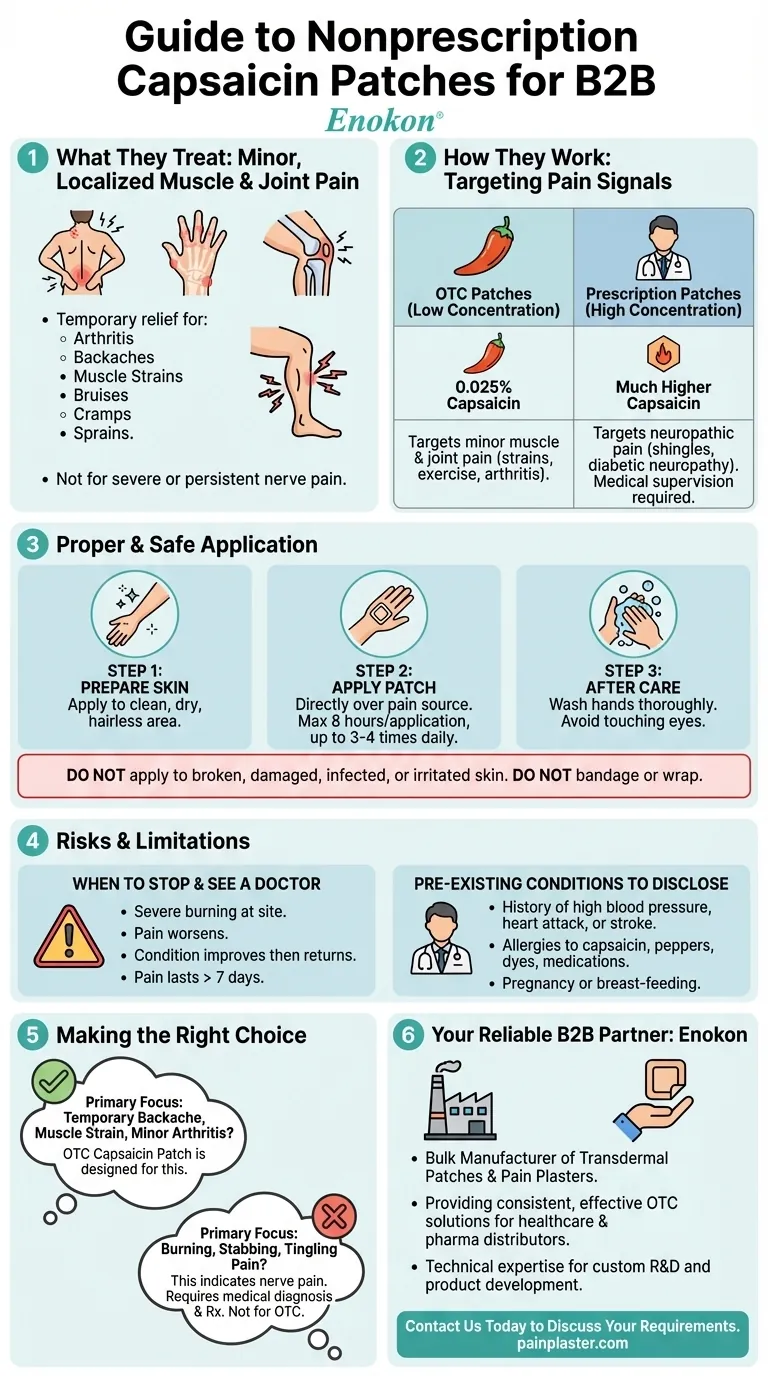
To be clear, nonprescription capsaicin patches are used to relieve minor, localized pain in muscles and joints. Their intended use is for common ailments such as arthritis, simple backaches, muscle strains, bruises, cramps, and sprains.
The key distinction to understand is that over-the-counter (OTC) capsaicin patches are designed for temporary, musculoskeletal aches. More severe or persistent nerve-related pain requires a significantly stronger, prescription-only formulation and a doctor's diagnosis.

How Capsaicin Targets Different Types of Pain
Capsaicin, the active compound in chili peppers, works by affecting pain signals in the body. The concentration of the capsaicin determines which type of pain it is approved to treat.
For Common Muscle and Joint Pain
Over-the-counter patches contain a low concentration of capsaicin, typically 0.025%.
They are specifically indicated for temporary relief from minor pain originating in the muscles and joints. This includes pain resulting from everyday strains, exercise, or conditions like arthritis.
For Severe Nerve Pain (Prescription Only)
In contrast, prescription-strength patches are used for neuropathic pain—pain caused by nerve damage.
These patches contain a much higher concentration of capsaicin and are used to treat conditions like postherpetic neuralgia (lingering pain after a shingles infection) and diabetic neuropathy. This treatment must be administered under medical supervision.
Proper and Safe Application
Using an OTC capsaicin patch correctly is essential for both effectiveness and safety. Always follow the specific instructions on the product packaging.
Application Guidelines
Apply the patch to a clean, dry, and hairless area of skin directly over the source of the pain.
Crucially, do not apply patches to skin that is broken, damaged, cut, infected, or covered in a rash. After applying the patch, wash your hands thoroughly with soap and water and avoid touching your eyes.
Dosage and Duration
A typical OTC patch should be worn for no more than 8 hours per application.
You can generally apply a new patch up to 3 or 4 times daily. Do not wrap or place a bandage over the patch, as this can increase heat and potential irritation.
Understanding the Risks and Limitations
While generally safe for their intended use, capsaicin patches are not without risks. Knowing when to stop using them and who should avoid them is critical.
When to Stop and See a Doctor
You should stop using the patch and consult a physician if you experience severe burning at the application site.
Also, seek medical advice if your pain worsens, your condition improves but then returns, or the pain lasts for more than 7 days.
Pre-existing Conditions to Disclose
Before using capsaicin, inform your doctor or pharmacist if you have certain conditions.
These include a history of high blood pressure, heart attack, or stroke. You should also disclose any known allergies to capsaicin, hot peppers, dyes, or other medications, or if you are pregnant or breast-feeding.
Making the Right Choice for Your Pain
To determine if an OTC patch is the appropriate solution, consider the nature of your discomfort.
- If your primary focus is relieving a temporary backache, muscle strain, or bruise: An OTC capsaicin patch is designed precisely for this type of minor, localized pain.
- If your primary focus is managing minor, daily arthritis pain: An OTC patch can be an effective tool for temporary relief in specific joints.
- If your primary focus is treating burning, stabbing, or tingling pain: This may indicate nerve pain, which requires a medical diagnosis and is not treatable with OTC products.
Understanding the purpose of OTC capsaicin empowers you to use it safely and effectively for the right kind of pain.
Summary Table:
| Condition Type | Suitable for OTC Capsaicin Patches? | Key Details |
|---|---|---|
| Minor Muscle/Joint Pain | Yes | Temporary relief for arthritis, backaches, strains, bruises, cramps. |
| Severe Nerve Pain | No | Requires prescription-strength patches for conditions like shingles pain or diabetic neuropathy. |
| Application Site | Yes, with conditions | Apply to clean, dry, intact skin. Avoid broken, damaged, or irritated skin. |
Looking for a reliable supplier of high-quality transdermal pain relief patches?
As Enokon, a bulk manufacturer of reliable transdermal patches and pain plasters, we provide healthcare and pharmaceutical distributors and brands with consistent, effective OTC solutions. Benefit from our technical expertise for custom R&D and product development to meet your specific market needs.
Contact our experts today to discuss your manufacturing requirements and how we can partner to bring effective pain relief to your customers.
Visual Guide
Related Products
- Capsaicin Chili Medicated Pain Relief Patches
- Heat Relief Capsicum Patch for Lower Back Pain Relief
- Menthol Gel Pain Relief Patch
- Icy Hot Menthol Medicine Pain Relief Patch
- Asthma Cough and Pain Relief Patch for Adults and Kids
People Also Ask
- What conditions should be reported to a care team before using capsaicin patches? Ensure Safe Pain Relief
- What conditions can capsaicin creams and patches help relieve? Find Targeted Pain Relief for Nerves & Joints
- What are the uses of nonprescription capsaicin patches? Natural Pain Relief for Muscles & Joints
- What should be avoided while using capsaicin patches? Essential Safety Tips for Effective Pain Relief
- How are capsaicin patches administered? A Guide to Clinical vs. At-Home Use



















