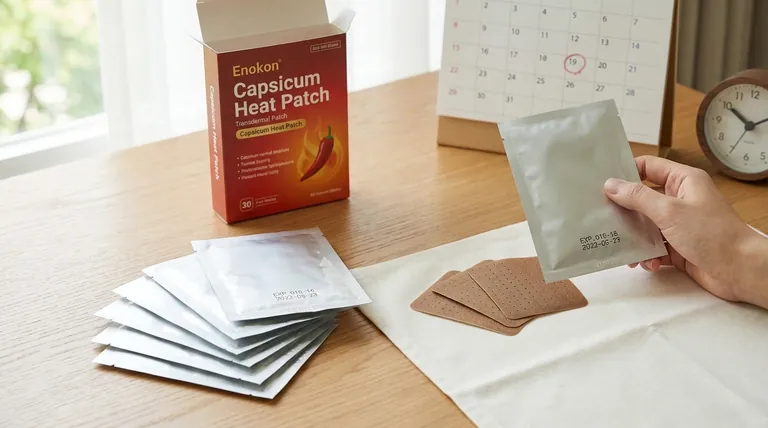
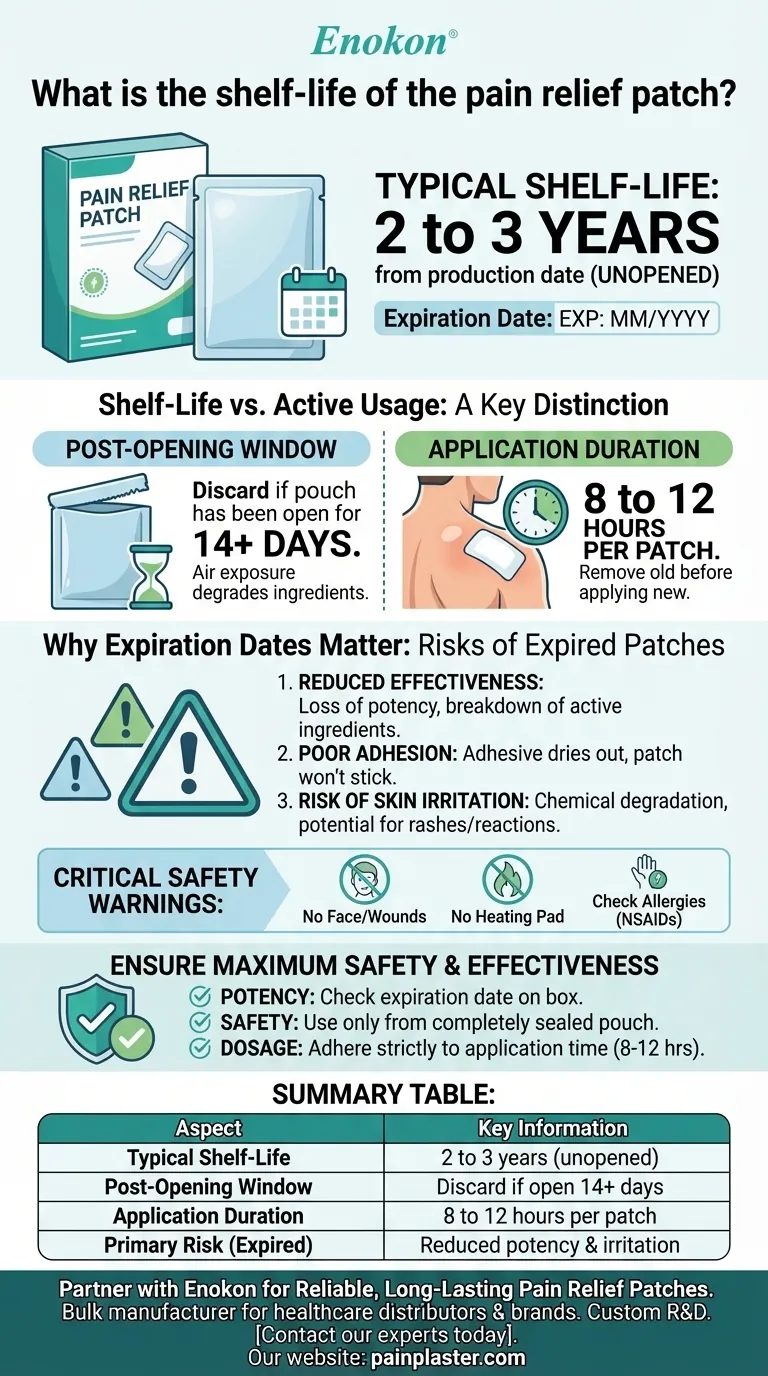
To put it simply, the shelf-life of most pain relief patches is 2 to 3 years from the date of production. The definitive expiration date is always printed clearly on the product’s box or individual pouch.
While the printed expiration date is your primary guide for an unopened box, the true effectiveness and safety of a patch also depend critically on the integrity of its sealed pouch. Once a pouch is opened, the clock starts ticking much faster.
Shelf-Life vs. Active Usage: A Key Distinction
Many users confuse a product's overall shelf-life with the recommended duration for wearing a single patch. Understanding the difference is essential for both safety and effectiveness.
The Official Shelf-Life
The shelf-life refers to how long the patch remains stable, safe, and effective while stored in its original, unopened packaging. This is typically the 2 to 3-year window indicated by the manufacturer's expiration date.
The Post-Opening Window
Once you open a patch's sealed pouch, its environment changes. The reference to discarding a patch from a pouch that has been open for 14 or more days is a critical safety instruction. Exposure to air can dry out the adhesive and degrade the active ingredients.
The Application Duration
The application duration is how long a single patch is designed to be worn on the skin to deliver medication effectively. For most over-the-counter pain patches, this period is between 8 and 12 hours. You must always remove the old patch before applying a new one.
Understanding the Trade-offs: Why Expiration Dates Matter
Using a patch incorrectly or after its expiration date is not just a matter of reduced performance; it also introduces potential risks.
Reduced Effectiveness
The primary consequence of using an expired patch is a loss of potency. The active ingredients, such as lidocaine or menthol, can break down over time, meaning the patch will likely provide significantly less pain relief than expected.
Poor Adhesion
The adhesive on the patch is crucial for keeping it in contact with your skin to deliver the medication. Over time, especially if a pouch has been opened, this adhesive can dry out and lose its sticking power, rendering the patch useless.
Risk of Skin Irritation
As the chemical compounds in the patch and its adhesive degrade, they can change composition. This increases the risk of causing unwanted skin reactions, rashes, or other irritation at the application site.
Critical Safety Warnings
It's vital to remember that a patch is a drug delivery system. It should never be used on the face, on wounds or damaged skin, with a heating pad, or if you have certain medical conditions or allergies, such as an allergy to NSAIDs.
How to Ensure Maximum Safety and Effectiveness
Follow these clear guidelines to get the reliable pain relief you expect while minimizing any potential risks.
- If your primary focus is potency: Always check the expiration date on the box before use. Discard any product that is past its expiration date.
- If your primary focus is safety: Only use a patch from a completely sealed pouch. If a pouch is open or damaged, discard the patch inside.
- If your primary focus is proper dosage: Adhere strictly to the application time listed on the package, typically 8-12 hours, and never wear more than one patch at a time unless directed by a doctor.
Ultimately, treating a pain relief patch like any other medication by respecting its expiration date and storage instructions ensures you receive its full, intended benefit safely.
Summary Table:
| Aspect | Key Information |
|---|---|
| Typical Shelf-Life | 2 to 3 years from production date (unopened) |
| Post-Opening Window | Discard if pouch has been open for 14+ days |
| Application Duration | 8 to 12 hours per patch |
| Primary Risk (Expired) | Reduced potency and potential skin irritation |
Partner with Enokon for Reliable, Long-Lasting Pain Relief Patches
As a bulk manufacturer of transdermal patches and pain plasters for healthcare and pharmaceutical distributors and brands, Enokon ensures your products have a stable, extended shelf-life and deliver consistent, safe relief to end-users. Benefit from our technical expertise for custom R&D and development to create a product that meets your exact specifications and market needs.
Contact our experts today to discuss your next project and ensure superior quality from production to patient.
Visual Guide
Related Products
- Icy Hot Menthol Medicine Pain Relief Patch
- Mugwort Wormwood Pain Relief Patch for Neck Pain
- Menthol Gel Pain Relief Patch
- Far Infrared Pain Patch Relief Pain Reliever for Back
- Far Infrared Deep Heat Relief Patches Medicated Pain Relief Patches
People Also Ask
- What are the benefits of using pain relief patches compared to oral medications? Targeted Relief with Fewer Side Effects
- What are the key components of a pain relief patch? Unlock the Science of Targeted Pain Relief
- What factors should be considered when choosing between pills and patches for pain relief? A Guide to Personalized Pain Management
- What alternatives exist for pain relief patches? Compare systemic meds & physical therapy
- What should you consider when choosing between a pain relief patch and a cream? Key Factors for Effective Pain Management