
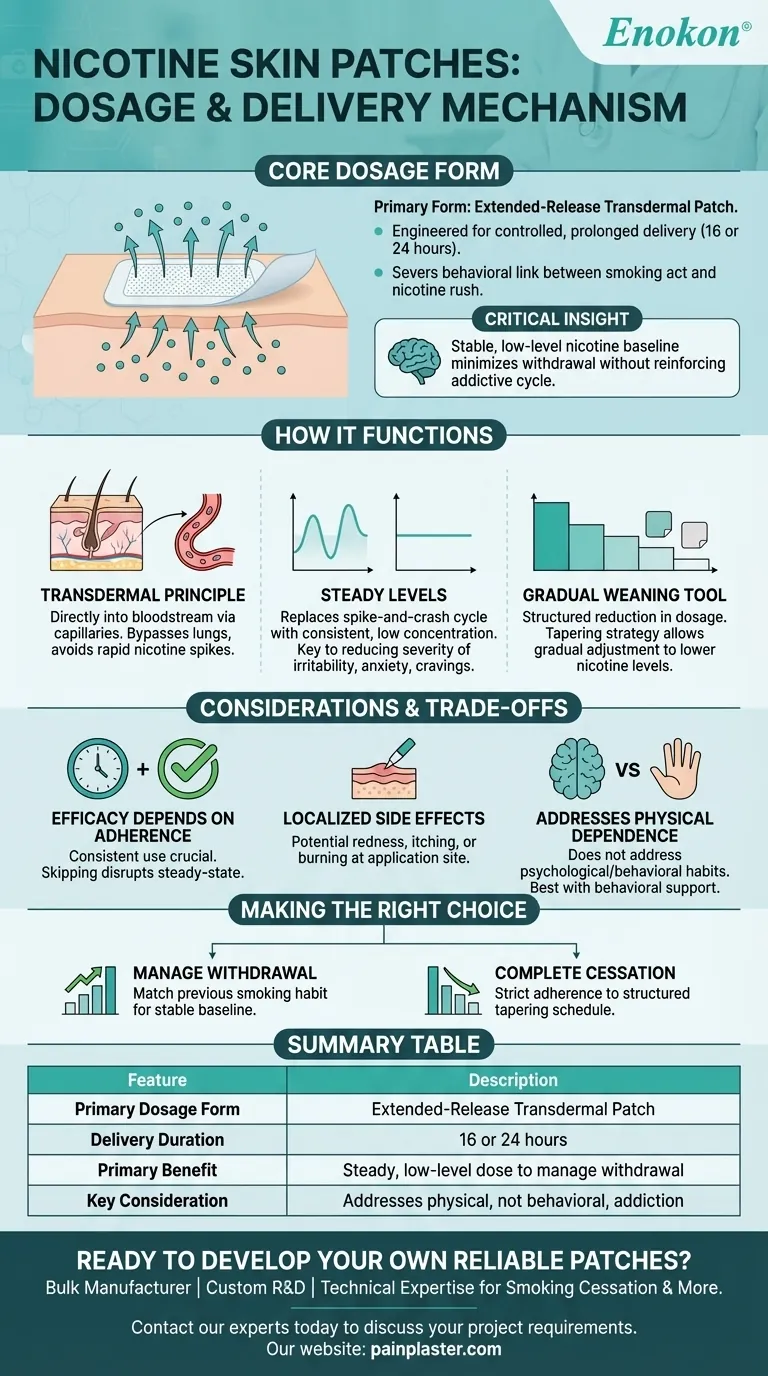
At its core, a nicotine skin patch is available in a single primary dosage form: the extended-release transdermal patch. This design is not arbitrary; it is specifically engineered to deliver a controlled, steady supply of nicotine through the skin over a prolonged period, typically 16 or 24 hours. This mechanism is central to its function in smoking cessation therapy.
The critical insight is that the nicotine patch's extended-release form is designed to sever the behavioral link between the act of smoking and the neurological reward of a nicotine rush. By providing a stable, low-level baseline of nicotine, it minimizes withdrawal symptoms without reinforcing the addictive cycle.

How the Extended-Release Patch Functions
Understanding the mechanics of the transdermal patch reveals why it is an effective tool for managing nicotine dependence. Its entire design is focused on transforming how the body receives nicotine.
The Principle of Transdermal Delivery
A nicotine patch adheres to the skin, allowing nicotine to be absorbed directly into the capillaries and then into the bloodstream. This method bypasses the lungs, breaking the immediate, high-impact delivery associated with smoking.
The extended-release characteristic means the patch's layers are designed to release the drug at a slow, predetermined rate throughout the day.
Maintaining Steady Nicotine Levels
Cigarette smoking causes rapid spikes and subsequent crashes in nicotine levels, driving the cycle of craving and reward. The patch replaces this with a consistent, low concentration of nicotine in the blood.
This stability is key to reducing the severity of withdrawal effects, such as irritability, anxiety, and intense cravings, which often lead to relapse.
A Tool for Gradual Weaning
The ultimate goal of nicotine replacement therapy is to end nicotine dependence entirely. The extended-release patch system is designed to facilitate this through a structured reduction in dosage over time.
Treatment typically involves a multi-step program where the user starts with a higher-dose patch and systematically moves to lower-dose patches over several weeks. This tapering strategy allows the body to gradually adjust to lower levels of nicotine until it is no longer needed.
Understanding the Trade-offs and Considerations
While effective, the nicotine patch is a medical tool with specific application parameters and potential downsides that must be managed.
Efficacy Depends on Adherence
The patch's success is highly dependent on correct and consistent use. Skipping days or removing the patch early can disrupt the steady-state nicotine level, potentially triggering withdrawal symptoms and cravings.
Potential for Localized Side Effects
Because the patch delivers its active ingredient through the skin, the most common side effects are localized. These can include skin redness, itching, or a burning sensation at the application site.
Addressing Only Physical Dependence
It is crucial to recognize that the patch primarily addresses the physical addiction to nicotine. It does not address the psychological or behavioral habits associated with smoking, such as the hand-to-mouth motion or smoking as a response to stress. For this reason, it is most effective when used as part of a comprehensive cessation program that includes behavioral support.
Making the Right Choice for Your Goal
Using a nicotine patch effectively means aligning the treatment strategy with the primary goal of cessation.
- If your primary focus is managing intense initial withdrawal: The key is to start with a patch dosage that matches your previous smoking habit to establish a stable nicotine baseline and prevent severe cravings.
- If your primary focus is achieving complete, long-term cessation: The key is strict adherence to the structured tapering schedule, moving from higher- to lower-strength patches as directed to gently wean your body off its dependence.
Ultimately, the nicotine patch's extended-release form provides a strategic advantage by managing the physical battle of withdrawal, allowing you to focus on overcoming the behavioral habits of smoking.
Summary Table:
| Feature | Description |
|---|---|
| Primary Dosage Form | Extended-Release Transdermal Patch |
| Delivery Duration | 16 or 24 hours |
| Primary Benefit | Provides a steady, low-level nicotine dose to manage withdrawal |
| Key Consideration | Primarily addresses physical, not behavioral, addiction |
Ready to develop your own reliable transdermal patches?
As a bulk manufacturer of proven transdermal systems, Enokon provides healthcare and pharma brands with the technical expertise for custom R&D and development. Let us help you create effective, high-quality patches for smoking cessation or other therapeutic areas.
Contact our experts today to discuss your project requirements.
Visual Guide
Related Products
- Capsaicin Chili Medicated Pain Relief Patches
- Icy Hot Menthol Medicine Pain Relief Patch
- Menthol Gel Pain Relief Patch
- Lidocaine Hydrogel Pain Relief Patch for Pain Relief
- Silicone Scar Sheets Patch Transdermal Drug Patch
People Also Ask
- What conditions can capsaicin creams and patches help relieve? Find Targeted Pain Relief for Nerves & Joints
- What conditions should be reported to a care team before using capsaicin patches? Ensure Safe Pain Relief
- What are the uses of nonprescription capsaicin patches? Natural Pain Relief for Muscles & Joints
- What should be avoided while using capsaicin patches? Essential Safety Tips for Effective Pain Relief
- What special precautions should be followed before using capsaicin patches? Ensure Safe and Effective Pain Relief




