In short, using topical lidocaine while breastfeeding is generally considered low-risk, but it requires caution and must be done under medical supervision. The primary concern is not that large amounts will pass into your breast milk, but that a lack of extensive safety data necessitates a careful approach. Your healthcare provider is the only one who can properly assess the risks and benefits for your specific situation.
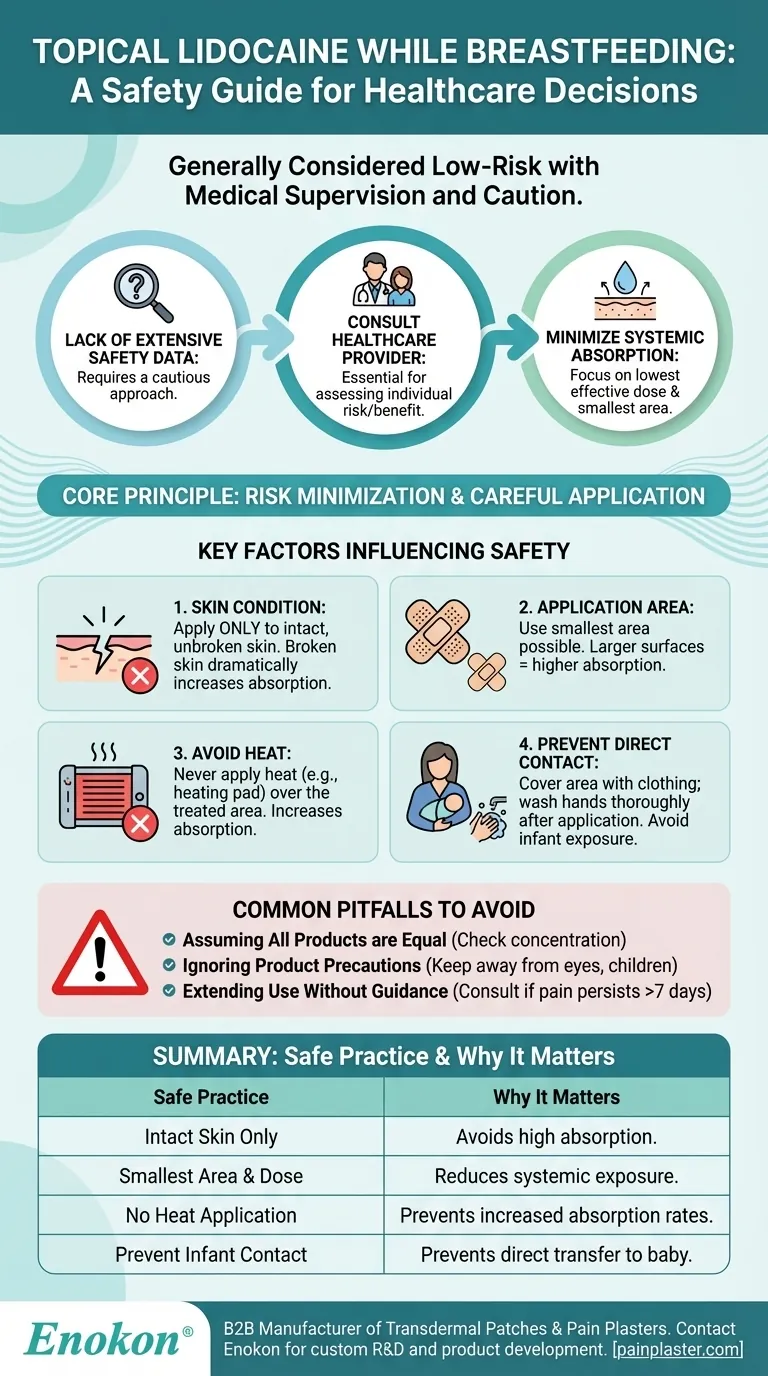
The core principle is risk minimization. While systemic absorption of topical lidocaine through intact skin is low, the safest path is to consult your doctor, use the lowest effective dose on the smallest possible area of unbroken skin, and prevent any direct contact between the infant and the treated area.

Why Caution is the Standard Advice
When you apply a medication to your skin, a small amount can be absorbed into your bloodstream. This is called systemic absorption. The central question for any breastfeeding parent is how much of that absorbed medication can pass into breast milk and what effect, if any, it might have on the baby.
The Lack of Definitive Data
The primary reason for caution is the limited number of high-quality studies on topical lidocaine use in breastfeeding individuals. Medical guidance defaults to a conservative stance when definitive data is absent. This doesn't mean it's known to be harmful; it means the risk, while presumed to be low, is not fully quantified.
How Absorption Varies
The amount of lidocaine that enters your system is not fixed. It depends heavily on how and where you apply it. Factors like the size of the application area and the condition of your skin play a significant role in determining your level of exposure.
Key Factors That Influence Safety
To use topical lidocaine as safely as possible, you and your doctor must consider the variables that affect absorption. Managing these factors is the key to minimizing any potential risk to your infant.
The Condition of Your Skin
This is the most critical factor. Lidocaine should only be applied to intact, unbroken skin. Application on scraped, cut, burned, or irritated skin dramatically increases the amount of drug absorbed into your bloodstream.
The Size of the Application Area
The smaller the area you treat, the lower the systemic absorption. Using a patch or a small amount of cream on a specific point of pain is very different from applying it over a large surface like the entire lower back.
The Use of Heat
Never apply heat, such as from a heating pad or hot bandage, over the area where you have applied lidocaine. Heat increases blood flow to the skin, which will significantly increase the rate and amount of medication absorbed.
The Risk of Direct Contact
A crucial but often overlooked risk is direct transfer to the baby. If your infant comes into contact with the treated skin or a used patch, they could ingest the medication. Always ensure the area is covered by clothing and wash your hands thoroughly after every application.
Common Pitfalls to Avoid
Navigating medication use while breastfeeding requires careful attention to detail. Avoiding these common mistakes is essential for ensuring safety.
Assuming All Products are Equal
Lidocaine comes in many forms—creams, sprays, patches—and in various concentrations. A high-concentration prescription product carries more potential for absorption than a low-dose over-the-counter cream. Follow product-specific instructions precisely.
Ignoring Product Precautions
Standard safety warnings are there for a reason. Keep the product away from your eyes, do not use it internally unless specifically directed by a physician, and store it securely out of the reach of children.
Extending Use Without Guidance
If your pain persists or worsens after seven days of use, stop and consult your healthcare provider. Do not assume that long-term use is safe without a medical evaluation.
Making the Safest Choice for You and Your Baby
Your goal is to get effective pain relief with the lowest possible risk. This is best achieved in partnership with a healthcare professional who understands your health history and your baby's needs.
- If your primary focus is treating minor, occasional pain: Consult your provider, but understand the risk is generally very low when using a small amount on intact skin for a short duration.
- If your primary focus is managing significant or chronic pain: A thorough discussion with your doctor is non-negotiable to weigh the benefits of pain management against the minimal but unquantified risks.
- For every application, regardless of the reason: Always inspect the skin first, wash your hands immediately after, and ensure the infant cannot come into direct contact with the medication.
Ultimately, making an informed decision with your healthcare provider is the most responsible way to manage your pain while protecting your child.
Summary Table:
| Factor | Safe Practice | Why It Matters |
|---|---|---|
| Skin Condition | Apply only to intact, unbroken skin. | Broken skin dramatically increases absorption into your bloodstream. |
| Application Area | Use the smallest effective dose on the smallest area. | Smaller application areas result in lower systemic absorption. |
| Heat | Avoid applying heat (e.g., heating pads) over the treated area. | Heat increases blood flow, raising medication absorption. |
| Infant Contact | Cover the area with clothing; wash hands thoroughly after application. | Prevents direct transfer of medication to the infant. |
Need reliable, high-quality topical pain relief solutions? As Enokon, a bulk manufacturer of trusted transdermal patches and pain plasters, we provide healthcare and pharma distributors and brands with the technical expertise for custom R&D and product development. Let us help you create safe and effective solutions for your customers. Contact our experts today to discuss your needs.
Visual Guide
Related Products
- Lidocaine Hydrogel Pain Relief Patch for Pain Relief
- Icy Hot Menthol Medicine Pain Relief Patch
- Menthol Gel Pain Relief Patch
- Capsaicin Chili Medicated Pain Relief Patches
- Far Infrared Deep Heat Relief Patches Medicated Pain Relief Patches
People Also Ask
- How does the aqueous base in a lidocaine patch contribute to drug delivery? Unlocking Sustained Pain Relief Technology
- What are the advantages of topical anesthetics over invasive Lidocaine infiltration? Discover Safer, Scalable Relief
- Which pain patch is most effective for arthritis? Find the Best Relief for Your Joint Pain
- Will a GP routinely continue prescribing lidocaine patches after the initial period? Understanding Short-Term Pain Relief
- Why are lidocaine patches preferred over oral medications? Targeted Relief & Scale Your Brand with OEM R&D Solutions