
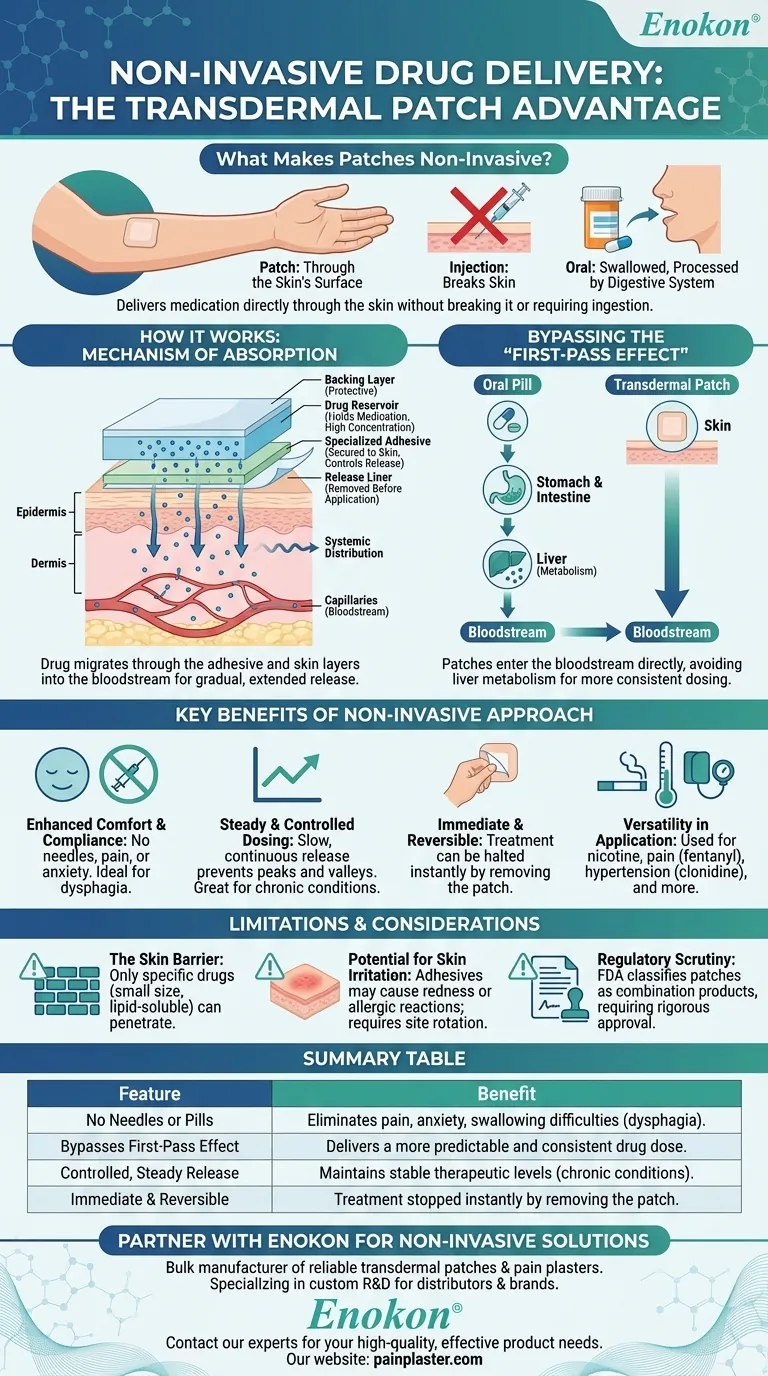
At its core, a transdermal patch is considered non-invasive because it delivers medication directly through the surface of the skin without breaking it. Unlike injections that pierce the skin or oral medications that must be swallowed and processed by the digestive system, a patch simply adheres to the body, allowing the active drug to be absorbed gradually.
The non-invasive nature of transdermal patches stems from their ability to bypass traditional delivery routes like needles and the gastrointestinal tract. This fundamental difference is what enables their unique benefits in patient comfort, consistent dosing, and therapeutic control.
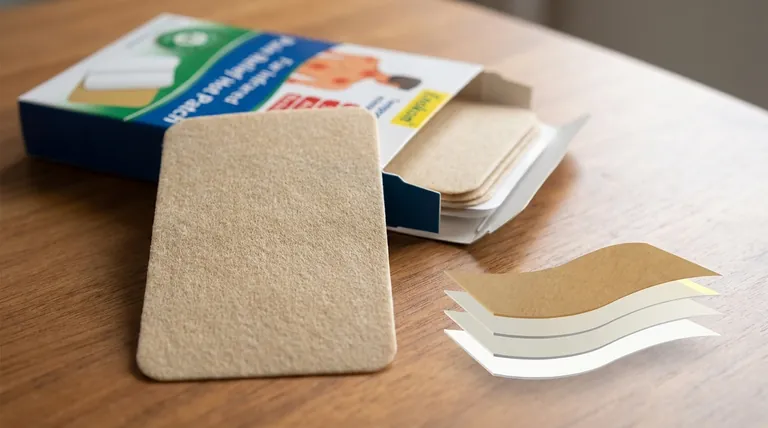
How Patches Deliver Medication Through the Skin
A transdermal patch is a sophisticated, multi-layered system designed to control the release of a drug into the bloodstream over an extended period. Understanding its structure reveals how it achieves this without invasive procedures.
The Core Components
Each patch is typically constructed with several key layers. These include a protective backing layer, a drug reservoir that holds the medication, a specialized adhesive to keep it secured to the skin, and a release liner that is peeled away before application.
The Mechanism of Absorption
Once applied, the drug migrates from the high-concentration reservoir, through the adhesive, and into the outer layers of the skin. From there, it is absorbed into the dermal layer's network of capillaries, entering the bloodstream for systemic distribution.
Bypassing the "First-Pass Effect"
When you swallow a pill, the drug is absorbed through the gut and must first pass through the liver before it circulates throughout the body. The liver metabolizes a portion of the drug, reducing its effective dose. Transdermal patches completely bypass this "first-pass effect," allowing for more predictable and consistent drug levels in the blood.
Key Benefits of a Non-Invasive Approach
Avoiding needles and pills is not just a matter of convenience; it unlocks significant therapeutic advantages that improve treatment outcomes and patient quality of life.
Enhanced Patient Comfort and Compliance
The most obvious benefit is the elimination of pain and anxiety associated with injections. Patches are also a critical alternative for patients who have difficulty swallowing pills (dysphagia), are nauseous, or are unconscious.
Steady and Controlled Dosing
Oral medications often create peaks and valleys in drug concentration. A patch, by contrast, is designed for slow, continuous release. This maintains a steady therapeutic level of medication, which is crucial for managing chronic conditions like pain (fentanyl) or high blood pressure (clonidine).
Immediate and Reversible Treatment
Treatment can be halted instantly by simply removing the patch. This gives caregivers and patients a level of control that is impossible with an injection or a long-acting oral medication that has already been absorbed.
Versatility in Application
This technology is used for a wide range of treatments. Common examples include nicotine for smoking cessation, fentanyl for severe pain management, and clonidine to treat hypertension, demonstrating its flexibility across different medical needs.
Understanding the Limitations and Considerations
While powerful, the transdermal approach is not a universal solution. Its effectiveness is bound by the principles of chemistry and biology, and it comes with specific trade-offs.
The Skin as a Formidable Barrier
The primary function of the skin is to keep substances out. Therefore, only certain drugs with specific molecular properties (like small size and lipid solubility) can effectively penetrate this barrier. Not all medications are suitable for transdermal delivery.
Potential for Skin Irritation
The adhesives used to secure the patch, typically acrylic-based, can cause skin irritation, redness, or allergic reactions in some individuals. This requires careful site rotation and monitoring.
Regulatory Scrutiny
The U.S. FDA classifies transdermal patches as combination products because they merge a drug with a medical device (the patch itself). This classification requires a rigorous safety and efficacy approval process before the product can be marketed.
Making the Right Choice for the Goal
Choosing a drug delivery method depends entirely on the therapeutic objective, the patient's condition, and the nature of the medication itself.
- If your primary focus is consistent, long-term dosing for a chronic condition: A transdermal patch is an excellent choice for maintaining stable drug levels without requiring frequent pills.
- If your primary focus is patient comfort and compliance: This method excels for those who fear needles, have difficulty swallowing, or need a "set-it-and-forget-it" medication schedule.
- If your primary focus is rapid, high-dose delivery in an emergency: Other methods, such as intravenous injections, are more suitable, as skin absorption is an inherently slower process.
Ultimately, transdermal technology offers a powerful balance between clinical effectiveness and a patient-centric design.
Summary Table:
| Feature | Benefit |
|---|---|
| No Needles or Pills | Eliminates pain, anxiety, and swallowing difficulties (dysphagia). |
| Bypasses First-Pass Effect | Delivers a more predictable and consistent drug dose. |
| Controlled, Steady Release | Maintains stable therapeutic levels, ideal for chronic conditions. |
| Immediate & Reversible | Treatment can be stopped instantly by removing the patch. |
Ready to leverage the benefits of non-invasive drug delivery for your brand?
Partner with Enokon, a bulk manufacturer of reliable transdermal patches and pain plasters. We specialize in providing custom R&D and development for healthcare and pharmaceutical distributors and brands. Our technical expertise ensures you get a high-quality, effective product tailored to your specific therapeutic needs.
Contact our experts today to discuss your project and discover how we can support your success.
Visual Guide
Related Products
- Far Infrared Heat Pain Relief Patches Transdermal Patches
- Silicone Scar Sheets Patch Transdermal Drug Patch
- Icy Hot Menthol Medicine Pain Relief Patch
- Menthol Gel Pain Relief Patch
- Mugwort Wormwood Pain Relief Patch for Neck Pain
People Also Ask
- Why is the selection of matrix materials critical when developing customized transdermal patches? Optimize Efficacy
- What role does a skin tolerance scoring system play in the safety evaluation of transdermal patches? Key Safety Metrics
- How does high-purity far-infrared ceramic powder contribute to the efficacy of far-infrared physical therapy patches?
- Why is an optical microscope used for the quality assessment of transdermal patches? Ensure Safety & Matrix Integrity
- What is the purpose of vacuum filtration for polymer solutions? Ensuring Quality in Transdermal Patch Manufacturing



















