
At a glance, medical patches are a versatile drug delivery system used to treat a wide range of conditions, from localized pain and hormonal imbalances to complex neurological disorders. They can deliver medication either for targeted relief directly at the application site or systemically into the bloodstream for a whole-body effect.
The core value of a medical patch is not the patch itself, but its function as a delivery mechanism. It offers a unique advantage by providing either targeted, local treatment for issues like pain or a steady, continuous release of medication into the bloodstream, bypassing the digestive system entirely.
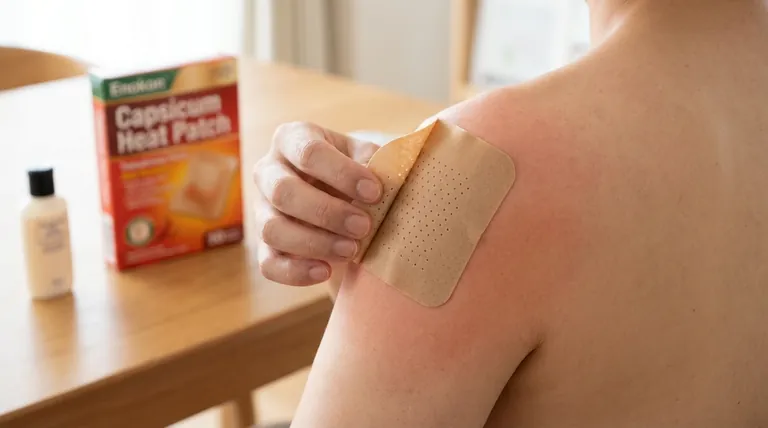
How Transdermal Patches Work: A Fundamental Overview
Understanding the two primary ways patches deliver medication is key to knowing why they are chosen for specific conditions. The method of delivery dictates the type of illness a patch can effectively treat.
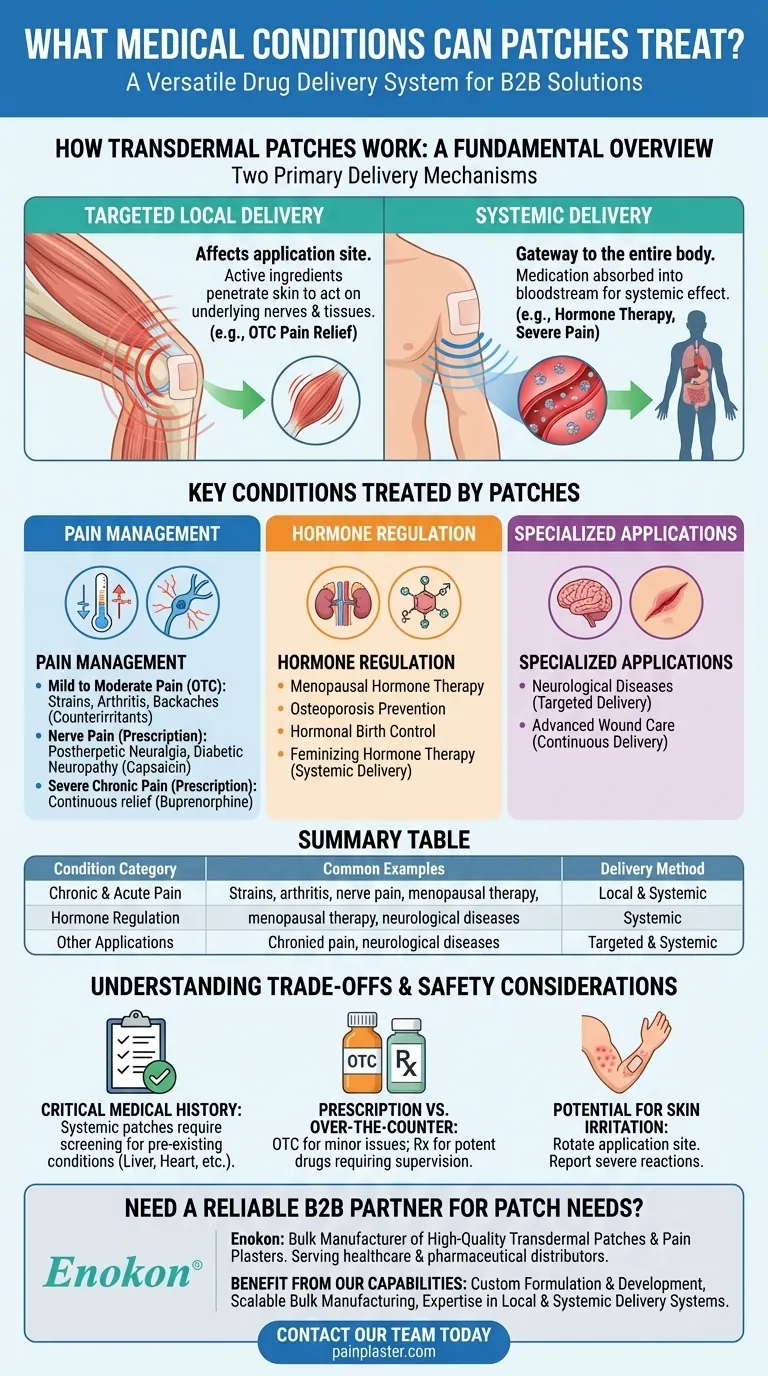
Targeted Local Delivery
Some patches are designed to affect only the area where they are applied. The active ingredients penetrate the skin to act on the nerves and tissues directly underneath.
This is the principle behind most over-the-counter pain patches, which use counterirritants or low-dose capsaicin to relieve minor muscle strains, joint pain, and backaches.
Systemic Delivery
Other patches serve as a gateway to the entire body. The medication is absorbed through the skin into the bloodstream, where it circulates to have a systemic effect.
This method is ideal for drugs that need to be administered in a slow, controlled, and steady dose over time. A prime example is an estrogen patch for hormone therapy or a buprenorphine patch for managing severe chronic pain.
Key Conditions Treated by Patches
The application of transdermal patches spans several distinct medical categories, each leveraging a specific delivery benefit.
Management of Chronic and Acute Pain
Pain management is one of the most common uses for patches, with options ranging from mild over-the-counter relief to powerful prescription medications.
- Mild to Moderate Pain: OTC patches often contain counterirritants to treat soft tissue injuries like strains, sprains, arthritis, or backaches.
- Nerve Pain: Prescription-strength capsaicin patches are highly effective for severe nerve pain, such as postherpetic neuralgia (lingering pain from shingles) and diabetic neuropathy.
- Severe Chronic Pain: Opioid patches containing drugs like buprenorphine provide continuous, powerful pain relief for patients who require around-the-clock management.
Hormone Regulation and Therapy
Patches that provide systemic delivery are an excellent method for administering hormones, avoiding the need for daily pills and ensuring a stable dosage.
Common uses include estrogen patches for menopausal hormone therapy, prevention of postmenopausal osteoporosis, hormonal birth control, and feminizing hormone therapy.
Other Specialized Applications
The references also confirm that transdermal patches are a proven and effective delivery system for treating certain neurologic diseases and for advanced wound care, where targeted, continuous delivery of medication can improve outcomes.
Understanding the Trade-offs and Safety Considerations
While highly effective, patches are not a one-size-fits-all solution. Their use comes with important considerations that require careful assessment.
The Critical Role of Medical History
Systemic patches deliver potent drugs, making your medical history a crucial factor. For example, before using a buprenorphine patch, a healthcare provider must screen for a history of head injuries, liver or gallbladder disease, breathing problems, or heart conditions, as the drug can create serious complications.
Prescription vs. Over-the-Counter (OTC)
There is a significant difference between what you can buy yourself and what a doctor must prescribe.
OTC patches are intended for minor, self-limiting conditions like muscle soreness. Prescription patches, however, deliver powerful medications that require a professional diagnosis and ongoing medical supervision to be used safely.
Potential for Skin Irritation
A common downside to any transdermal patch is the potential for skin irritation or allergic reaction at the application site. It is important to rotate the location of the patch as directed and report any severe skin reactions to your doctor.
Making the Right Choice for Your Condition
Selecting the appropriate patch depends entirely on your specific diagnosis and treatment goal.
- If your primary focus is minor muscle or joint pain: An over-the-counter counterirritant or low-dose capsaicin patch is a suitable first-line treatment.
- If your primary focus is severe nerve pain or chronic pain: A prescription patch with a potent analgesic is necessary and requires a physician's diagnosis and oversight.
- If your primary focus is stable hormone regulation: A systemic patch offers a convenient and effective alternative to oral medications for consistent, long-term therapy.
Ultimately, understanding whether a condition requires local or systemic treatment is the key to determining if a medical patch is the right solution for your health needs.
Summary Table:
| Condition Category | Common Examples | Delivery Method |
|---|---|---|
| Chronic & Acute Pain | Muscle strains, arthritis, nerve pain, severe chronic pain | Local & Systemic |
| Hormone Regulation | Menopausal therapy, birth control, osteoporosis prevention | Systemic |
| Other Applications | Neurological diseases, advanced wound care | Targeted & Systemic |
Need a reliable partner for your transdermal patch needs?
As Enokon, a bulk manufacturer of high-quality transdermal patches and pain plasters, we specialize in serving healthcare and pharmaceutical distributors and brands. Our technical expertise ensures custom R&D and development tailored to your specific requirements, whether you're targeting pain management, hormone therapy, or specialized drug delivery.
Benefit from our capabilities:
- Custom formulation and development
- Scalable, reliable bulk manufacturing
- Expertise in both local and systemic delivery systems
Let's develop the right patch solution for your patients. Contact our team today to discuss your project!
Visual Guide
Related Products
- Medical Cooling Gel Patches for Fever Cooling Patches
- Asthma Cough and Pain Relief Patch for Adults and Kids
- Far Infrared Deep Heat Relief Patches Medicated Pain Relief Patches
- Prostate Pain Kidney Health Care Patch for Men
- Mugwort Wormwood Pain Relief Patch for Neck Pain
People Also Ask
- How does the mechanism of action for medical cooling gel patches facilitate physical temperature reduction? Science Explained
- How does a kinetic control strategy provide value in Medical Cooling Gel patches? Unlock Advanced Product Customization
- What role do medical ice packs or cooling gel patches play during the application of high-concentration capsaicin patches?
- What are the advantages of cooling patches over traditional wet towel methods? Modern Fever Relief
- How do cooling patches work to reduce fever? Safe, Drug-Free Relief for All Ages



















