
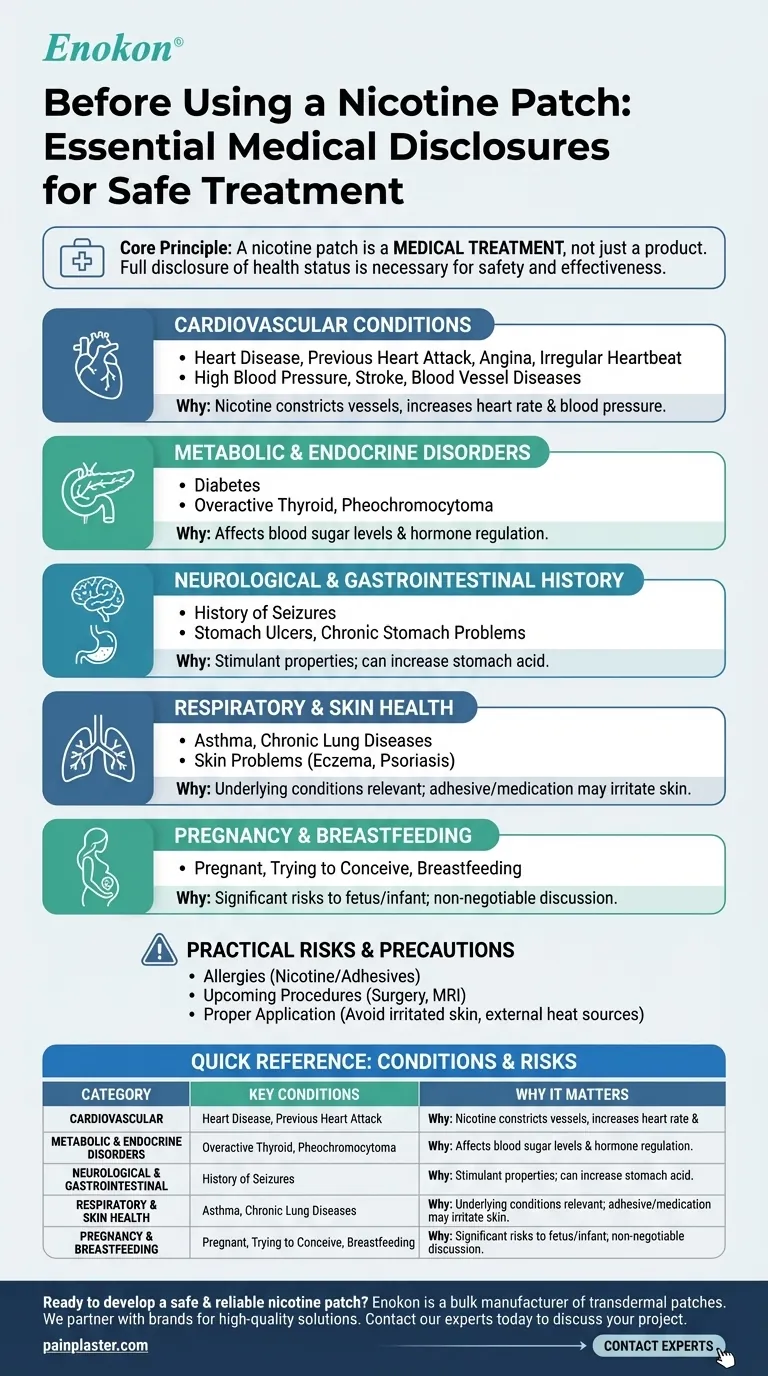
Before starting a nicotine patch, it is crucial to provide your healthcare provider with a complete medical history. You must inform them of any heart conditions, high blood pressure, diabetes, lung disease, or skin conditions. It is also essential to disclose if you are pregnant, planning to become pregnant, or breastfeeding, as well as any history of seizures or allergies.
The core principle is this: A nicotine patch is a medical treatment, not just a consumer product. Because nicotine is a stimulant that affects multiple body systems, full disclosure of your health status is necessary to ensure it is a safe and effective tool for your specific situation.

Why Your Medical History is Critical
A nicotine patch delivers a controlled dose of nicotine into your bloodstream through the skin. This medication is a powerful tool for smoking cessation, but it is also a powerful substance that interacts with your body's core functions.
Your medical history provides the essential context for your doctor to weigh the benefits of the patch against potential risks. Conditions affecting your heart, blood vessels, or metabolic system are particularly important, as nicotine can directly impact these areas.
Key Conditions to Discuss with Your Doctor
Organize your health information to ensure a productive conversation with your care team. The most significant conditions fall into several key categories.
Cardiovascular Conditions
Nicotine constricts blood vessels, increases heart rate, and can raise blood pressure.
If you have a history of heart disease, previous heart attack, angina (chest pain), or an irregular heartbeat, your doctor needs to know. These conditions make your cardiovascular system more vulnerable to the stimulant effects of nicotine.
You must also disclose if you have high blood pressure, a history of stroke, or other blood vessel diseases.
Metabolic and Endocrine Disorders
Nicotine can interfere with how your body regulates key hormones and processes.
Diabetes is a critical condition to discuss, as nicotine can affect blood sugar levels and may require adjustments to your monitoring or medication.
You should also mention an overactive thyroid or pheochromocytoma (a rare adrenal gland tumor), as nicotine can worsen symptoms associated with these conditions.
Neurological and Gastrointestinal History
Nicotine directly affects the central nervous system and can irritate the digestive tract.
A personal or family history of seizures is vital information, as nicotine's stimulant properties could potentially lower the seizure threshold.
Disclose any history of stomach ulcers or other chronic stomach problems, as nicotine can increase stomach acid production.
Respiratory and Skin Health
While the patch avoids the lungs, underlying conditions can still be relevant.
If you have asthma or other chronic lung diseases, your doctor should be aware, even though the patch bypasses inhalation.
Since the medication is delivered through the skin, pre-existing skin problems like eczema or psoriasis are important. These can be aggravated by the patch adhesive or the medication itself.
Pregnancy and Breastfeeding
This is a non-negotiable point of discussion.
Nicotine poses significant risks to a developing fetus and can be passed to an infant through breast milk. If you are pregnant, trying to conceive, or breastfeeding, your doctor must be informed to discuss the safest possible options for you and your child.
Understanding the Practical Risks and Precautions
Beyond chronic conditions, several other factors can influence the safety and effectiveness of the nicotine patch.
Allergies and Sensitivities
You must report any known unusual or allergic reactions to nicotine itself.
It is equally important to mention allergies to adhesives, tape, or other medications applied to the skin. Some people also have sensitivities to specific ingredients like menthol or salicylates.
Upcoming Medical Procedures
Inform your care team if you are using a nicotine patch before any scheduled procedure.
You will likely need to remove the patch before surgery. It must also be removed before an MRI scan, as some patches contain metal components that can heat up and cause skin burns.
Proper Application and Usage
Your doctor should be aware of any issues that could affect application. Avoid placing the patch on skin that is red, irritated, or has cuts.
Be aware that external heat sources like heating pads or saunas can increase the rate of nicotine absorption, potentially leading to an overdose.
Making the Right Choice for Your Goal
Full transparency empowers your doctor to create the safest and most effective cessation plan for you. Use this guide to prepare for your conversation.
- If your primary focus is safety with a history of heart disease: Your doctor must carefully evaluate if the controlled nicotine dose from a patch is less risky than the unpredictable spikes from continued smoking.
- If your primary focus is managing diabetes while quitting: You may need to monitor your blood sugar more closely, as nicotine can impact your body's insulin sensitivity.
- If your primary focus is avoiding skin irritation: Discussing allergies and conditions like eczema beforehand allows your doctor to recommend strategies or alternative nicotine replacement therapies.
- If you are pregnant or breastfeeding: This conversation is essential to weigh the significant risks of nicotine against the known harms of smoking for both you and your baby.
Openly sharing your health history is the first and most important step toward a safe and successful journey to becoming smoke-free.
Summary Table:
| Category | Key Conditions to Disclose | Why It Matters |
|---|---|---|
| Cardiovascular | Heart disease, high blood pressure, history of stroke | Nicotine constricts blood vessels and increases heart rate. |
| Metabolic/Endocrine | Diabetes, overactive thyroid | Nicotine can affect blood sugar levels and hormone regulation. |
| Neurological/Gastrointestinal | History of seizures, stomach ulcers | Nicotine is a stimulant and can increase stomach acid. |
| Skin & Respiratory | Eczema, psoriasis, asthma | Patch adhesive may irritate skin; underlying conditions are relevant. |
| Special Considerations | Pregnancy, breastfeeding, upcoming surgery/MRI | Nicotine risks to fetus/infant; patch must be removed for procedures. |
Ready to develop a safe and reliable nicotine patch for your brand?
At Enokon, we are a bulk manufacturer of reliable transdermal patches and pain plasters. We partner with healthcare and pharmaceutical distributors and brands to deliver high-quality products. Our technical expertise ensures we can support your custom R&D and development needs, helping you create effective, safe smoking cessation solutions tailored to diverse patient needs.
Contact our experts today to discuss your project requirements.
Visual Guide
Related Products
- Menthol Gel Pain Relief Patch
- Capsaicin Chili Medicated Pain Relief Patches
- Icy Hot Menthol Medicine Pain Relief Patch
- Lidocaine Hydrogel Pain Relief Patch for Pain Relief
- Mugwort Wormwood Pain Relief Patch for Neck Pain
People Also Ask
- How effective are pain relief patches for muscle pain? Target Localized Pain with Transdermal Delivery
- How do pain relief patches compare to other pain relief methods? Discover Targeted, Long-Lasting Relief
- Who should consult a healthcare professional before using pain relief patches? Ensure Your Safety with Medical Advice
- Can pregnant women use pain relief patches? Your Essential Guide to Safe Pain Management
- What are some common applications of pain relief patches? Effective Relief for Muscle & Joint Pain

















