
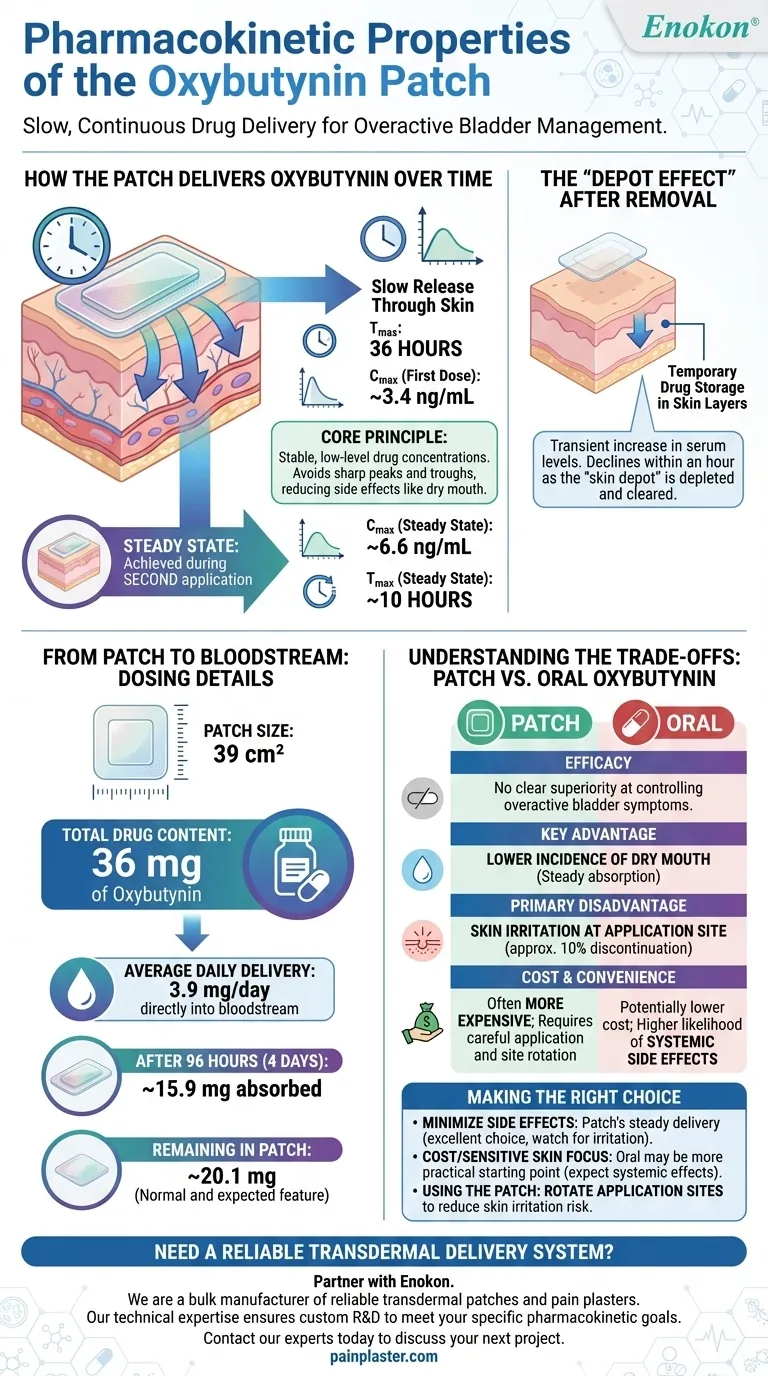
From a pharmacokinetic standpoint, the oxybutynin patch is designed for slow, continuous drug delivery over several days. After a single application, it reaches a peak plasma concentration of approximately 3.4 ng/mL at around 36 hours. With continued use, stable, steady-state drug levels are achieved during the second patch application, with peak concentrations averaging 6.6 ng/mL at about 10 hours into the dosing interval.
The core principle of the oxybutynin patch is to maintain stable, low-level drug concentrations in the bloodstream. This avoids the sharp peaks and troughs associated with oral pills, which is the primary reason it causes fewer side effects like dry mouth.
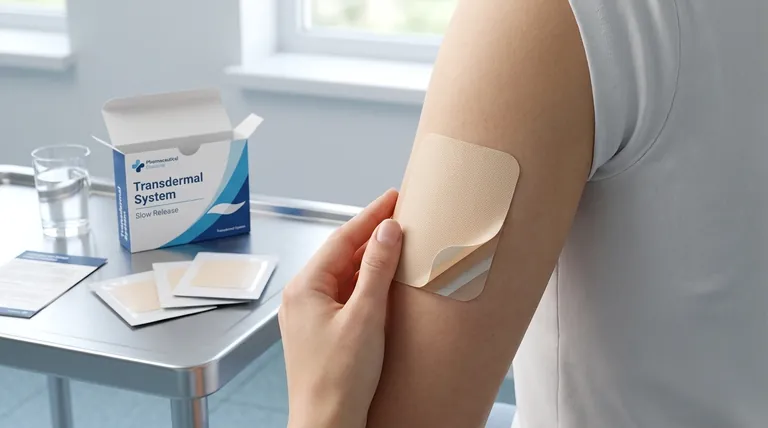
How the Patch Delivers Oxybutynin Over Time
The transdermal patch fundamentally changes how oxybutynin interacts with the body compared to traditional oral tablets. Its goal is consistency, not speed.
Reaching Peak Concentration (Cmax)
The patch releases the drug slowly through the skin. This results in a much longer time to reach maximum concentration (Tmax) than oral forms.
After the very first patch is applied, it takes about 36 hours to reach a peak concentration (Cmax) of roughly 3.4 ng/mL.
Achieving Steady State
With continuous use, the drug levels build up to a therapeutic equilibrium. This "steady state" is achieved during the application of the second patch.
At steady state, the peak concentration is higher, averaging 6.6 ng/mL, and is reached more quickly within the application cycle, at about 10 hours.
The "Depot Effect" After Removal
After a patch is removed, a small amount of oxybutynin remains temporarily stored in the skin layers. This can cause a brief, transient increase in serum levels.
However, these levels begin to decline within an hour as the "skin depot" is depleted and the drug is cleared from the body.
From Patch to Bloodstream: The Dosing Details
Understanding the patch's design clarifies its pharmacokinetic profile. It is a reservoir system designed for multi-day use.
Drug Content and Delivery Rate
A standard 39 cm² patch contains a total of 36 mg of oxybutynin.
It is engineered to deliver an average of 3.9 mg of oxybutynin per day directly into the bloodstream.
Drug Remaining in the Patch
The patch contains much more medication than it delivers. After 96 hours (4 days) of wear, only about 15.9 mg has been absorbed.
This means a significant amount of the drug, roughly 20.1 mg, remains in the patch upon removal. This is a normal and expected feature of this type of transdermal system.
Understanding the Trade-offs: Patch vs. Oral Oxybutynin
The unique pharmacokinetic profile of the patch creates a distinct set of advantages and disadvantages compared to oral oxybutynin. The choice is not about superior effectiveness but about balancing side effects and practical considerations.
Efficacy: No Clear Superiority
The transdermal patch is no more effective at controlling overactive bladder symptoms than either short- or long-acting oral oxybutynin.
The Key Advantage: Reduced Side Effects
The patch's main benefit is a lower incidence of dry mouth. The slow, steady absorption avoids the high peak drug concentrations that are primarily responsible for this common side effect with oral tablets.
The Primary Disadvantage: Skin Reactions
The most significant drawback is skin irritation at the application site. These local skin reactions are common enough that they cause approximately 10% of patients to discontinue using the patch.
Cost and Convenience
The patch is often more expensive than its oral counterparts. It also requires careful application and site rotation to minimize skin irritation.
Making the Right Choice for Your Treatment
Selecting the best oxybutynin formulation depends entirely on the individual's priorities and tolerance.
- If your primary focus is minimizing side effects like dry mouth: The patch's steady, low-dose delivery makes it an excellent choice, provided you don't experience skin irritation.
- If your primary focus is cost or you have very sensitive skin: An oral formulation may be a more practical starting point, though you should be prepared for a higher likelihood of systemic side effects.
- If you are choosing the patch: Be sure to rotate the application site (e.g., abdomen, hip, or buttock) with each new patch to reduce the risk of skin irritation.
Understanding these delivery characteristics empowers you to have a more informed discussion with your healthcare provider about the right treatment for your specific needs.
Summary Table:
| Key Pharmacokinetic Metric | Value / Characteristic |
|---|---|
| Peak Concentration (Cmax) - First Dose | ~3.4 ng/mL |
| Time to Peak (Tmax) - First Dose | ~36 hours |
| Peak Concentration (Cmax) - Steady State | ~6.6 ng/mL |
| Daily Delivery Rate | 3.9 mg/day |
| Primary Advantage | Fewer systemic side effects (e.g., dry mouth) |
| Primary Disadvantage | Potential for skin irritation at application site |
Need a reliable transdermal delivery system for your pharmaceutical product?
At Enokon, we are a bulk manufacturer of reliable transdermal patches and pain plasters for healthcare and pharma distributors and brands. Our technical expertise ensures custom R&D and development to meet your specific pharmacokinetic goals, just like the oxybutynin patch.
Benefit from our expertise to:
- Develop patches with precise, controlled release profiles.
- Ensure consistent quality and reliable manufacturing at scale.
- Leverage our experience for your custom formulation needs.
Contact our experts today to discuss how we can partner on your next transdermal project.
Visual Guide
Related Products
- Menthol Gel Pain Relief Patch
- Lidocaine Hydrogel Pain Relief Patch for Pain Relief
- Herbal Medicated Anti Diarrhea Patch for Digestive Relief
- Asthma Cough and Pain Relief Patch for Adults and Kids
- Icy Hot Menthol Medicine Pain Relief Patch
People Also Ask
- How do pain relief patches compare to other pain relief methods? Discover Targeted, Long-Lasting Relief
- How effective are pain relief patches for muscle pain? Target Localized Pain with Transdermal Delivery
- Who should consult a healthcare professional before using pain relief patches? Ensure Your Safety with Medical Advice
- Can pregnant women use pain relief patches? Your Essential Guide to Safe Pain Management
- What are the different types of pain relief patches available? Find the Right Solution for Your Pain



















