
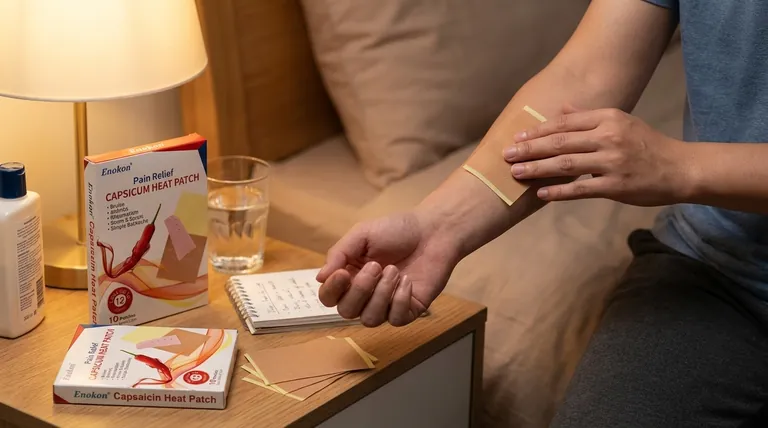
Before applying a pain patches, several precautions must be taken to ensure safe and effective use. These include checking skin condition, avoiding heat exposure, proper hand hygiene, and consulting a healthcare provider about medical history and concurrent medications. It's also crucial to monitor for side effects, store patches correctly, and follow application guidelines strictly to prevent adverse reactions.
Key Points Explained:
-
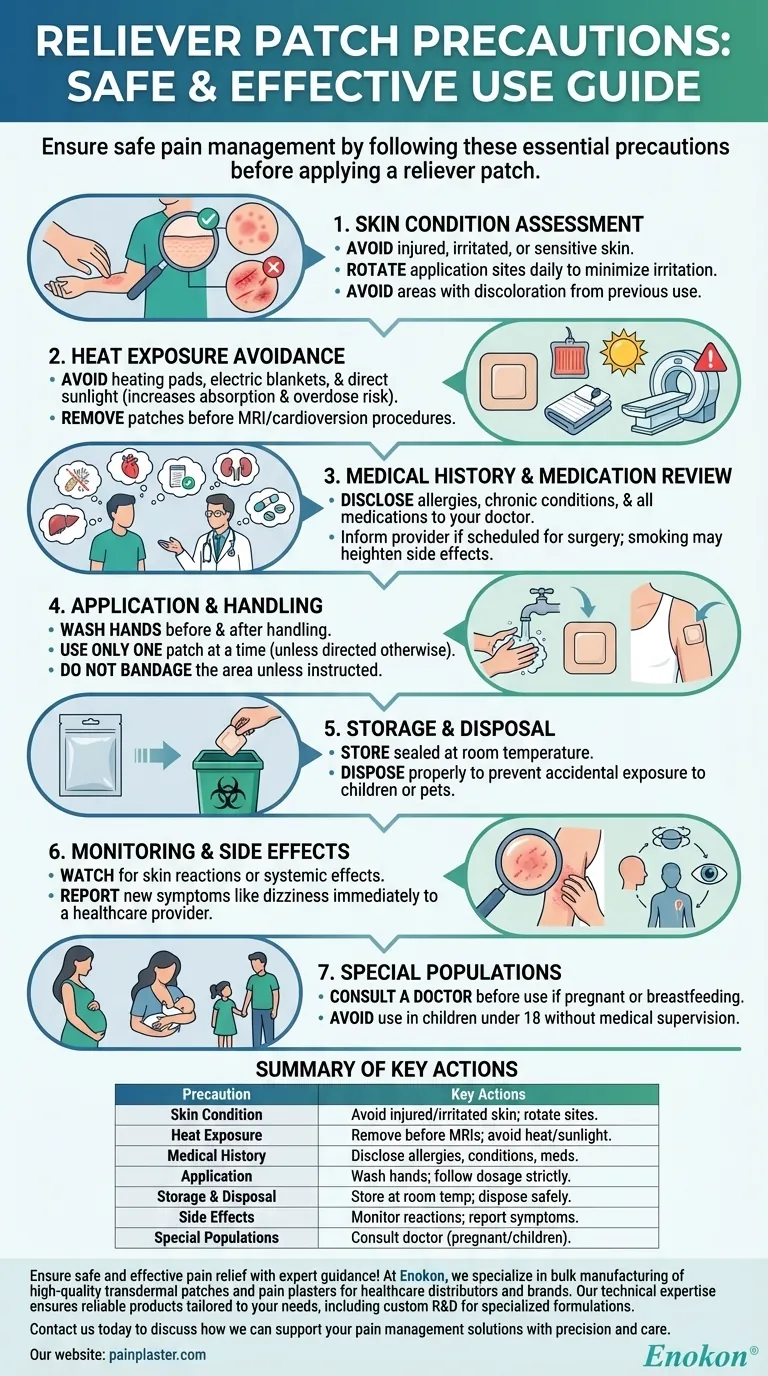
Skin Condition Assessment
- Do not apply the patch to injured, irritated, or sensitive skin (e.g., cuts, scrapes, sunburns, rashes, or infections).
- Avoid areas with permanent skin lightening or discoloration from previous use.
- Rotate application sites daily to minimize skin irritation.
-
Heat Exposure Avoidance
- Heating pads, electric blankets, or direct sunlight can increase medication absorption, leading to overdose risks.
- Remove patches before MRI procedures or cardioversion to prevent burns.
-
Medical History & Medication Review
- Disclose allergies, chronic conditions (e.g., heart disease, diabetes, liver/kidney issues), and medications to your doctor.
- Smoking may heighten side effects; inform providers if you’re scheduled for surgery.
-
Application & Handling
- Wash hands before and after handling the patch to prevent accidental transfer to eyes or mucous membranes.
- Use only one patch at a time (maximum two in 24 hours if directed).
- Do not bandage the area unless instructed.
-
Storage & Disposal
- Keep patches at room temperature, sealed in their pouches until use.
- Dispose of used/expired patches properly to prevent accidental exposure to children or pets.
-
Monitoring & Side Effects
- Watch for skin reactions (redness, itching) or systemic effects (vision changes, erection problems).
- Report new symptoms like dizziness or skin lightening to a healthcare provider immediately.
-
Special Populations
- Pregnant/breastfeeding individuals should consult a doctor before use.
- Avoid use in children under 18 without medical supervision.
These precautions ensure the patch works effectively while minimizing risks—small steps that safeguard your health in everyday pain management.
Summary Table:
| Precaution | Key Actions |
|---|---|
| Skin Condition | Avoid injured/irritated skin; rotate application sites. |
| Heat Exposure | Remove patches during MRIs; avoid heating pads/sunlight. |
| Medical History | Disclose allergies, chronic conditions, and medications to your doctor. |
| Application | Wash hands before/after use; follow dosage instructions strictly. |
| Storage & Disposal | Store at room temperature; dispose safely to protect children/pets. |
| Side Effects | Monitor for skin reactions or systemic issues; report symptoms immediately. |
| Special Populations | Consult a doctor if pregnant, breastfeeding, or using for children under 18. |
Ensure safe and effective pain relief with expert guidance!
At Enokon, we specialize in bulk manufacturing of high-quality transdermal patches and pain plasters for healthcare distributors and brands. Our technical expertise ensures reliable products tailored to your needs, including custom R&D for specialized formulations.
Contact us today to discuss how we can support your pain management solutions with precision and care.
Visual Guide
Related Products
- Far Infrared Pain Patch Relief Pain Reliever for Back
- Mugwort Wormwood Pain Relief Patch for Neck Pain
- Icy Hot Menthol Medicine Pain Relief Patch
- Asthma Cough and Pain Relief Patch for Adults and Kids
- Menthol Gel Pain Relief Patch
People Also Ask
- How does high-purity far-infrared ceramic powder contribute to the efficacy of far-infrared physical therapy patches?
- Why Control Pseudo-diffusion in Pain Relief Patch Manufacturing? Enhance Efficacy & Performance
- What are pain relief patches and how are they used? A Guide to Safe, Targeted Relief
- When should you consider using pain relief products like creams and patches? Optimize Comfort & Safety
- What are pain relief patches? Discover Targeted, Drug-Free Pain Management Solutions



















