
While primarily known for its localized burning sensation, capsaicin transdermal can, in rare instances, cause more significant side effects. These less common events move beyond the application site, potentially including severe skin reactions like blistering or burns, neurological symptoms such as dizziness or changes in taste, and systemic effects like an increased heart rate or difficulty breathing.
The crucial challenge for any user is distinguishing the expected, temporary discomfort at the application site from a rare but serious adverse reaction. While local irritation is normal, any symptom that is severe, spreads, or affects other body systems warrants immediate medical evaluation.
Beyond the Burn: Severe Local Reactions
The most common side effect of transdermal capsaicin is a temporary sensation of heat or pain where it's applied. However, a small number of users may experience reactions that are far more severe and indicate a problem.
Differentiating Normal from Severe
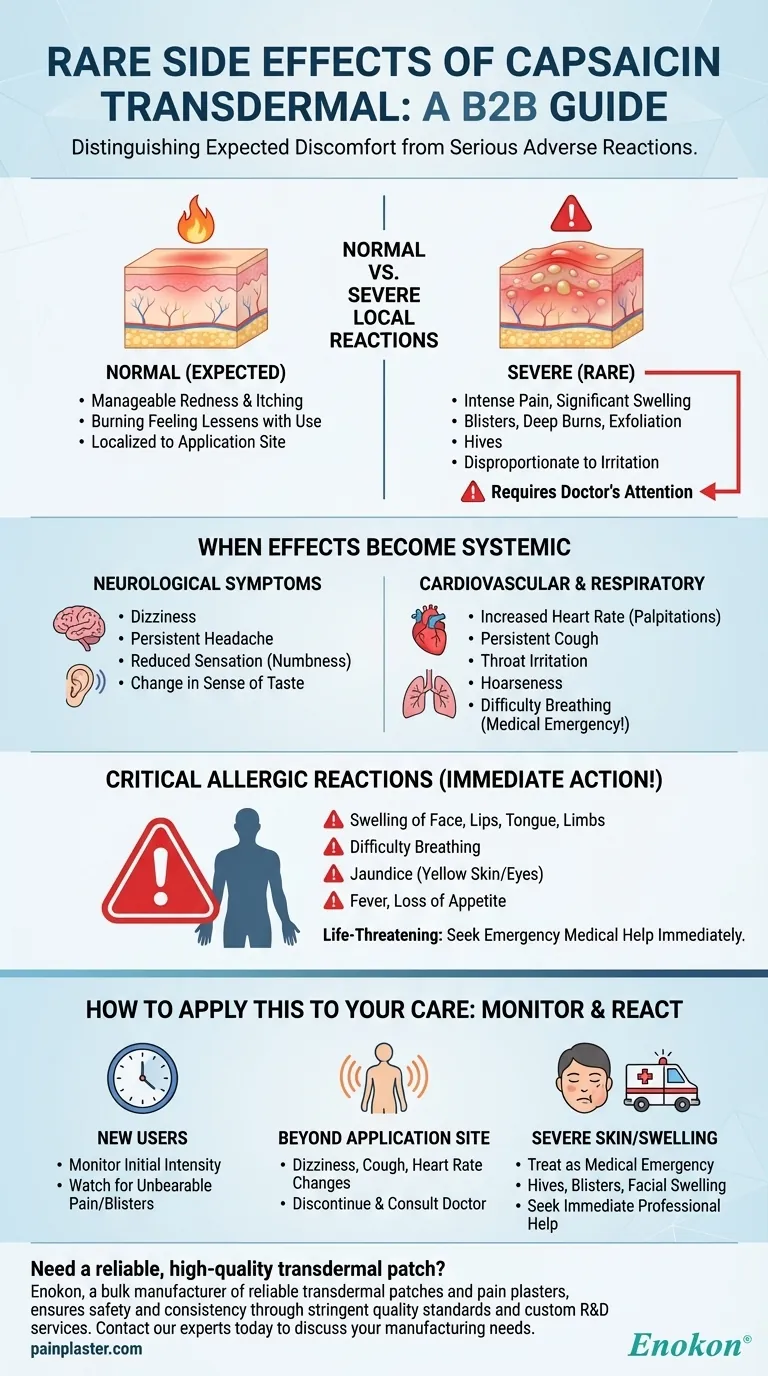
A normal reaction involves manageable redness, itching, and a burning feeling that typically lessens with continued use.
A severe local reaction is disproportionate. It involves intense pain, swelling, or skin changes that go beyond simple irritation and signal potential tissue damage.
Signs of a Severe Skin Reaction
Key warning signs at the application site include the formation of blisters, deep burns, or significant swelling.
Other serious indicators are exfoliation (peeling of the skin) or the development of hives. These reactions suggest more than just surface-level irritation and require a doctor's attention.
When Effects Become Systemic
In very rare cases, the effects of capsaicin can extend beyond the skin and impact other parts of the body. These systemic effects are a clear sign to stop use and consult a physician.
Neurological Symptoms
Some individuals may experience dizziness, persistent headache, or a noticeable reduction in sensation in the treated area that does not resolve.
An unusual but reported side effect is a change in your sense of taste, indicating the medication is having a wider neurological impact.
Cardiovascular and Respiratory Stress
Though uncommon, capsaicin can affect the cardiovascular system, leading to palpitations or an increased heart rate.
Respiratory symptoms such as a persistent cough, throat irritation, or hoarseness can also occur. Any difficulty breathing is a medical emergency.
Understanding Critical Allergic Reactions
The most dangerous potential side effects are those related to a serious allergic or systemic reaction. These symptoms are rare but require immediate medical intervention to prevent severe complications.
Signs Requiring Immediate Attention
Seek emergency medical help if you experience swelling of the face, lips, tongue, or limbs.
Other critical signs include jaundice (yellowing of the skin or eyes), loss of appetite, fever, or difficulty breathing. These point to a significant, body-wide reaction.
The Importance of Prompt Action
These symptoms are not to be monitored at home. They represent a serious medical event that could be life-threatening and demand an immediate response from a healthcare professional.
How to Apply This to Your Care
Monitoring your body’s response is the most effective way to use capsaicin transdermal safely. Knowing what to look for allows you to react appropriately.
- If you are a new user: Pay close attention to the intensity of the initial reaction. A burning feeling is expected, but pain that is unbearable or skin that begins to blister is not.
- If you notice effects beyond the application site: Symptoms like dizziness, a new cough, or changes in your heart rate are clear signals to discontinue use and speak with your doctor.
- If you observe severe skin changes or swelling: Treat this as a medical emergency. Signs like hives, blisters, or swelling of the face require immediate professional medical help.
Being informed about these potential outcomes empowers you to use this treatment safely and effectively.
Summary Table:
| Category of Side Effect | Specific Symptoms to Watch For |
|---|---|
| Severe Local Reactions | Blisters, deep burns, significant swelling, hives, skin peeling (exfoliation) |
| Neurological Symptoms | Dizziness, persistent headache, numbness, changes in taste |
| Systemic Effects | Increased heart rate (palpitations), cough, throat irritation, hoarseness |
| Critical Allergic Reactions | Swelling of face/lips/tongue, difficulty breathing, jaundice, fever |
Need a reliable, high-quality transdermal patch?
As Enokon, a bulk manufacturer of reliable transdermal patches and pain plasters, we understand that safety and consistency are paramount for healthcare and pharma distributors and brands. Our technical expertise ensures every patch meets stringent quality standards, minimizing risks for end-users.
Benefit from our custom R&D and development services to create a safer, more effective product for your patients.
Contact our experts today to discuss your manufacturing needs.
Visual Guide
Related Products
- Capsaicin Chili Medicated Pain Relief Patches
- Heat Relief Capsicum Patch for Lower Back Pain Relief
- Far Infrared Heat Pain Relief Patches Transdermal Patches
- Silicone Scar Sheets Patch Transdermal Drug Patch
- Menthol Gel Pain Relief Patch
People Also Ask
- What conditions should be reported to a care team before using capsaicin patches? Ensure Safe Pain Relief
- What conditions can capsaicin creams and patches help relieve? Find Targeted Pain Relief for Nerves & Joints
- What are the uses of nonprescription capsaicin patches? Natural Pain Relief for Muscles & Joints
- What should be avoided while using capsaicin patches? Essential Safety Tips for Effective Pain Relief
- What precautions should be taken when using capsaicin patches? A Guide to Safe and Effective Pain Relief


















