
If the Signal Relief patch doesn't provide immediate relief, the first step is to methodically adjust its placement. The patch must be positioned precisely over the source of the discomfort to work correctly, and some individuals may also require more time for the effects to become noticeable.
The most common reason for a lack of immediate relief is incorrect placement. Think of the patch as a sensitive antenna; it must be aimed directly at the signal (your discomfort) to function, which can require a bit of patient troubleshooting.

Understanding the Core Principle: The "Antenna" Effect
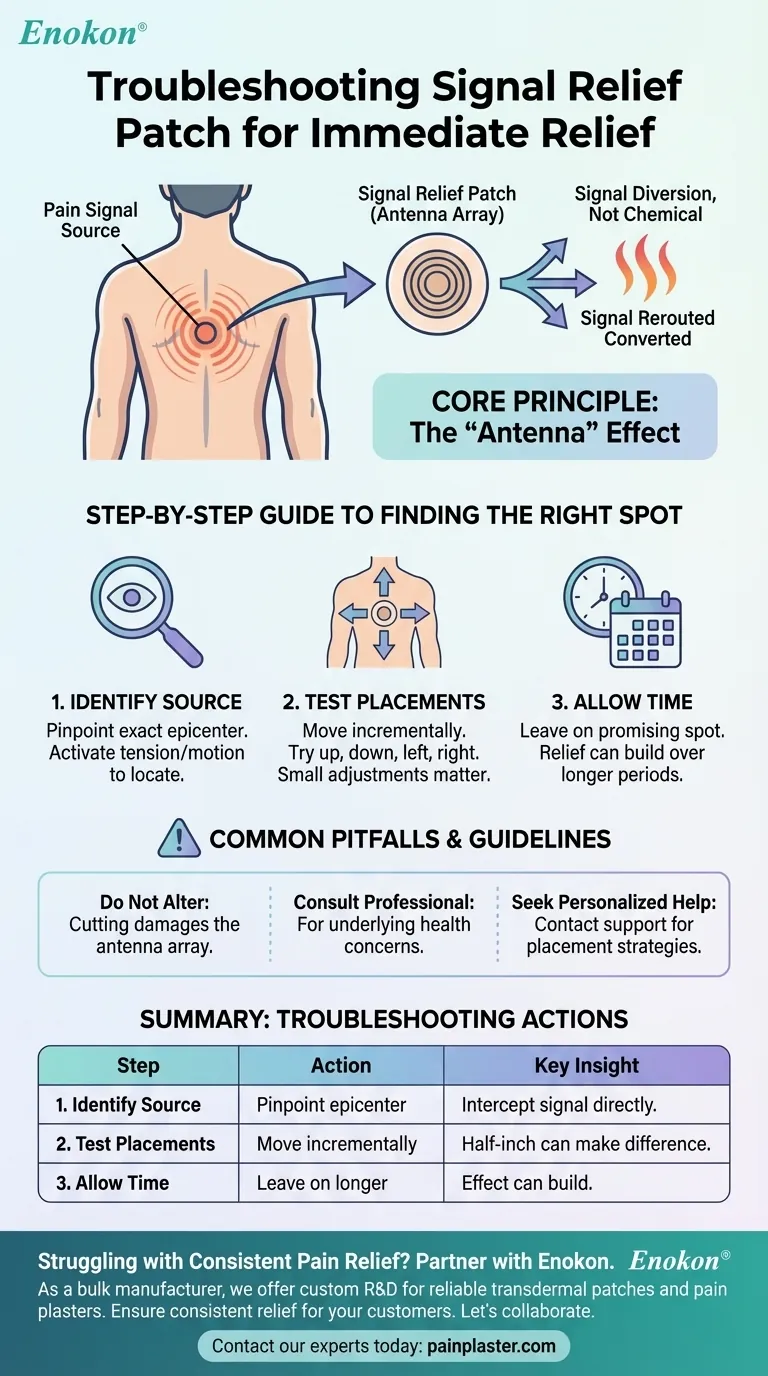
To troubleshoot effectively, it's essential to understand how the patch is designed to work. It operates on a principle of signal diversion, not chemical interaction.
How the Patch Works
The Signal Relief patch contains a microscopic array of particles that act as an antenna. This array is designed to absorb the energy from your body's pain signals.
The technology then reroutes this energy through the patch, converting it into harmless, undetectable heat. It does this without introducing any drugs or chemicals into your body.
Why Precise Placement is Critical
Because the patch functions like an antenna, its position is everything. If it is not placed directly between the source of the discomfort and the brain, it cannot properly "intercept" the signal.
Even moving the patch by half an inch can be the difference between feeling no relief and experiencing a significant reduction in discomfort.
A Step-by-Step Guide to Finding the Right Spot
If you are not feeling relief, follow this systematic process to find the optimal location for your patch.
Step 1: Identify the Source
Before placing the patch, try to pinpoint the exact origin of your discomfort. Gently move in a way that activates the tension or pain, paying close attention to your range of motion.
The goal is to find the epicenter of the sensation, not just the general area where you feel it.
Step 2: Test Different Placements
Start by placing the patch directly over the spot you identified. If you don't feel a change within a few minutes, begin moving it to adjacent locations.
Move the patch slowly around the area—up, down, left, and right. Sometimes the ideal spot is slightly "off-center" from where you perceive the pain to be.
Step 3: Allow for More Time
While many users experience fast relief, some individuals require more time. Once you find a spot that seems to provide some improvement, leave the patch in place.
The effect can build over a longer period for some types of discomfort or for certain individuals.
Common Pitfalls and Usage Guidelines
To ensure you are using the patch safely and effectively, it's important to be aware of its limitations and intended use.
Do Not Alter the Patch
The patch's internal antenna array is precisely engineered. You should never cut or alter the patch in any way, as this will damage its structure and render it ineffective.
When to Consult a Professional
The Signal Relief patch is not a medical device and is not intended to diagnose or treat health conditions. If you have any concerns about your underlying health, you should always consult a physician.
When to Seek Personalized Help
If you have followed the placement steps and still have questions or are not experiencing relief, the manufacturer's customer support can provide personalized assistance with placement strategies.
Making the Right Choice for Your Goal
Use this framework to guide your next steps and get the best results from your patch.
- If your primary focus is finding initial relief: Dedicate time to the methodical placement process, moving the patch systematically around the source of your discomfort.
- If you've tried different placements without success: Leave the patch on the most promising spot for a longer duration or contact customer support for personalized guidance.
By approaching placement with patience and precision, you can systematically troubleshoot the issue and optimize the patch's effectiveness.
Summary Table:
| Step | Action | Key Insight |
|---|---|---|
| 1. Identify Source | Pinpoint the exact epicenter of discomfort. | The patch must intercept the pain signal directly. |
| 2. Test Placements | Move the patch incrementally around the area. | Even a half-inch adjustment can make a significant difference. |
| 3. Allow Time | Leave the patch on a promising spot for longer. | Relief can build over time for some individuals. |
Struggling with consistent pain relief? Partner with Enokon.
As a bulk manufacturer of reliable transdermal patches and pain plasters for healthcare distributors and brands, we understand the critical importance of effective product performance. Our technical expertise in custom R&D and development ensures your patches deliver the consistent, reliable relief your customers expect.
Let's collaborate to enhance your product line. Contact our experts today to discuss your custom patch development needs.
Visual Guide
Related Products
- Far Infrared Deep Heat Relief Patches Medicated Pain Relief Patches
- Far Infrared Pain Patch Relief Pain Reliever for Back
- Far Infrared Heat Pain Relief Patches Transdermal Patches
- Far Infrared Knee Pain Patch Heat Patches for Pain Relief
- Natural Herbal Patch for Motion Sickness and Car Sickness Relief
People Also Ask
- How do Deep Heat Pain Relief Patches provide pain relief? Discover the Drug-Free Mechanism
- How effective are pain relief patches for muscle pain? Target Localized Pain with Transdermal Delivery
- What are pain relief patches and how are they used? A Guide to Safe, Targeted Relief
- When should you consider using pain relief products like creams and patches? Optimize Comfort & Safety
- What are pain relief patches? Discover Targeted, Drug-Free Pain Management Solutions



















